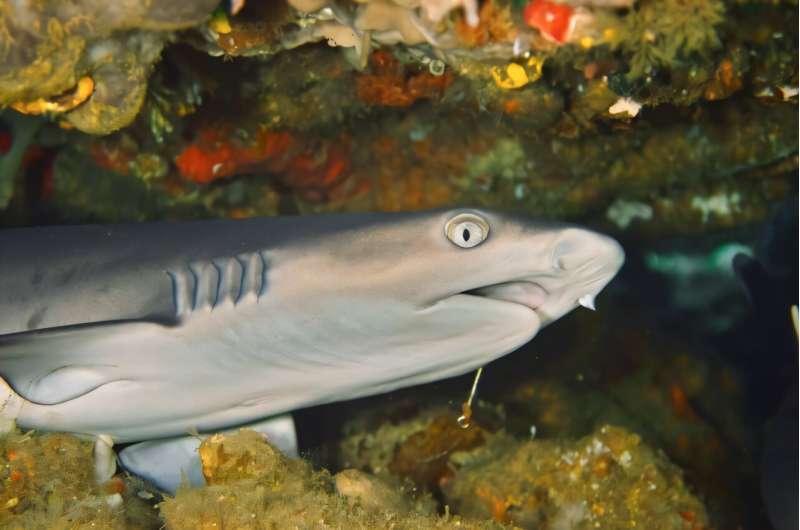
A recent study led by the University of Vienna reveals a continuous decline in shark and ray biodiversity over the past 100 million years. Published in the journal Scientific Reports, this research challenges earlier assumptions that the diversity of these species has remained stable or even increased. The findings have significant implications for modern marine conservation efforts.
The team, headed by Manuel A. Staggl from the Institute of Paleontology, sought to answer a pressing question: what can fossilized sharks and rays reveal about the current biodiversity crisis? Staggl noted that cartilaginous fish, which include modern sharks and rays, have survived multiple mass extinction events over their 400 million-year history. Yet today, more than a third of neoselachians are at risk of extinction. “To develop effective conservation measures, we must understand which environmental factors have influenced their diversity in the past,” he emphasized.
The researchers conducted an extensive analysis of fossil data, comparing it with historical environmental conditions such as temperature, carbon dioxide levels, and habitat availability. Their results offer new insights into the evolutionary history of these important marine predators.
Resilience of Sharks and Rays
One of the most surprising findings of the study is that the mass extinction event 66 million years ago, caused by an asteroid impact, had a lesser impact on sharks and rays than previously thought. “These animals proved to be remarkably resilient and recovered quickly from the catastrophe,” Staggl explained.
The peak of shark and ray biodiversity occurred during the Eocene, approximately 45 million years ago, when the climate was significantly warmer than today. Since then, their biodiversity has been on a downward trend, influenced by various environmental factors.
The study highlights that shallow coastal areas have acted as biodiversity hotspots, facilitating the emergence of new shark and ray species. Jürgen Kriwet, head of the Evolutionary Morphology Research Group, noted, “The more diverse the shallow marine habitats, the more species emerged.” However, he expressed concern that these habitats are now severely threatened by factors such as coastal development, global warming, pollution, and unsustainable fishing practices.
Complex Climate Influences
The role of carbon dioxide levels has proven to be more complex than earlier theories suggested. Moderate CO2 levels have been associated with positive effects on shark and ray biodiversity, as they promote photosynthesis in algae and seagrass meadows. “This has a positive effect on the entire food chain and ultimately on sharks and rays,” Kriwet explained. Yet, if CO2 levels rise excessively, marine ecosystems suffer, leading to negative consequences.
Staggl cautioned that the current biodiversity crisis is fundamentally different from past events. “In the past, sharks and rays had time to adapt to changes or migrate to other areas. However, the current changes are happening far too quickly. In this respect, the situation today is unprecedented.” Highly specialized species, such as deep-sea sharks adapted to stable cold environments, face significant challenges due to rapid warming.
The implications of this research underscore the urgent need for effective conservation strategies. Prioritizing the preservation and restoration of diverse coastal habitats is essential. Additionally, reducing CO2 emissions is imperative to mitigate ocean acidification. “Our study shows that marine conservation is not just about fishing quotas—we need to adopt a broader perspective that considers entire habitats and the climate system,” concluded Staggl.
The findings of this study not only reshape our understanding of shark and ray biodiversity but also highlight the critical need for comprehensive conservation efforts in light of ongoing environmental changes.