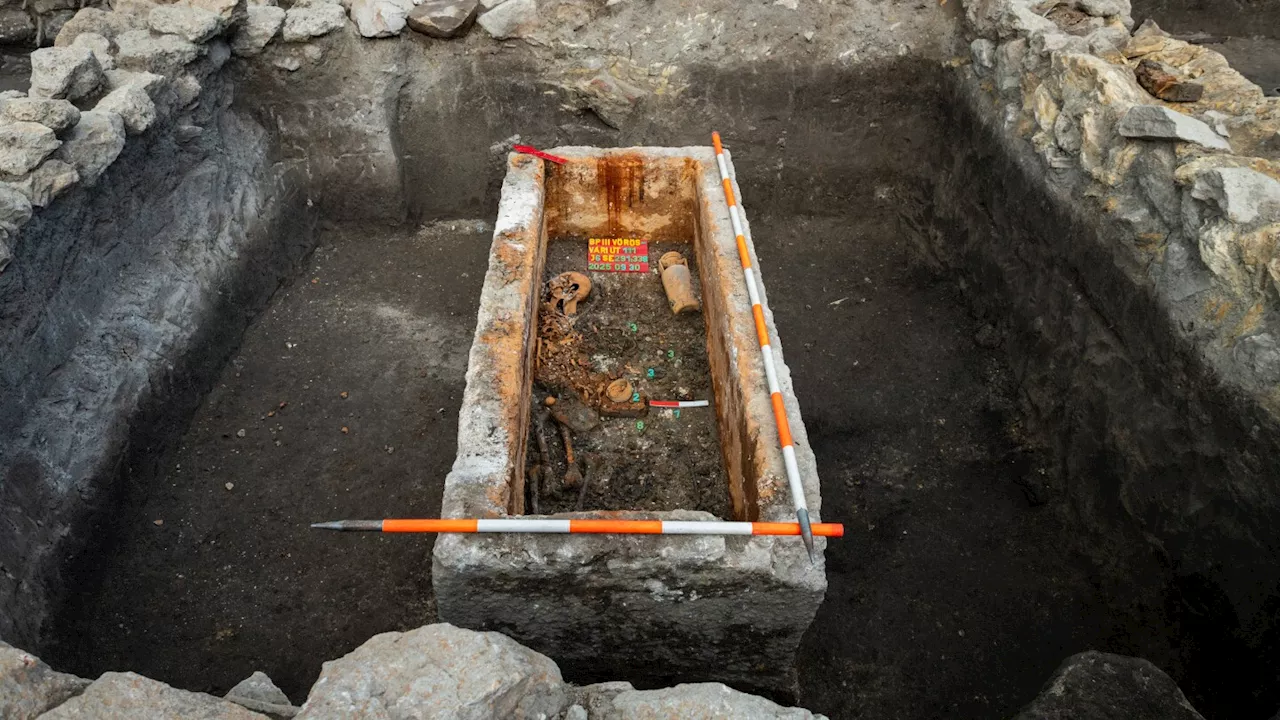
UPDATE: Archaeologists in Budapest have made a groundbreaking discovery, unearthing a 1,700-year-old Roman sarcophagus in the Óbuda district. This remarkably preserved limestone coffin, sealed for centuries, offers a rare glimpse into the life of a young woman from ancient Rome, revealing important artifacts and human stories from a bygone era.
The Budapest History Museum team found the sarcophagus during a significant excavation, part of an ongoing effort to explore the historical site of Aquincum, an ancient Roman settlement along the Danube. The coffin was discovered untouched, its lid secured with metal clamps and molten lead, ensuring its integrity through the ages.
When researchers carefully lifted the lid, they uncovered a complete skeleton surrounded by a treasure trove of artifacts, including 140 coins, glass vessels, and bronze figures. “The peculiarity of the finding is that it was a hermetically sealed sarcophagus. It was not disturbed previously, so it was intact,” stated Gabriella Fényes, the lead archaeologist.
This significant find was located among the ruins of houses abandoned in the 3rd century, repurposed later as a burial ground. Nearby excavations revealed additional Roman structures, including an aqueduct and simpler graves, but none compared to the wealth of the newly discovered tomb.
The sarcophagus not only contained artifacts but also represented the deep emotional ties of the deceased’s family. “The deceased was buried very carefully by her relatives. They must have really loved who they buried here,” Fényes remarked, shedding light on the human aspect of this archaeological marvel. The objects found with the remains suggest the individual was likely a young woman of higher social status, as indicated by the lavish items intended for her eternal journey.
As anthropologists begin analyzing the skeleton, they aim to uncover more about her age, health, and origins. The burial’s opulence suggests that this young woman was well-to-do, a fact that underscores the significance of this discovery. “It is truly rare to find a sarcophagus like this, untouched and never used before,” said Gergely Kostyál, coleader of the excavation.
Excavators are also examining a layer of mud found inside the coffin, which may contain additional artifacts. “I suspect we could find jewelry. We haven’t found any earrings or other jewelry belonging to the woman, so I hope that these small items will turn up during the sifting of the mud,” Fényes added, hinting at even more potential discoveries.
This remarkable find is not just about ancient history; it reflects the deep connections and mourning practices of people from 1,700 years ago. “I was very touched by the care and expression of love that we were able to get a glimpse of,” Fényes expressed, emphasizing the emotional significance of the discovery.
As the excavation continues, the world watches closely for what new revelations may emerge from this historic site. This discovery serves as a poignant reminder of the lives lived long ago and the enduring impact of our shared human history. Stay tuned for further updates as this story unfolds.