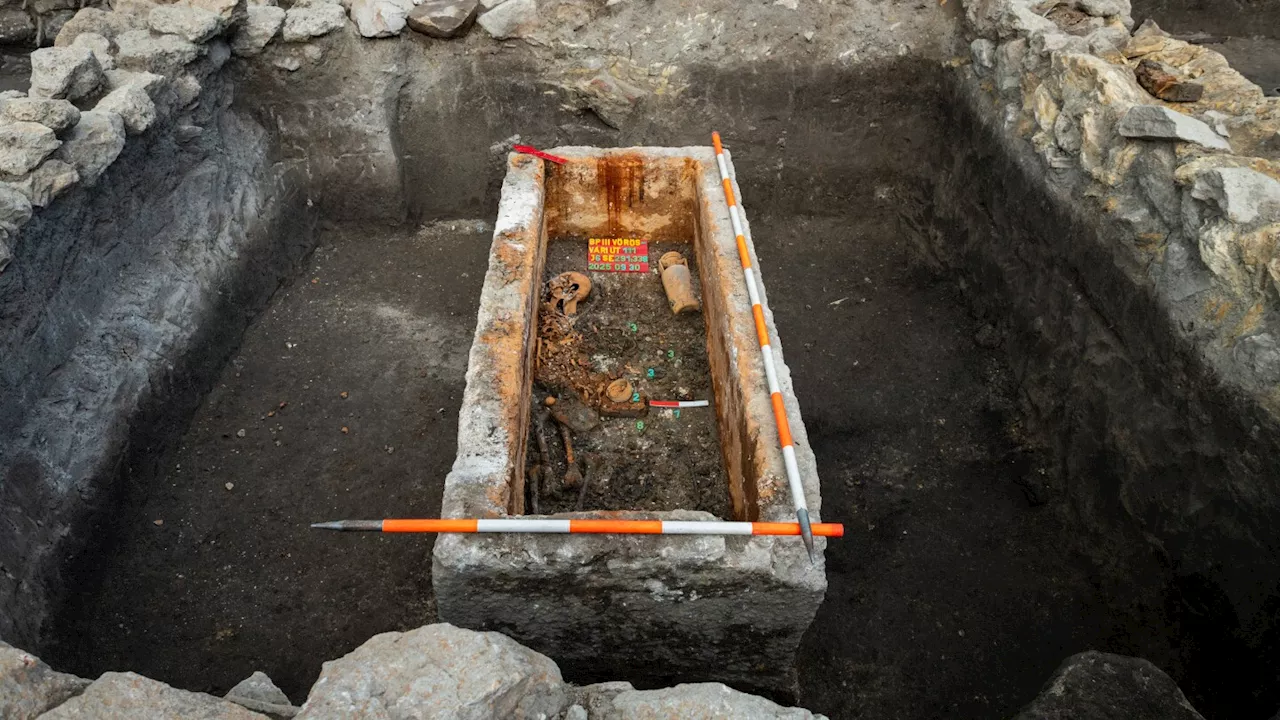
A remarkably intact Roman sarcophagus has been uncovered in Budapest, shedding light on the life of a young woman from approximately 1,700 years ago. The discovery, made by archaeologists from the Budapest History Museum, took place during a significant excavation in the Óbuda district, an area that once formed part of the flourishing Roman settlement known as Aquincum along the Danube frontier.
The limestone coffin was found sealed with metal clamps and molten lead, preserving its contents through the centuries. When the lid was lifted, researchers discovered a complete skeleton alongside numerous artifacts, providing invaluable insights into the era. “The peculiarity of the finding is that it was a hermetically sealed sarcophagus. It was not disturbed previously, so it was intact,” explained Gabriella Fényes, lead archaeologist for the excavation.
Significance of the Discovery
The sarcophagus was located among the remnants of abandoned structures within a section of Aquincum that had been vacated in the 3rd century and converted into a burial ground. Nearby, archaeologists found a Roman aqueduct and eight additional graves, none of which matched the wealth of artifacts associated with this sealed tomb.
Inside the sarcophagus, the team discovered a range of funerary items, including two intact glass vessels, bronze figures, and 140 coins. A bone hairpin, a piece of amber jewelry, and traces of gold-threaded fabric suggest that the burial was for a young woman. “The objects were items given to the deceased by her relatives for her eternal journey,” Fényes noted, emphasizing the emotional connection of the find.
The grave’s elaborate contents and the condition of the skeleton point towards a higher social status for the deceased. Gergely Kostyál, a Roman-period specialist and co-leader of the project, remarked, “It is truly rare to find a sarcophagus like this, untouched and never used before, because in the fourth century it was common to reuse earlier sarcophagi.” The fact that this sarcophagus was made specifically for the deceased further highlights its significance.
Looking Ahead: Further Research
Currently, anthropologists are set to examine the young woman’s remains, which will likely reveal more about her age, health, and origins. The archaeological team has also removed a layer of mud from inside the coffin, which Fényes hopes may contain additional treasures. “I suspect we could find jewelry. We haven’t found any earrings or other jewelry belonging to the woman, so I hope that these small items will turn up during the sifting of the mud,” she said.
This discovery not only holds scientific value but also resonates emotionally. Fényes expressed her sentiments, stating, “I was very touched by the care and expression of love that we were able to get a glimpse of. Even now, I shudder to think how painful it must have been for the people at that time to bury this young lady.”
As the research continues, the insights gained from this sarcophagus will contribute to a deeper understanding of Roman life in ancient Hungary and the customs surrounding death and burial during that period.