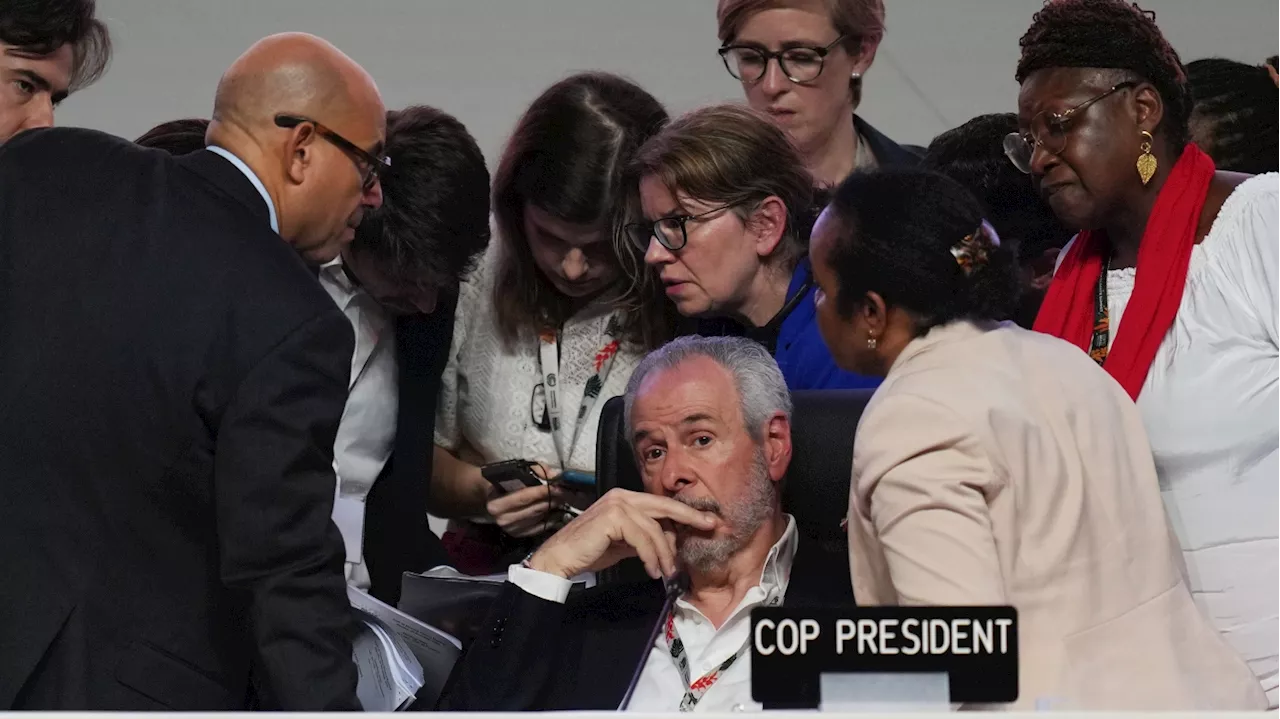
UPDATE: The U.N. Climate Conference in Brazil concluded on November 22, 2025, without reaching a crucial agreement to phase out fossil fuels, the primary cause of global warming. The absence of a formal commitment to transition away from coal, oil, and gas has left many nations disappointed and concerned about the future of climate action.
Dozens of countries, including the United Kingdom, Germany, and numerous developing nations, had demanded a clear roadmap for moving beyond fossil fuels. However, the final agreement failed to mention fossil fuel reduction, emphasizing only the need for “urgent action” on greenhouse gas emissions. André Corrêa do Lago, the president of this year’s conference, acknowledged that many nations were seeking a stronger commitment.
The absence of the U.S. from negotiations has raised eyebrows, as attention shifted to China, the world’s largest emitter of climate pollution.
“There is no mitigation if we cannot discuss transitioning away from fossil fuels,” said Daniela Duran Gonzalez, head of international affairs for Colombia’s Ministry of Environment.
Earlier in the week, over 80 countries had united to push for a fossil fuel roadmap, yet the final talks yielded only modest progress. The agreement emphasizes the necessity for “deep, rapid, and sustained” cuts in emissions but lacks specific strategies for fossil fuel reduction. Experts warn that without addressing fossil fuel dependency, achieving the targets set by the 2015 Paris Agreement—limiting warming to 1.5 degrees Celsius—is nearly impossible.
The conference also highlighted the urgent financial needs of developing nations, which require at least $300 billion annually by 2035 to adapt to climate change impacts. The agreement calls for tripling climate financing for these nations, yet previous commitments have often gone unmet, raising concerns about future funding reliability.
Looking ahead, the creation of a new conference in Santa Marta, Colombia, dedicated to the global phase-out of fossil fuels, has been hailed as a significant outcome of the Brazil talks. Ralph Regenvanu, Vanuatu’s climate change minister, emphasized the importance of this new initiative, stating, “The phasing out is necessary.” Despite the setbacks at the U.N. talks, many nations are committed to pursuing a more aggressive strategy against fossil fuel reliance.
As nations grapple with the ongoing climate crisis, the urgency to address fossil fuel consumption has never been greater. The world watches closely as further discussions unfold, with significant implications for future climate policy and global warming mitigation efforts.