The National Transportation Safety Board (NTSB) has released its preliminary findings regarding a significant incident involving a United Airlines Boeing 737, which collided with a weather balloon at an altitude of 36,000 feet over Utah last month. The impact resulted in considerable damage to the cockpit’s windshield, showering the pilots with glass shards, but the aircraft successfully diverted to Salt Lake City without further incident.
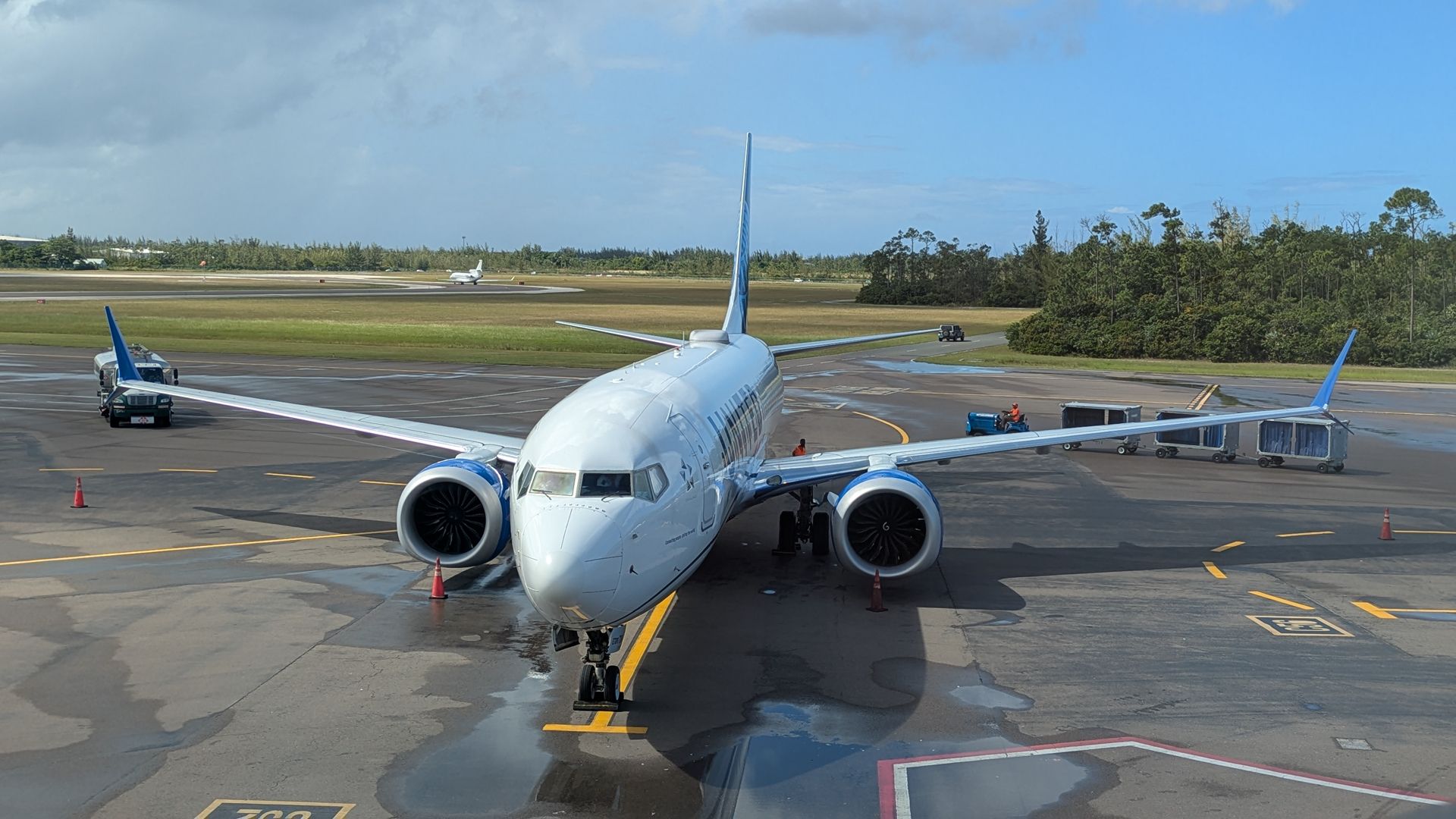
The incident occurred on October 16, 2025, during United Flight 1093, which had departed from Denver, Colorado, and was bound for Los Angeles, California. As the aircraft cruised near Moab, Utah, the captain observed an object on the horizon. Before he could alert the first officer, the Boeing 737 MAX 8 struck the object, leading to a “loud bang” that filled the cockpit with debris.
Investigation Reveals Weather Balloon Collision
According to the NTSB, the object was identified as a high-altitude global sounding balloon (GSB) developed by California-based WindBorne Systems. The company had lost contact with the balloon, which was launched from Spokane, Washington, on October 15, 2025. The NTSB’s radar analysis indicated that the balloon was in the vicinity of the United flight path at the time of the collision.
The NTSB’s report detailed that the GSB was traveling south from Washington through Oregon and Nevada before changing course and crossing into Utah. NTSB Chair Jennifer Homendy noted that the outcome of the collision could have been catastrophic, stating, “It could have been really devastating for the aircraft and those on board.”
Although only the captain sustained injuries—specifically, lacerations to his right arm—other potential damages could have led to a more tragic outcome. Thankfully, cabin pressurization remained stable after the impact, and while the first officer’s window overheat light activated during the event, the situation was controlled.
WindBorne Systems Responds to Incident
In response to the accident, WindBorne Systems emphasized its design philosophy aimed at minimizing damage during such collisions. The company noted that its GSBs are constructed with lightweight materials, avoiding large metal components that could exacerbate impact effects. Measures being implemented include enhancing air traffic alerts and reducing the time balloons spend in commercial airspace.
Aircraft windshields, like the one on the involved Boeing 737, are engineered to endure various impact scenarios, such as bird strikes. The windshield on this aircraft, manufactured by PPG Aerospace, features multiple layers, including a thermally tempered glass pane and specialized interlayers designed to prevent shattering.
Following the collision, the aircraft, identified by registration number N17327, has not returned to service over a month later. Data from Flightradar24 shows that, after diverting to Salt Lake City, the aircraft conducted a brief flight to Chicago Rockford on October 19, 2025, but has remained grounded since.
The damaged windshield has been sent to the NTSB Materials Lab in Washington, D.C., for further examination. As the investigation continues, updates from the NTSB and United Airlines are anticipated to clarify the implications of this unusual incident and the safety measures being adopted to prevent future occurrences.