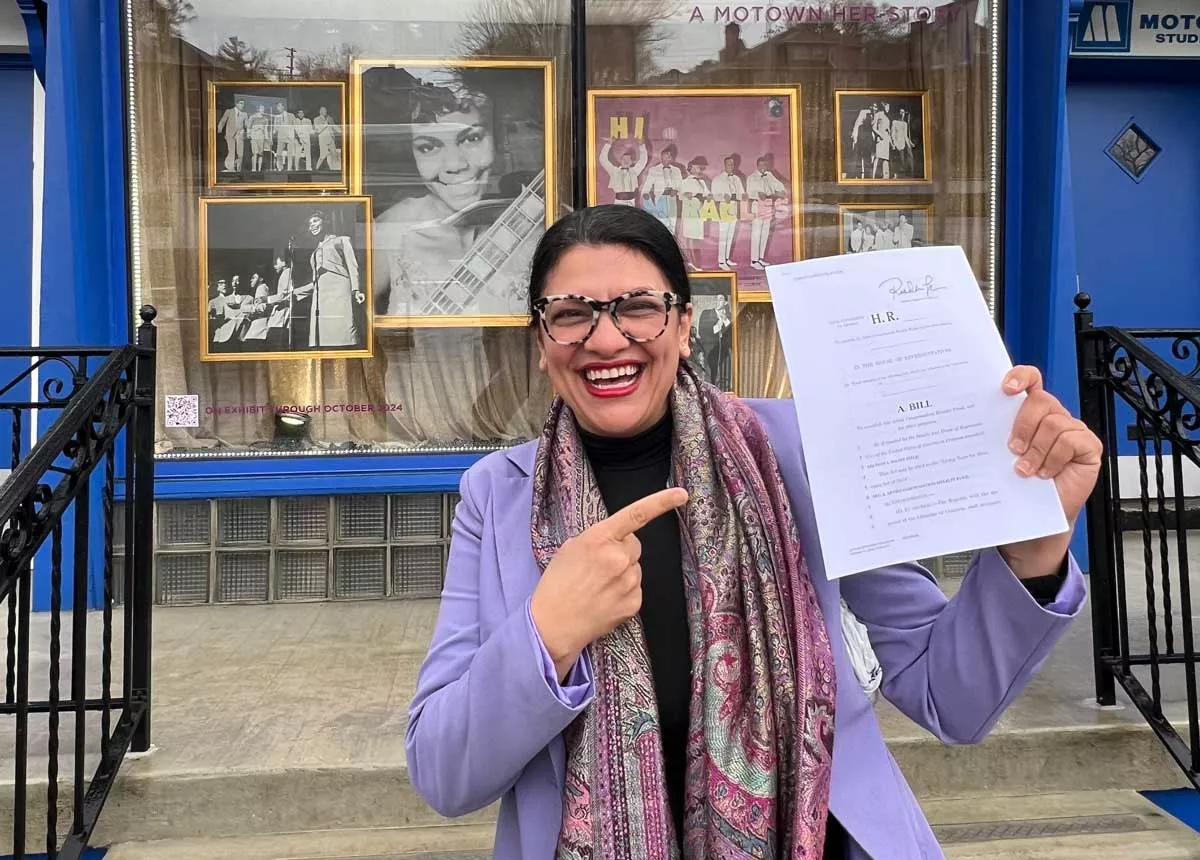
The Detroit City Council unanimously supported the Living Wage for Musicians Act on March 12, 2024. This federal legislation, introduced by U.S. Representative Rashida Tlaib, aims to significantly alter how artists receive payment for their work on digital streaming platforms. Detroit joins other major cities, including New York, in backing this initiative.
Streaming has become the dominant revenue source for the music industry, accounting for approximately 84% of all recorded music revenue in the United States. Despite this, artists often receive minimal compensation for their contributions. For instance, musicians can earn as little as $0.003 per stream, necessitating over 800,000 monthly streams to achieve the equivalent of a full-time job at $15 per hour. Such statistics illustrate the urgent need for reform in the current payment model.
Advocates for the bill highlighted Detroit’s rich musical heritage and the importance of supporting local artists. Marcus Miller, co-founder of the Creative Union, emphasized the potential impact this legislation could have on retaining talent in Detroit. He stated, “With bills like this, we have the opportunity to keep our talent here for the future and actually make a change.”
Planning to travel to Washington, D.C., Miller and fellow supporters aim to advocate for the bill’s passage. Tlaib reintroduced the legislation in September 2023, garnering support from musicians and the United Musicians and Allied Workers union. The proposed framework would establish a new royalty stream directly benefiting artists, distinct from the traditional pro-rata system that typically favors prominent acts and major labels.
The bill proposes a small surcharge on streaming subscriptions, capped between $4 and $10, along with contributions from advertising revenue, to fund an Artist Compensation Royalty Fund. This fund would manage payments to musicians while ensuring that no single track receives an excessive share of the payouts.
Tlaib has articulated the bill’s objective, stating, “It’s only right that the people who create the music we love are paid a living wage, so that they can thrive, not just survive.” Musicians, including Detroit-based producer Shigeto, have expressed support for the initiative, citing it as a necessary correction to a flawed system that has left many artists struggling.
Supporters argue that the implementation of this bill would empower more artists to record and tour, thereby enriching the cultural landscape of cities like Detroit. As the music industry continues to evolve, the push for equitable compensation for artists remains a crucial conversation, underscoring the need for systemic change.