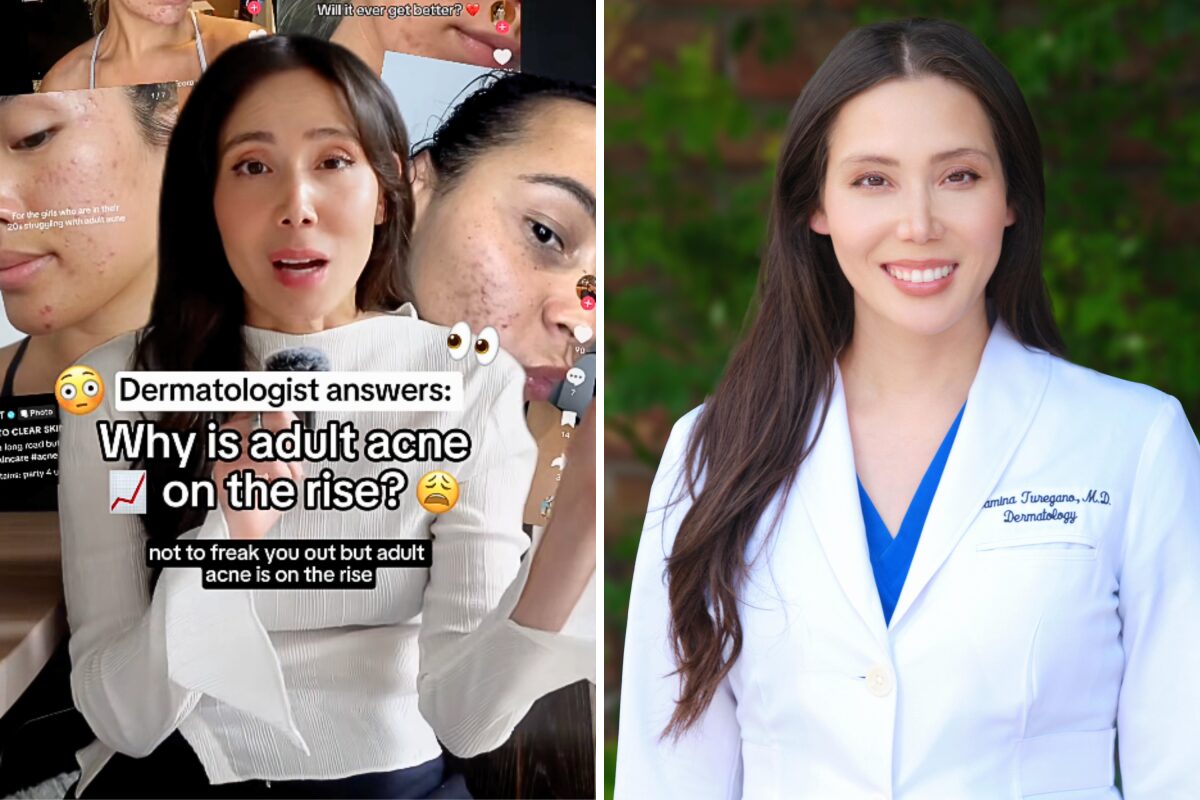
The rising prevalence of adult acne, particularly among women, has captured the attention of dermatologists and health experts. According to Dr. Mamina Turegano, a triple board-certified dermatologist, there may be systemic factors contributing to this trend. Her recent TikTok video has garnered significant views and emphasizes the importance of understanding the environmental and hormonal influences behind this skin condition.
In her September video, which has been viewed over 122,000 times, Turegano highlights that adult acne has been on the rise for the past 20 years. She states, “Fifty percent of women, especially in their 20s, have experienced adult acne, and 35 percent of people experience adult acne.” The American Academy of Dermatology acknowledges that while acne is the most common skin condition in the U.S., affecting up to 50 million Americans annually, the impact on adult women is particularly notable, with up to 15 percent experiencing this condition.
The increase in adult acne is not merely anecdotal; dermatologists report seeing more patients with new breakouts into their 30s, 40s, and beyond. While many associate acne with adolescence, adult cases are often hormonally driven. Factors such as chronic stress, sleep deprivation, diets high in ultra-processed foods, and exposure to environmental chemicals are believed to play significant roles.
Dr. Shamsa Kanwal, a board-certified dermatologist with over 10 years of clinical experience, observed that adult acne is notably more common among women aged 20 to 40. She attributes this to hormonal shifts, chronic stress, and dietary patterns that may spike insulin levels. “In my practice and in conversations with colleagues, adult acne absolutely feels more common,” Kanwal explained.
Adult acne differs from teenage acne, both in appearance and treatment. It often clusters around the lower face, chin, and jawline and can be more inflammatory. Turegano emphasizes that while treatments for both types of acne overlap, there are specific approaches for adult cases. “If acne is painful, scarring, or not improving with over-the-counter products, that’s a good time to see a dermatologist,” she advised.
Turegano, based in New Orleans, approaches skin health holistically, connecting the rise in adult acne to broader systemic health issues. She suspects that endocrine-disrupting chemicals found in plastics, pesticides, and personal care products may contribute to hormonal imbalances. “Hormonal changes at different phases of women’s lives can play a huge role,” she stated.
The causes of adult acne are complex and multifaceted. Everyday triggers such as friction from helmets or tight masks, as well as heavy layering of skincare products, can exacerbate breakouts. Kanwal suggests a comprehensive treatment plan that may include a combination of retinoids, benzoyl peroxide, salicylic acid, and sometimes topical antibiotics or azelaic acid.
The American Academy of Dermatology identifies several leading causes of adult acne, including hormonal changes, stress, and cosmetic products. Turegano underscores the importance of addressing not just the visible symptoms but also the root causes. “Those treatments are often limited to addressing symptoms. Looking at internal, lifestyle, and environmental factors can help address the root causes as well,” she remarked.
In her practice, Turegano advocates for starting with the basics: a gentle cleanser, a non-comedogenic moisturizer, and sunscreen every morning. Following this foundation, she recommends incorporating active ingredients such as retinoids, benzoyl peroxide, and salicylic acid to make a significant impact on skin health.
Ultimately, Turegano aims to broaden the conversation around acne, urging individuals to consider how modern environmental factors might affect both their skin and overall health. “I want people to start thinking about acne through a broader lens,” she concluded.
As the conversation about adult acne continues, it is clear that understanding the interplay of lifestyle, environment, and health is crucial for effective treatment and management.