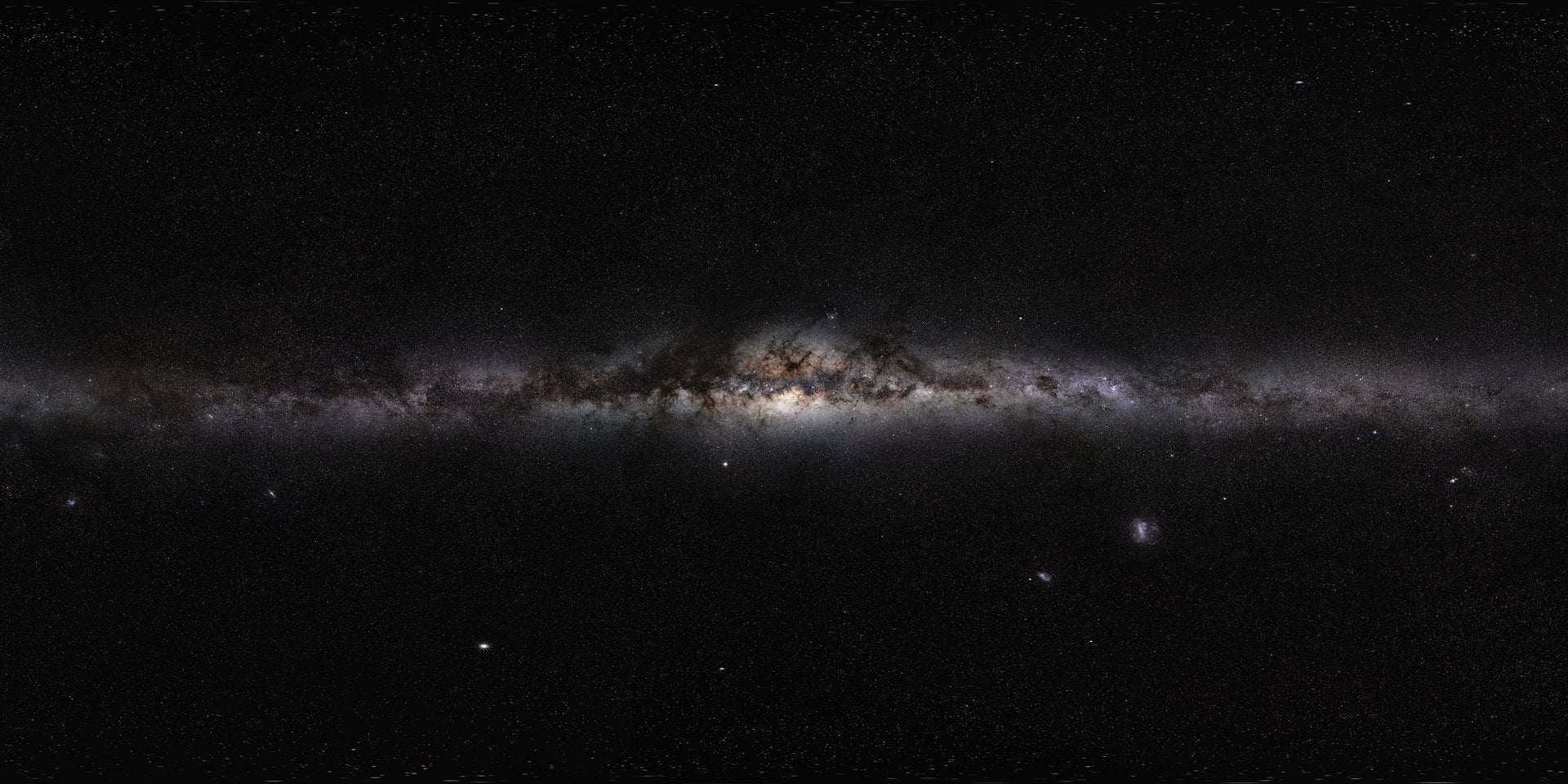
Researchers at the RIKEN Center for Interdisciplinary Theoretical and Mathematical Sciences (iTHEMS) in Japan, in collaboration with the University of Tokyo and the Universitat de Barcelona, have achieved a groundbreaking milestone in astrophysics. They successfully conducted the world’s first simulations of the Milky Way galaxy that accurately represent over 100 billion stars over a span of 10,000 years. This innovative simulation not only surpasses previous models by a factor of 100 in terms of the number of stars but also operates at a speed 100 times faster.
The research team utilized an advanced combination of 7 million CPU cores, machine learning algorithms, and sophisticated numerical simulations. Their findings were published in a paper titled “The First Star-by-star N-body/Hydrodynamics Simulation of Our Galaxy Coupling with a Surrogate Model,” featured in the Proceedings of the International Conference for High Performance Computing, Networking, Storage and Analysis (SC ’25). This model represents a significant advancement for the study of stellar and galactic evolution, providing astronomers with a robust tool for testing theories related to the formation and structure of galaxies.
Breaking New Ground in Galactic Simulations
Simulations capturing the dynamics of individual stars are crucial for validating existing theories about galactic formation and evolution. Traditionally, creating such detailed simulations has been challenging due to the complexity of the forces involved, including gravity, fluid dynamics, supernovae, and the effects of supermassive black holes (SMBHs). Current computational limits have constrained models to about one billion solar masses, which accounts for less than 1% of the stars in the Milky Way.
In practical terms, past simulations required approximately 315 hours (over 13 days) to model just one million years of galactic evolution. Given that the Milky Way is approximately 13.61 billion years old, this translates to over 36 years required to simulate a full billion years of its history. The challenges stem not only from the need for vast computational power but also from the diminishing returns of efficiency as more cores are added.
To overcome these obstacles, researchers led by Hirashima developed an innovative approach, incorporating a machine learning surrogate model. This model utilized high-resolution simulations of supernovae to predict the impact of these explosions on the surrounding gas and dust over a timeframe of 100,000 yearsEfficiency and Implications for Future Research
The team’s model was rigorously tested on the Fugaku and Miyabi Supercomputer Systems, both situated at the RIKEN Center for Computational Science and the University of Tokyo, respectively. The results demonstrated that the new method could simulate the resolution of stars in galaxies containing over 100 billion stars. Remarkably, it accomplished the simulation of one million years of evolution in just 2.78 hours. At this pace, researchers could simulate a staggering 1 billion years of galactic history within just 115 days. These advances offer astronomers a powerful new means to explore and test theories regarding galactic evolution, enhancing our understanding of the universe’s development. Furthermore, the incorporation of AI models into such advanced simulations has broader implications beyond astrophysics. This “AI shortcut” approach could potentially revolutionize other fields requiring complex modeling, such as meteorology, ocean dynamics, and climate science. The implications of this research extend into various domains, showcasing how cutting-edge technology can transform our comprehension of the cosmos and its intricate processes. As the field of astrophysics continues to evolve, tools like this will undoubtedly play a pivotal role in unraveling the mysteries that lie within our universe.