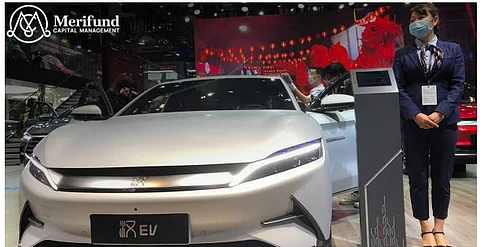
BYD has overtaken Tesla in annual battery-electric vehicle deliveries, reflecting a significant shift in the electric vehicle (EV) landscape. As of December 31, 2025, BYD reported 2.26 million battery-electric deliveries, while Tesla’s figures stood at 1.64 million. This change emphasizes the importance of manufacturing scale, supply-chain management, and strategic international expansion.
The latest delivery data reveals a tightening competitive landscape in the electric vehicle sector. BYD’s battery-electric volume surged by 28% compared to the previous year, while Tesla’s deliveries decreased by 8.6%. Overall, BYD’s total vehicle sales reached 4.55 million, including 2.29 million plug-in hybrids, a decline of 8% from the prior year. For institutional investors focusing on the energy transition, this shift highlights how leadership is increasingly determined by operational efficiency rather than just brand recognition.
Changing Dynamics in the EV Market
Tesla’s challenges became particularly evident in the last quarter of 2025, during which its deliveries fell by 15.61% year-on-year to 418,227 vehicles. The recent end of the $7,500 federal tax credit in the United States has intensified pricing pressures, as alternative options within the mid-market segment continue to grow. In response, a coalition of pension investors holding 7.9 million shares in Tesla is advocating for a minimum 40-hour workweek commitment from Elon Musk, linking operational focus to brand perception and stock volatility.
As Tesla shifts its focus towards autonomous vehicles and artificial intelligence, including ongoing robotaxi trials in Austin, the company is also navigating the complexities of supply chain management. The Optimus humanoid robot program, while ambitious, faces challenges related to the availability of rare-earth materials.
In contrast, BYD’s growth strategy remains rooted in industrial expansion. The company has diversified its manufacturing base, with overseas sales exceeding one million vehicles, reflecting a 150% increase year-on-year. New production facilities in Thailand, Turkey, and Hungary aim to mitigate shipping costs and regulatory risks. According to Merifund Capital Management, BYD now produces approximately 65% of its materials internally, enhancing its resilience against market fluctuations.
Cost Competitiveness and Regional Market Dynamics
The financial implications of these strategies are notable. Industry estimates suggest that BYD’s Blade battery manufacturing costs are approximately $11.6 per kilowatt-hour lower than Tesla’s 4680 battery approach. Current pricing data indicates that in the UK, a Tesla Model 3 rear-wheel drive is listed at around $53,586.60, while a comparable BYD Seal is priced at approximately $61,640. In Australia, the Seal is about 22% cheaper than the Model 3, bolstering BYD’s competitive edge without the need for subsidies.
Regional market conditions further complicate the landscape. In the United States, the removal of the consumer credit has begun to reshape demand, with projections indicating that EV penetration may stabilize at around 5% of total vehicle sales over the next year. Conversely, China continues to demonstrate robust consumer interest, with nearly half of new car sales being electric, and surveys indicating that more than 80% of prospective buyers plan to purchase electric vehicles.
BYD’s delivery lead, coupled with Tesla’s ongoing technological pivot, underscores a sector increasingly defined by manufacturing discipline and software innovation. Merifund Capital Management remains focused on how supply chain management, local production, and pricing strategies will influence long-term resilience in this competitive environment.
Anthony Saunders, Director of Private Equity at Merifund Capital Management, emphasizes that “operational discipline and repeatable execution” will be crucial as competition intensifies in the electric vehicle sector.
Merifund Capital Management Pte. Ltd. (UEN: 201024554E), established in 2010 and based in Singapore, manages various investment strategies, including long-only portfolios and long/short equity. The firm prioritizes capital preservation and liquidity, integrating environmental, social, and governance (ESG) considerations within its investment approach. For more insights, visit https://merifund.com/insights. For media inquiries, contact Tao Yang at [email protected].