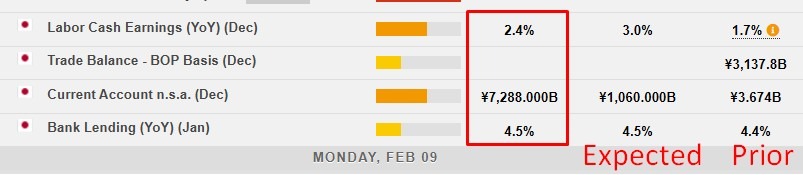
Japan’s latest wage data for December 2023 reveals a troubling trend: while nominal wages are on the rise, real wages continue to decline, putting pressure on the Bank of Japan (BoJ) to adopt a cautious approach to monetary policy. Government statistics indicate that inflation-adjusted real wages fell by 0.1% year-on-year in December, marking a continuous contraction that has now lasted for 12 consecutive months.
Despite the ongoing decline in real wages, nominal pay has shown signs of improvement. Total cash earnings rose by 2.4% year-on-year to ¥631,986, a notable increase compared to November’s revised growth of 1.7%. Regular pay saw a rise of 2.2% year-on-year, while special payments, which primarily include winter bonuses, increased by 2.6%. These figures suggest that companies are providing one-off compensation to help mitigate rising costs.
Wage Growth Remains Mixed
The quality of wage growth presents a more complex picture. Overtime pay saw only a 0.9% year-on-year increase, down from the previous 1.2%. This moderation in overtime pay indicates a potential softening in labor demand within certain sectors of the private market. Overtime trends are closely observed as they serve as a real-time indicator of corporate activity, and this slowdown reflects a degree of caution among employers despite stronger headline wage growth.
On an annual basis, the situation appears even less favorable. Real wages fell by 1.3% in 2025, representing the fourth consecutive year of real wage declines, a trend that began when inflation surpassed the BoJ’s 2% target in 2022. This prolonged reduction in real incomes continues to impact consumption negatively, raising concerns about the sustainability of domestic demand in Japan.
Implications for Bank of Japan Policy
For the Bank of Japan, these latest figures complicate the ongoing policy discussions. Wage dynamics play a crucial role in the BoJ’s assessment of whether inflation can be sustained without the need for significant stimulus. Although nominal pay and base salaries are trending upwards, the persistent decline in real wages suggests that the wage-price cycle remains incomplete.
Market analysts are likely to interpret this report as a sign of easing near-term pressure for further rate hikes following the BoJ’s 25 basis point increase in December 2023 to 0.75%. Policymakers have consistently emphasized the necessity of sustained real income growth before considering further tightening of monetary policy. The December figures provide little reassurance on this front.
In foreign exchange markets, this data reinforces the narrative of gradual normalisation rather than rapid acceleration. Consequently, the yen may experience limited upward movement unless inflation or upcoming spring wage negotiations present clearer signs of improvement. In terms of interest rates, the data supports expectations that the BoJ will proceed with caution, weighing the increase in nominal wages against the ongoing fragility of household purchasing power.