Texas’ environmental regulator has approved what is now considered the largest air pollution permit in the United States for a vast complex of gas power plants and data centers located in Pecos County. Pacifico Energy, a global infrastructure company, announced this week that its 7.65 gigawatt facility, named GW Ranch, will significantly contribute to the state’s expanding energy infrastructure, particularly in the gas sector.
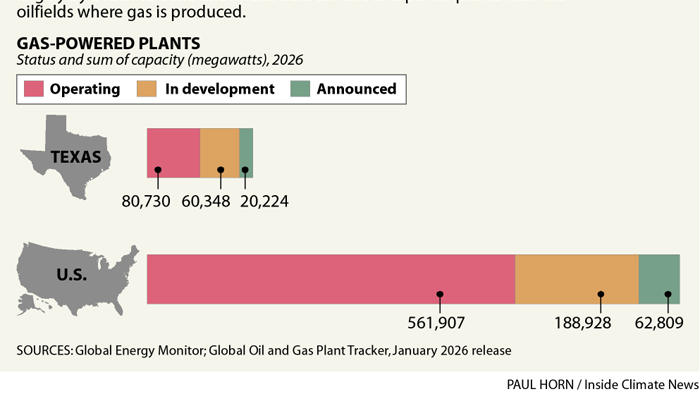
This development is part of a broader trend in Texas, which is emerging as a major hub for gas power projects. According to a recent report from Global Energy Monitor (GEM), the state has seen a surge in gas power development, with nearly 58 gigawatts of new capacity slated for 2025 alone. These projects are closely tied to the rising demand for energy to support data centers, particularly those serving artificial intelligence operations.
The scale of the energy being developed is staggering. For instance, the planned gas power plants in Texas could collectively produce enough energy to power mid-sized cities. Notably, the pipeline of gas projects in Texas now exceeds the peak power demand of the state of California, showcasing the state’s dramatic energy ambitions.
Environmental Concerns and Regulatory Approvals
Critics, including environmental advocates, express concerns about the potential environmental impact of these projects. Jenny Martos, project manager for GEM’s Global Oil and Gas Plant Tracker, noted that “massive fossil fuel infrastructure is being developed, often directly at the source of gas supply, in order to feed speculative AI demand.” The GW Ranch alone is permitted to emit over 12,000 tons per year of regulated air pollutants, which include soot, ammonia, and other harmful substances.
The Texas Commission on Environmental Quality (TCEQ) has issued permits for numerous gas power projects, including Fermi America’s planned 6 gigawatts of capacity near Amarillo. In November, Chevron also announced its first power plant, projected to generate up to 5 gigawatts for AI applications.
In a worrying trend, nearly half of all upcoming gas power projects in Texas—totaling 40 gigawatts of capacity—are intended to directly supply energy to data centers. This has raised red flags among environmentalists who fear the long-term implications of such expansive fossil fuel infrastructure.
Local Impact and Community Response
The approval of these projects has sparked significant local opposition. In Blue, Texas, residents have expressed alarm over the TCEQ’s decision to permit the 1.2 gigawatt Sandow Lakes Power Plant, which is located near North America’s largest Bitcoin mining facility. A local group, Move the Gas Plant, formally requested a public hearing on the air pollution permit but had their request denied with little discussion.
Travis Brown, a spokesperson for the group, criticized the TCEQ’s rapid approval process. “It took them literally 45 seconds to bring it up and deny our request for a hearing,” he stated. Following the approval, construction at the Sandow site commenced quickly, raising concerns among residents about the potential health impacts of emissions from the facility.
As of now, Texas is home to 11 gas power plant projects currently under construction and 102 projects in preconstruction phases, with an additional 28 projects recently announced. If completed, these developments could more than double the state’s existing gas power generation capacity, significantly altering the energy landscape.
According to Gabriel Collins, a researcher at Rice University’s Baker Institute for Public Policy, the GW Ranch could consume between 1 and 2 billion cubic feet of gas per day, representing a substantial portion of the gas produced from the Permian Basin. While Collins notes that not all announced projects will come to fruition, the sheer scale of these proposals indicates a shift in how Texas is approaching energy generation.
The implications of this growth are profound. As Texas positions itself at the forefront of gas power development, the balance between energy demands and environmental sustainability will be crucial in shaping the future of the state’s energy landscape.