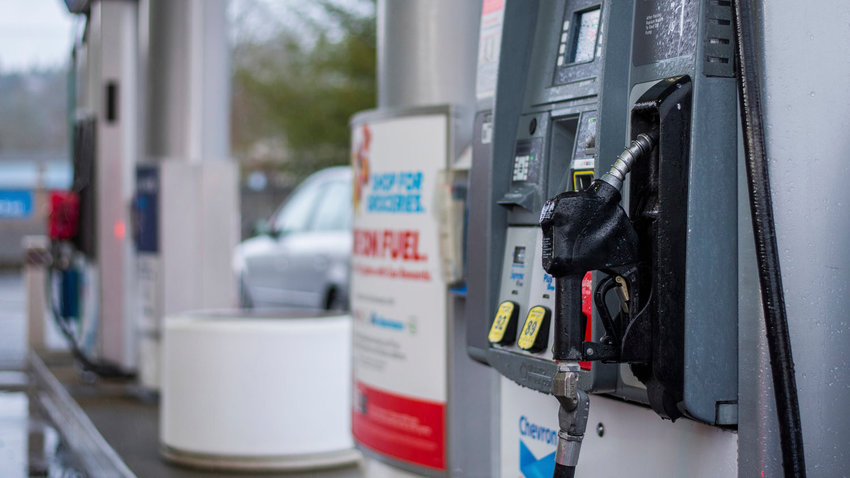
Motorists in Washington State are experiencing gas prices that significantly exceed the national average. While the average price for a gallon of regular unleaded gasoline in the U.S. is approximately $2.81, drivers in Washington are paying around $3.84. Factors such as state-level policies and high taxes contribute to these elevated fuel costs.
According to the American Automobile Association (AAA), only California and Hawaii report higher gas prices, with California averaging $4.27 and Hawaii at nearly $4.41 per gallon. The current situation has drawn attention from energy experts, who cite various reasons for Washington’s persistent fuel price challenges.
In a recent conversation, Patrick De Haan, head of petroleum analysis at GasBuddy, attributed part of the high prices to Washington’s cap-and-trade program, which has effectively become a carbon tax. This program requires refineries to purchase credits to operate, impacting prices for gasoline, jet fuel, and diesel. De Haan noted that Washington and California have some of the highest gasoline prices in the nation due to this regulatory framework.
Impact of the Climate Commitment Act
The 2021 Climate Commitment Act aims to reduce greenhouse gas emissions by capping the total amount of pollution permissible in Washington State. Under this act, businesses must obtain allowances equivalent to their emissions through quarterly auctions managed by the Washington State Department of Ecology. These auctions began in early 2023 and are designed to decrease the number of available allowances over time. This reduction leads to a diminishing supply and consequently higher prices for consumers. To date, the program has raised more than $4.3 billion, with funds allocated to projects promoting clean energy and reducing greenhouse gas emissions.
Despite these ongoing challenges, De Haan pointed out that the average price for gasoline in Washington has decreased by approximately 36 cents over the past month. From an average of just over $4.12 a month ago, the current price still remains $1 higher than the national average.
GasBuddy relies on user-reported data, while AAA combines user reports with professional surveys, which can create slight discrepancies in reported prices. California frequently leads the nation in gasoline prices but is occasionally surpassed by Hawaii and, less commonly, Washington. De Haan explained that California has increased its imports from as far away as Asia, while Hawaii remains limited by competition with only one refinery in operation.
Future Price Expectations
Looking ahead, De Haan anticipates that prices in Washington and other western states could rise. He expects that within the next few weeks, Washington’s prices may begin to stabilize, although he warned that the transition to summer gasoline blends in California could restrict supply to other markets, including Washington, Oregon, Nevada, and Arizona. This could lead to increased prices.
De Haan elaborated on seasonal trends, noting that gas prices typically rise in spring as refineries undergo maintenance in preparation for the summer driving season. Increased demand during warmer weather and events like spring break travel usually contribute to this seasonal uptick. He predicts that by spring, the statewide average in Washington could again exceed the $4 mark.
Despite the challenges, De Haan ended on a cautiously optimistic note, stating, “We expect that gas prices in Washington State will see a slight improvement in 2026 compared to what we observed in 2025.” For now, Washington drivers continue to navigate a complex landscape of high fuel prices shaped by state policies and global market dynamics.