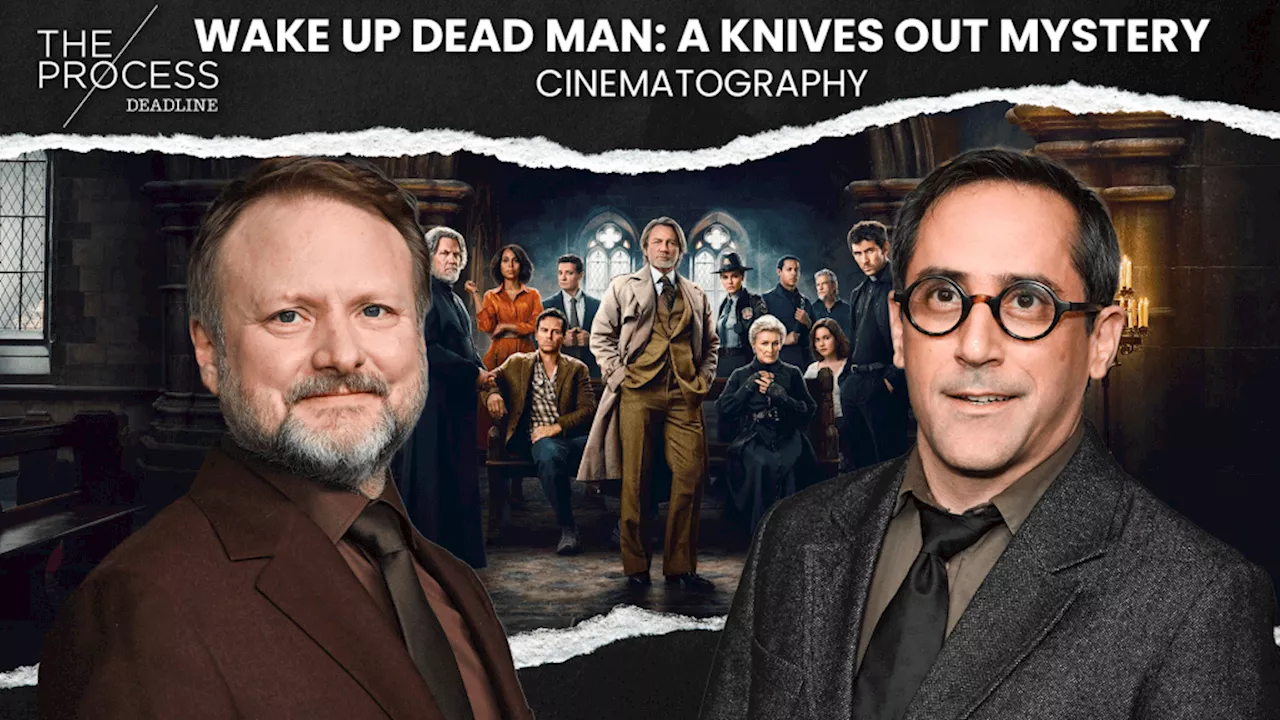
Filmmaker Rian Johnson and cinematographer Steve Yedlin are redefining visual storytelling with their latest project, ‘Wake Up Dead Man.’ The pair are focusing on a more gothic aesthetic, utilizing “natural light shifts” to enhance the film’s mood. Johnson emphasizes that this approach marks a departure from his previous works, stating, “It’s a little more gothic and moodier in its tone, so that defined a lot.”
Collaborating closely, Johnson and Yedlin have crafted an environment where lighting plays a crucial role. Yedlin notes that the film is “more of a lighting movie than a camera movie,” underscoring their innovative use of light to reflect the emotional landscape of the narrative. Early in the production, they envisioned dynamic shifts in lighting that could evoke the changing atmosphere, much like the swift clouds of Johnson’s Colorado upbringing.
The filmmakers harness these natural light changes to serve thematic purposes, particularly in scenes set against the backdrop of a Catholic church. Yedlin explains that light is strategically used to backlight characters during moments of clarity while darkening scenes to convey despair. “I grew up in Colorado where the clouds moved very fast,” Johnson recalls. “You’d be having a conversation, and suddenly it would be like God turned the lights out.” This vivid imagery captures the dramatic potential of natural light in cinema.
One notable scene features a conversation between Detective Blanc and Father Jud. Yedlin highlights how the sunlight dramatically illuminates Jud at a pivotal moment during their discussion on faith. “That one came out so pointed,” he remarks, indicating the effectiveness of their lighting techniques.
In another sequence, Johnson experiments with strobe lighting to create a nightmarish atmosphere. “There’s a bit of a freak-out sequence where I wanted to do this sort of dream effect,” he explains. The collaboration turned playful as Yedlin equipped Johnson with a controller to manipulate the lights, allowing for creative experimentation that resulted in unique visual effects.
Johnson has often referred to his style as “theatrical realism,” but Yedlin emphasizes the balance they strive for between overt theatrics and authenticity. “What we’re trying to do is have it feel really big and theatrical,” he states. Their goal is to create a sense of scale without veering into the realm of artificiality. “We’re trying to be evocative of the actual time of day and weather,” Yedlin adds, noting the range of lighting conditions they depict, from dawn to dusk.
The collaboration between Johnson and Yedlin extends beyond mere aesthetics; it reflects a shared vision for storytelling that resonates with audiences. Their commitment to exploring the interplay of light and emotion promises to deliver a compelling cinematic experience in ‘Wake Up Dead Man.’
As the film approaches its release, anticipation builds not only for its narrative but also for the innovative techniques that Johnson and Yedlin have employed to bring their gothic vision to life. With their focus on natural light and emotional depth, ‘Wake Up Dead Man’ is poised to captivate viewers and challenge conventional filmmaking norms.