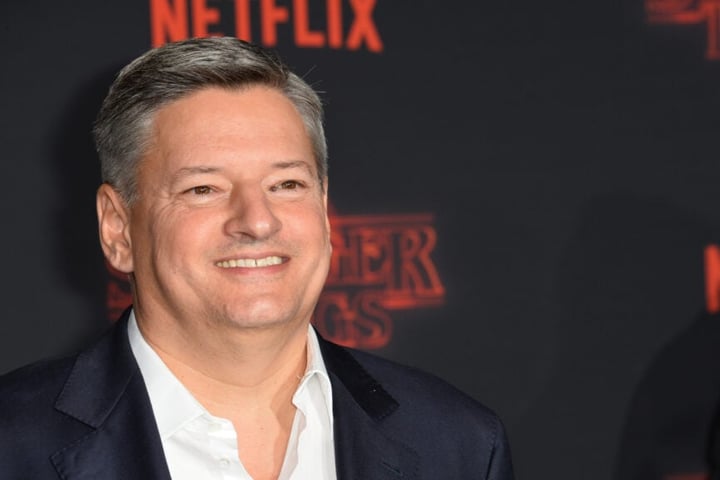
Netflix Inc. co-CEO Ted Sarandos has revealed that he relies on fiction, rather than conventional management literature, as a guiding force in his approach to leadership and decision-making. During an interview on CNBC’s Leaders Playbook, Sarandos expressed that traditional management books do not resonate with him, preferring narratives that delve into human experiences and challenges.
Sarandos, who is 61 years old, cited the novella Typhoon by Joseph Conrad as a pivotal influence in shaping his leadership philosophy. The story centers around a steamship captain and his crew facing a ferocious storm at sea. Sarandos described it as “the most powerful leadership story I’ve ever read,” emphasizing its depth and the wisdom he gains from multiple readings. He noted, “I read it over and over again because I find … I get something different in the book every time I read it.” Initially perceiving the captain as reckless, he later came to appreciate the nuanced lessons about leading through uncertainty, stating, “The real leadership test is: How do you manage through that?”
Sarandos connected the themes of Typhoon to his own experiences at Netflix. A decade after he joined the company as head of content operations, he made a bold move by investing $100 million in Netflix’s first original series, House of Cards. He greenlighted two seasons without the approval of CEO Reed Hastings, reflecting on the potential impact of this decision: “If it succeeds, we could completely transform the business as we know it.”
Insights from Other Business Leaders
During the same discussion, notable figures such as David Risher, CEO of Lyft Inc., and investor Kevin O’Leary shared their personal leadership insights, highlighting the importance of mentorship and strategic thinking. Risher credited his time working under Bill Gates and Jeff Bezos as instrumental in driving Lyft to record performance in 2024. He stated that Gates taught him to focus on weaknesses rather than strengths, while Bezos instilled a strong customer-centric approach. This shift in mindset significantly contributed to Lyft achieving record-high annual ride numbers.
O’Leary, known for his role on Shark Tank, shared a productivity framework inspired by Steve Jobs. He emphasized the effectiveness of completing three critical tasks each day, a method that has enhanced both his work efficiency and business growth.
The late Charlie Munger, vice chairman of Berkshire Hathaway, previously articulated a philosophy that aligns with these insights. He pointed out that Berkshire Hathaway’s success is rooted in moving away from short-term, career-driven thinking, instead adopting an owner’s mindset focused on investing in high-quality businesses with sustainable advantages.
Sarandos’ reflections on leadership through fiction, along with the insights from other industry leaders, underscore a common theme: the ability to navigate uncertainty and adapt to changing circumstances is crucial for success in today’s fast-paced business environment.
This perspective may resonate widely, as leaders across various sectors seek innovative ways to inspire their teams and drive their organizations forward.