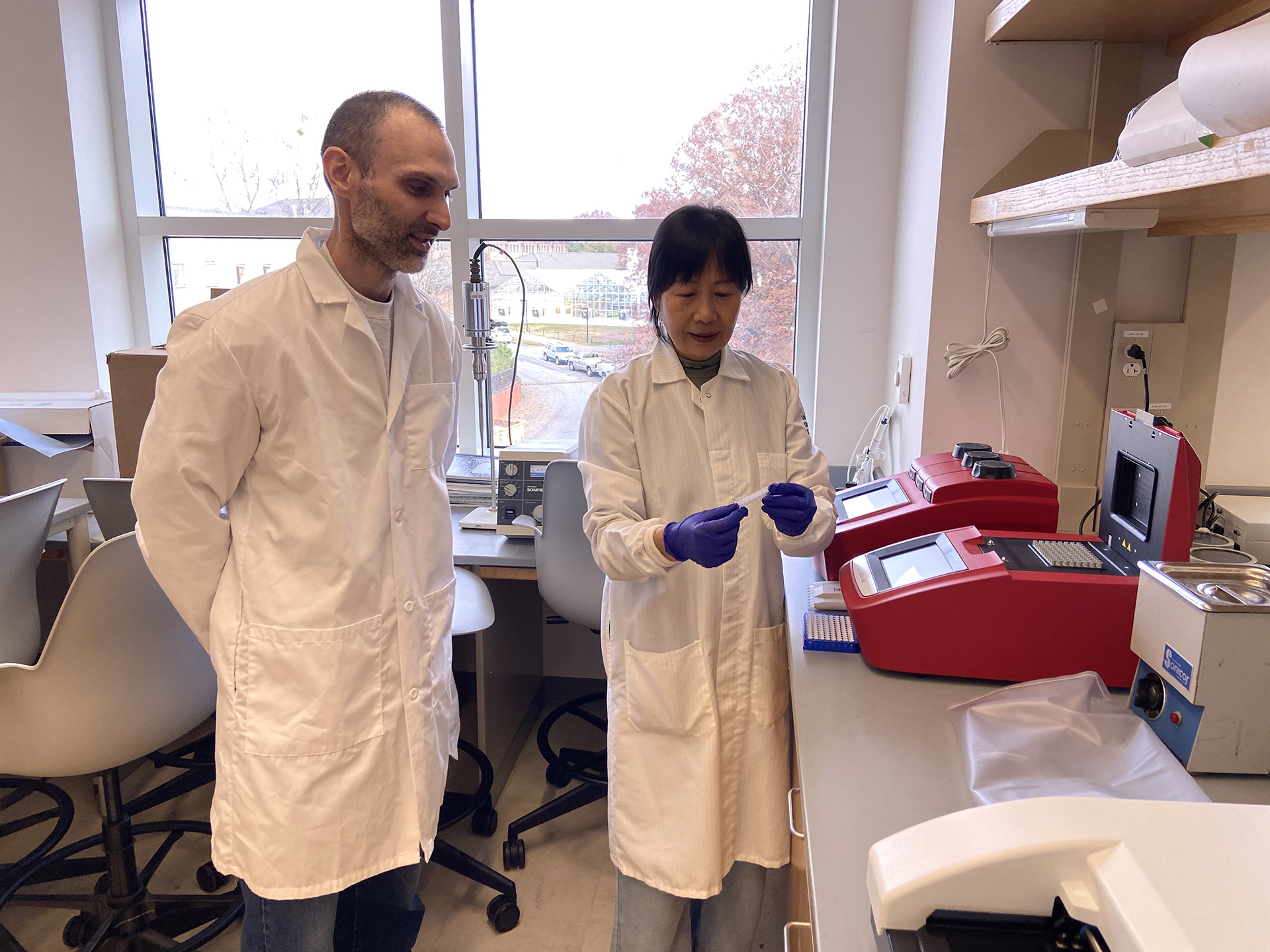
Research from Wageningen University & Research (WUR) in the Netherlands has unveiled significant insights into the evolution of cannabis and its bioactive compounds, such as tetrahydrocannabinol (THC) and cannabidiol (CBD). By resurrecting ancient cannabis enzymes, scientists have opened new avenues for the development of innovative drugs.
The study, led by researchers Robin van Velzen and Cloé Villard, utilized ancestral sequence reconstruction to trace the evolutionary history of cannabinoid-producing enzymes. This method allowed the team to recreate ancient proteins from modern genetic data, revealing how these enzymes once synthesized cannabinoids in early cannabis ancestors.
Insights into Cannabis Evolution
Modern cannabis plants exhibit a wide range of cannabinoid proportions largely influenced by the activity of synthase enzymes. The research highlighted that contemporary enzymes are specialized for producing specific cannabinoids. In contrast, the ancient enzymes demonstrated a generalist nature, capable of producing multiple compounds, including THC, CBD, and cannabichromene (CBC), from a single precursor.
“What once seemed evolutionarily ‘unfinished’ turns out to be highly useful,” said van Velzen. He emphasized the robustness and flexibility of these ancestral enzymes, making them promising candidates for applications in biotechnology and pharmaceuticals.
While THC and CBD have been the primary focus of cannabis research, CBC is emerging as an important compound that has yet to receive adequate attention. Modern cannabis varieties typically contain less than 1% CBC, complicating efforts to study and produce it at scale. “At present, there is no cannabis plant with a naturally high CBC content,” noted van Velzen. The introduction of the ancient enzyme into cannabis plants could potentially lead to new medicinal varieties rich in CBC.
Potential Medical Applications
Preliminary studies have suggested that CBC may exhibit anti-inflammatory, anticonvulsant, and antibacterial properties, although its therapeutic potential is less understood compared to THC and CBD. The findings from this research indicate that the resurrected enzymes were easier to produce in microorganisms, such as yeast cells, than their modern counterparts. This efficiency may allow for the production of rare cannabinoids without the need for extensive plant cultivation.
The research team explained, “Through rational engineering of these ancestors, we designed hybrid enzymes which allowed identifying key amino acid mutations underlying the functional evolution of cannabinoid oxidocyclases.” This innovative approach not only enhances understanding of cannabinoid enzymes but also contributes to future breeding and medicinal applications.
The study, which offers a comprehensive look at the origin and evolution of cannabinoid oxidocyclases, was published in the Plant Biotechnology Journal. The implications of these findings could significantly impact both research and drug development, paving the way for novel cannabis-based therapies.