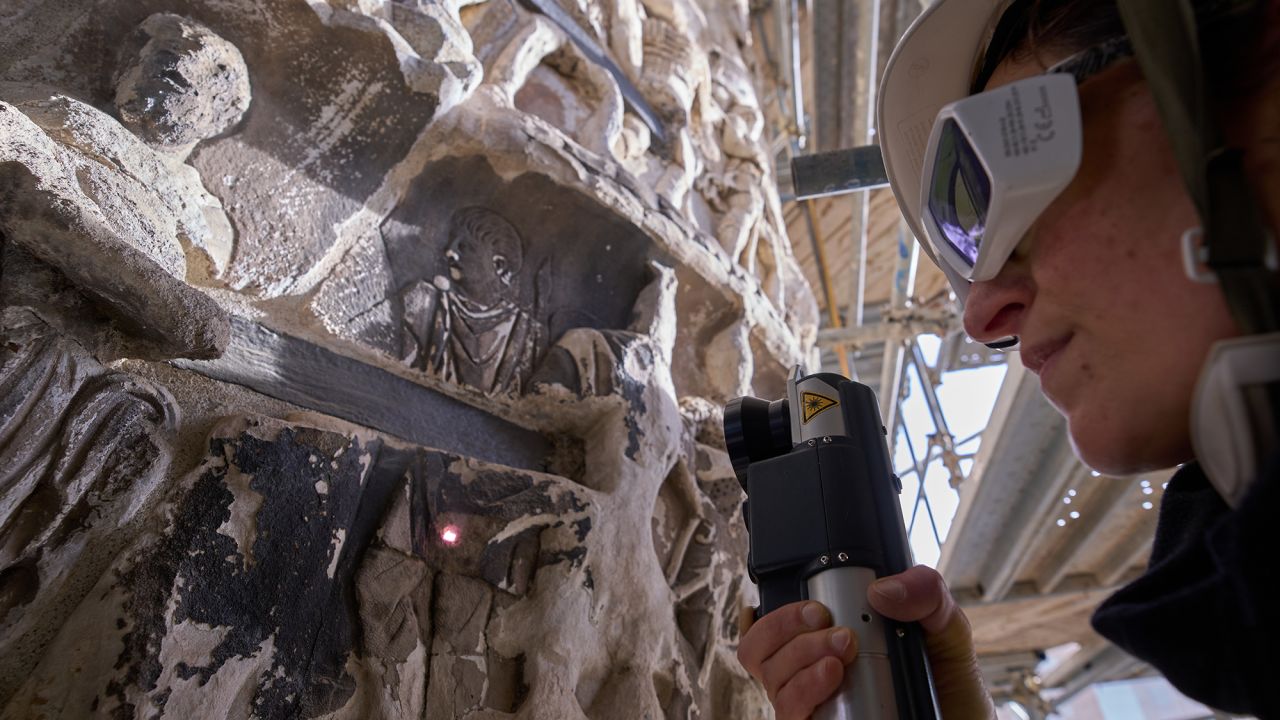
The Column of Marcus Aurelius, a monumental structure in the heart of Rome, is undergoing a sophisticated restoration process utilizing advanced laser technology. This ancient column, which was constructed between 180 CE and 193 CE, stands at 100 feet tall and features intricate carvings that depict the military campaigns of Emperor Marcus Aurelius. The restoration project, involving a team of 18 specialists, aims to preserve this significant piece of history for future generations.
Innovative Restoration Techniques
During a recent visit, CNN journalist Ben Wedeman reported on the high-tech methods employed in the cleaning and restoration of the column. The team has been utilizing state-of-the-art lasers to carefully remove layers of grime and pollution that have accumulated over centuries. This technique not only ensures a thorough cleaning but also minimizes the risk of damage to the original marble, a crucial factor considering the column’s historical significance.
The use of lasers represents a shift towards more precise and less invasive restoration methods. Traditional cleaning methods often involved harsh chemicals or abrasive techniques that could harm the delicate surface of the marble. By contrast, laser technology allows restorers to target specific areas without affecting the overall integrity of the monument.
Project Timeline and Impact
The restoration work is expected to be completed by early 2026. This timeline reflects the meticulous nature of the process, as each detail of the column is handled with care. As the project progresses, it is anticipated that the restored column will not only enhance the aesthetic appeal of the site but also attract more visitors to this iconic landmark.
The Column of Marcus Aurelius serves as a reminder of Rome’s rich history and its contributions to art and architecture. By investing in such restoration projects, authorities emphasize the importance of preserving cultural heritage for educational and tourism purposes. The use of innovative technology in this context highlights a broader trend in heritage conservation, where modern methods are increasingly integrated into traditional practices.
This restoration not only aims to clean the column but also to educate the public about the history it represents. Each carving tells a story, and restoring its visibility allows for a renewed appreciation of the artistry and craftsmanship of ancient Roman civilization. As the project unfolds, it will be interesting to see how the combination of tradition and technology continues to shape the preservation of historical sites around the world.