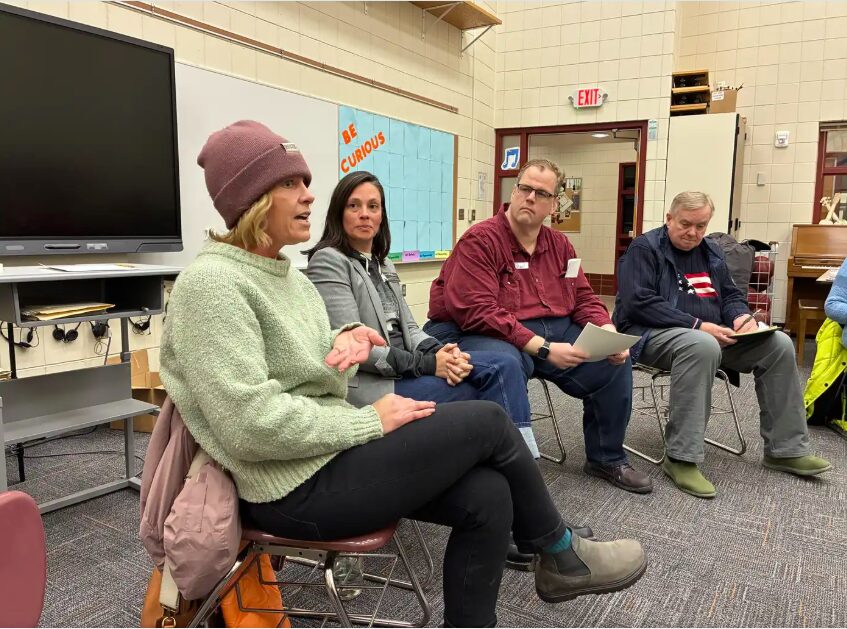
Minnesota state legislators are actively engaging with residents in rural areas to address pressing healthcare challenges. As lawmakers prepare for the upcoming legislative session set to begin in February 2024, they are meeting with communities across the state to directly understand the issues affecting healthcare accessibility and affordability in these regions.
Since October 2023, legislators have visited towns including Northfield, St. Peter, St. Cloud, Red Wing, and Winona, with plans to hold additional listening sessions in Hermantown and Moorhead. Kristi Pursell, a Democratic-Farmer-Labor (DFL) state representative from Northfield, emphasized the importance of ensuring that voices from greater Minnesota are heard. “I wanted to make sure that people in greater Minnesota felt listened to and that our particular struggles don’t go unnoticed just because it’s tough to get to the capital,” Pursell stated.
The healthcare landscape in rural Minnesota has become increasingly challenging. Recent closures of hospitals and clinics have intensified the crisis. Notably, in December 2023, Mayo Clinic shut down six rural clinics in southeastern Minnesota, and Allina Health announced the closure of its birthing center in Faribault. Compounding these issues, health insurance premiums in rural areas often exceed those in the Twin Cities metro region.
Residents shared their personal experiences during the Winona listening session. Janet Hilliker, a 77-year-old from Winona, described her struggle to secure an in-network mental health appointment, revealing that her local hospital had a two-month wait. To receive timely help, she opted to pay out-of-pocket for a private provider, which was financially burdensome. “The fact that our really good hospital doesn’t have mental health opportunities open as soon as you really need them, that’s just appalling to me,” Hilliker remarked.
Another resident, Alex James, voiced similar frustrations. He and his girlfriend have faced significant difficulty finding a local dentist who accepts her Medicaid insurance. After months of searching for care to address her chipped tooth, they found options only in the metro area, over two hours away.
The challenges extend beyond individual access to care. Rural residents, particularly farmers, often rely on purchasing coverage through the health insurance marketplace, such as MNSure. The expiration of tax credits at the beginning of January 2024 has further exacerbated affordability issues for many Minnesotans. This change is particularly troubling for residents in southern Minnesota, where premiums are already higher due to Mayo Clinic’s dominant position in the healthcare market.
At the Winona session, Pam Hartwell, a small family farmer from nearby Dresden, shared her struggles to afford marketplace insurance. She explained that part-time employment, which lacked health benefits, has left her uninsured for much of the past 13 years. “I’m a 56-year-old woman, and things on your body just start breaking down. And when you don’t have healthcare, you don’t have a regular physician,” Hartwell noted.
Legislators actively listened to these concerns, asking questions and expressing their own frustrations with the healthcare system. Alongside Pursell, Aaron Repinski, the Republican representative for Winona, participated in the discussions, as did his predecessor Gene Pelowski and Tina Liebling, a Democratic representative from the metro area. Repinski highlighted the current tie in the Minnesota House of Representatives, which creates an opportunity for negotiation and compromise. “Hopefully we can work across the aisle,” he stated.
Pursell underscored the goal of these sessions: to foster understanding of the diverse needs across the state and to find common ground. “I wanted to provide all of us with a similar context,” she explained. “Now that the nine or ten different colleagues of mine have heard these stories, we have a common baseline for saying we know that this is a problem, and so now let’s try to fix it.”
As legislators continue to engage with rural communities, the hope is that these efforts will lead to tangible solutions that address the unique healthcare challenges faced by residents in Greater Minnesota.