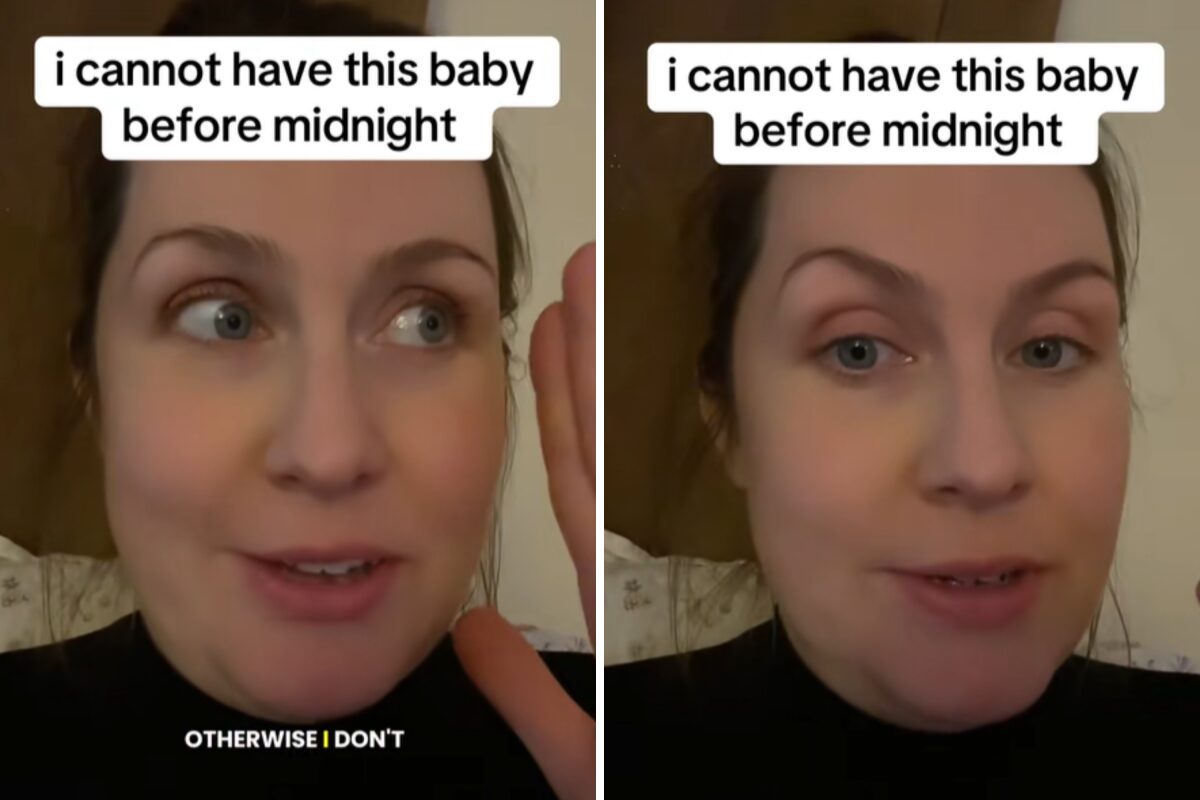
A pregnant woman’s urgent plea to avoid giving birth before midnight has captured widespread attention on social media. Al Sienkiewicz, who shares her experiences as @tales_of_a_working_mama on TikTok, expressed her anxiety over potentially missing out on crucial parental leave benefits. If her baby arrived before midnight on December 9, she would lose access to federally protected leave and full pay from her employer, forcing her back to work just six weeks after giving birth.
During a prenatal appointment on December 9, doctors informed Sienkiewicz that she was already four centimeters dilated. At 38 years old, she was aware that labor could progress rapidly with her second child. “I went home and didn’t move,” she told Newsweek. “I had to make it to midnight to be fully qualified for benefits and pay.” Sienkiewicz had started a new job on that very day, unaware of the precarious timeline she was about to navigate.
The couple, who also have a two-year-old son, had planned for a second child, but the pregnancy advanced quicker than anticipated. Initially due on December 21, the date shifted to December 15 as the baby’s growth indicated an earlier arrival. Sienkiewicz had kept her pregnancy private at work until informing human resources, where she learned the narrow margin for her parental benefits.
To qualify for the Family and Medical Leave Act (FMLA), which allows eligible employees up to 12 weeks of unpaid leave for family reasons, she needed to give birth after December 9. If she delivered before that date, she would only be entitled to six weeks of New York State disability at 60 percent pay, with no job protection or extended leave.
As the day wore on, anxiety mounted. Doctors had warned that labor could begin within days. Sienkiewicz planned to treat herself to a pedicure, but the thought quickly turned into a distant luxury. “As the day progressed, I began to feel more anxious,” she recounted. “I was panicking, asking questions like, what are we going to do for childcare for a newborn, and how will we pay bills and live with a smaller income?”
The overwhelming pressure led her to express her frustrations online. Her TikTok video resonated with many, garnering over 3.5 million views and prompting a flood of comments from fellow mothers across the United States who empathized with her plight. Some viewers from outside the U.S. offered a different perspective, noting the stark contrast to parental leave policies in their countries. “This is dystopian,” one commenter wrote, while another stated, “I’m too Australian for this.”
Reflecting on the response, Sienkiewicz said, “I was thankful and surprised and had all sorts of emotions, including resentment at the system. I’m lucky, but many women and families aren’t and have been in the same situation with difficult outcomes.”
As the evening progressed, she posted two more updates and eventually went to bed. At 01:00 on December 10, contractions began. By 03:45, she was admitted to labor and delivery. Her baby arrived quickly after midnight, completing the timing just as she had hoped. “Baby understood the assignment,” she added, highlighting the relief and gratitude she felt at having navigated such a stressful experience.
Sienkiewicz’s story underscores the challenges faced by working parents in the U.S. as they juggle employment and family needs under tight deadlines. The viral response has sparked discussions about the need for more supportive policies that prioritize the well-being of families. As this narrative unfolds, many continue to advocate for reforms that would ease the burden on parents navigating similar situations.