Back pain affects many individuals, often leading to discomfort that hinders daily activities. To address this common issue, certified yoga therapist Jillian Pransky offers a simple two-move yoga routine designed to relieve tension and restore mobility. These restorative exercises focus on the psoas muscle, which is often a significant contributor to back discomfort.
Understanding the root cause of back tension is essential. According to Pransky, stress plays a crucial role in this issue. The psoas muscle, which connects the legs to the spine, is particularly sensitive to stress, contracting rapidly in response to feelings of anxiety or being overwhelmed. When this muscle remains activated for extended periods, it can lead to chronic tension in the back and contribute to other issues, such as hip pain and digestive discomfort.
In addition to stress, prolonged sitting, high-heeled footwear, and consistent walking on hard surfaces can shorten the psoas muscle. This shortening can pull on the spine, exacerbating back pain. Therefore, finding ways to relax and stretch the psoas is vital for minimizing discomfort.
Two Restorative Yoga Exercises
Pransky’s two recommended exercises come from restorative yoga, a practice that focuses on relaxation and gentle movements. The following poses target the psoas and are particularly effective for releasing tension:
1. **Sphinx Pose and Crocodile Pose**
Begin by lying on your belly and transitioning into Sphinx Pose, where your forearms rest on the ground and your chest is lifted. This position helps to create space in the front body while supporting the spine. Allow your hips to remain heavy as you inhale deeply.
Next, move into Crocodile Pose by bending one knee out to the side, resembling a resting tree pose. Rest your cheek on the ground and let your body weight sink into the mat. Focus on your breath, allowing it to flow through your pelvis and spine. Repeat this sequence for two to three rounds of breath before switching sides.
This combination of poses helps calm the psoas muscle, which is often at the heart of back tightness. The gentleness of these movements encourages the body to transition from guarding to releasing, which is essential for effective tension relief.
Pransky emphasizes that this sequence allows the body to “fully surrender,” reinforcing relaxation and alleviating lingering tension in the psoas and lower back.
2. **Child’s Pose**
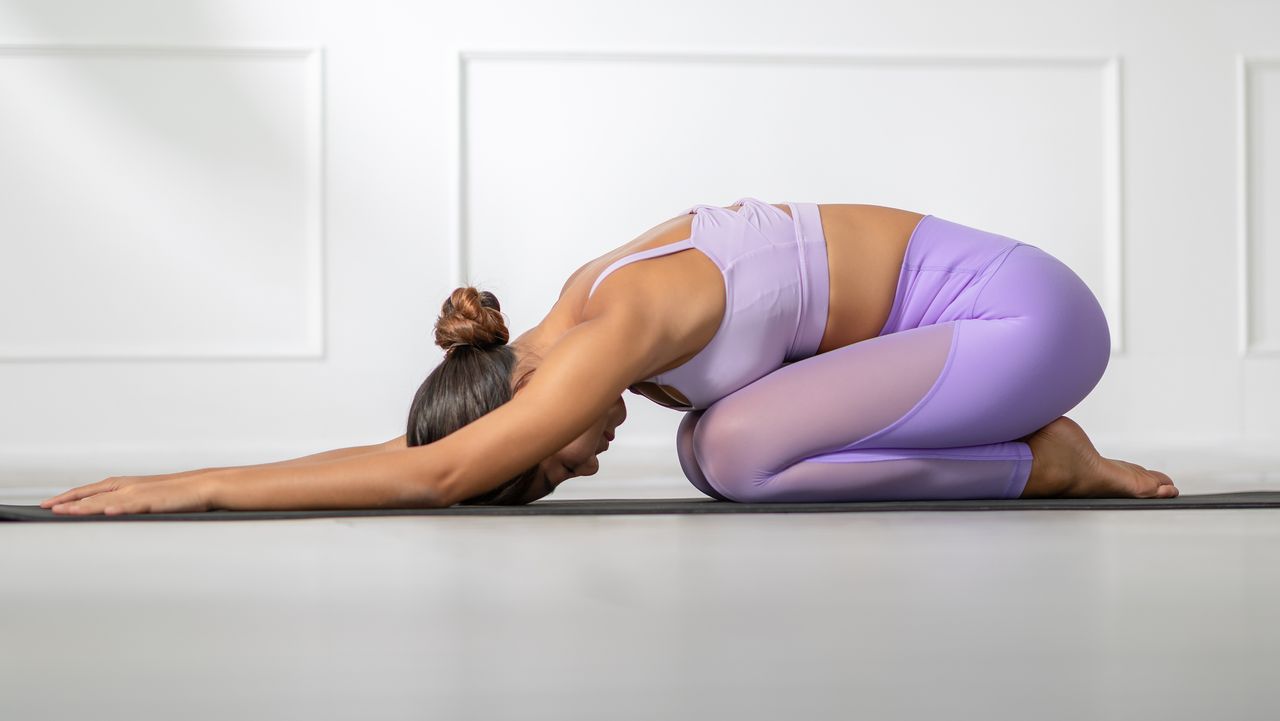
The next exercise is Child’s Pose, which starts with a kneeling position where your big toes touch and your knees are apart. Extend your arms forward and lower your torso between your thighs, resting your forehead on the mat. Focus on slowing and deepening your breath, holding this position for one to three minutes.
Child’s Pose effectively eases tension in the lower back and surrounding muscles. Although it does not directly stretch the psoas, the relaxation of surrounding areas helps the muscle to unwind indirectly. This forward fold encourages the body to shift into a calmer state, allowing for recovery after the more active psoas-focused work.
As Pransky notes, this posture helps the body “integrate the effects of previous movements while offering grounding and a sense of security.”
Incorporating these two restorative yoga poses into a daily routine can significantly enhance mobility and reduce back pain. By understanding the connection between stress and physical tension, individuals can take proactive steps towards better back health.