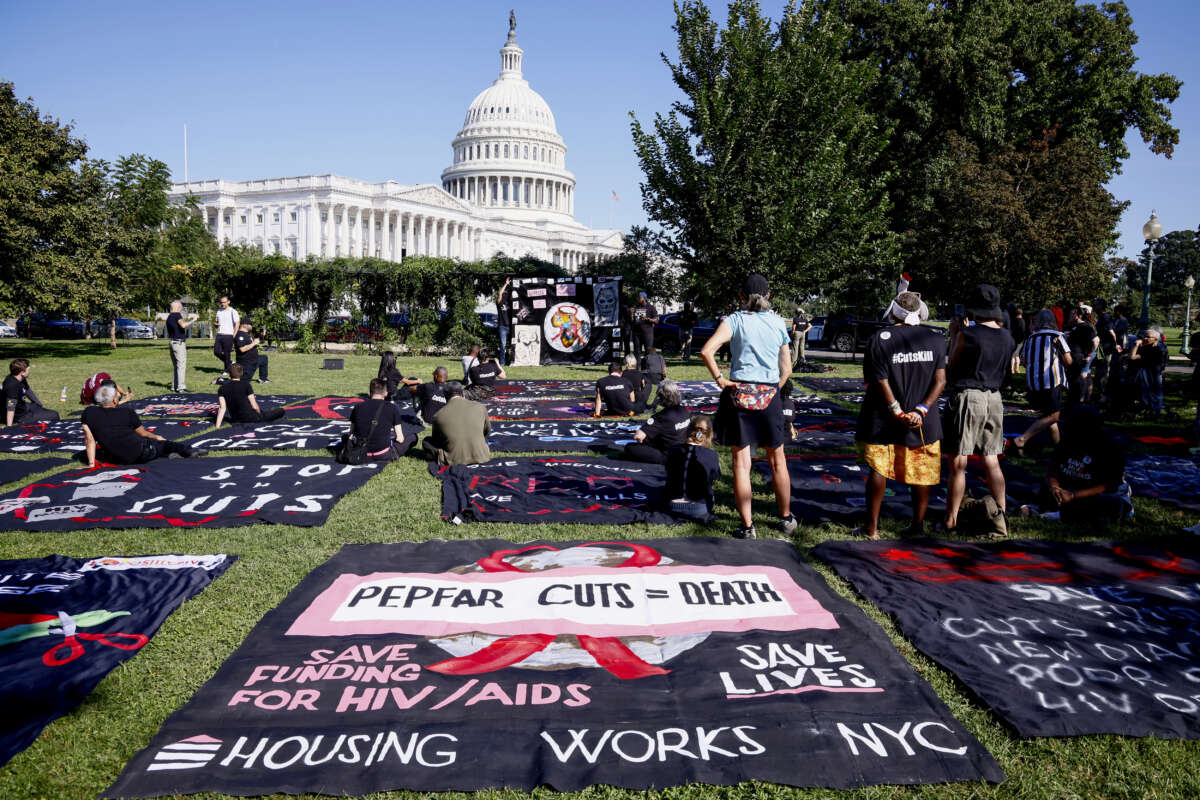
Public health experts warn that significant cuts to federal HIV programs in the United States threaten to reverse decades of progress in treatment and prevention. The proposed changes, attributed to the Trump administration, could dismantle key initiatives just as advancements in medical science are making it easier for patients to manage HIV. Experts express alarm that the ongoing budget cuts will have devastating consequences for millions of Americans living with the virus.
In recent months, the federal government has moved to eliminate various funding sources that support essential HIV services. Notably, the Centers for Disease Control and Prevention (CDC) faces proposed reductions that would impact its ability to monitor new HIV cases nationally and distribute funds to state health agencies. Experts indicate that these cuts could lead to unchecked outbreaks of the virus across the country.
Perry Halkitis, dean of the Rutgers School of Public Health, described the current climate for HIV-positive individuals as “depressing.” He noted that the progress made toward ending the AIDS epidemic has been overshadowed by the potential loss of funding. Approximately 40% of Americans living with HIV currently rely on Medicaid for health coverage, and cuts to this program are expected to exacerbate their vulnerability.
The situation is particularly dire at the state level. For instance, one of the largest historically Black medical schools in Tennessee has lost $2 million in federal HIV research funding. Advocates fear these reductions will strip away foundational support for HIV services nationwide, jeopardizing the hard-won gains made over the years.
Funding cuts coincide with the introduction of a new twice-yearly dose of pre-exposure prophylaxis (PrEP), a critical medication for preventing HIV transmission. While the Food and Drug Administration approved this treatment in 2023, concerns remain about affordability for uninsured populations. The anticipated loss of health care coverage due to federal budget cuts could impede access to this potentially life-saving medication.
In a budget proposal, the White House suggested shutting down crucial HIV prevention and surveillance efforts at the CDC. Congressional Republicans have taken it a step further by proposing to eliminate the federal program initiated during Trump’s first term, which aimed to significantly reduce new HIV infections. This includes potential cuts to the Ryan White HIV/AIDS Program, which serves as a safety net for those who lose their health coverage.
Matthew Rose, a senior public policy advocate at the Human Rights Campaign, expressed shock at the unprecedented hostility toward HIV prevention efforts. He emphasized that the current proposals break with a long-standing bipartisan consensus that once characterized HIV as a shared concern rather than a political issue.
Under Trump’s first term, initiatives were put in place to provide free PrEP to uninsured Americans. His administration even pledged to end the HIV epidemic by 2030. However, experts now observe a stark shift in priorities, attributing this change to an influx of new staff less committed to public health initiatives.
The new administration exhibits a renewed focus on rolling back rights for vulnerable populations, including transgender individuals, who are disproportionately affected by HIV. The CDC recently endorsed a new PrEP option that does not explicitly address the needs of transgender patients, raising concerns among health advocates. Experts fear that this exclusion could hinder access to essential treatments for high-risk groups.
“The communities we serve are under direct attack on so many fronts,” said Jeremiah Johnson, executive director of PrEP4All. He pointed out that public health is facing unprecedented challenges, including a growing distrust in health institutions. Johnson remains cautiously optimistic about the possibility of ending the HIV epidemic but warns that the current trajectory may lead to a resurgence of the virus.
According to a study conducted in 2021, the average lifetime HIV-related medical costs for an individual exceed $420,000. If funding sources like the Ryan White program and Medicaid are eliminated, many HIV-positive individuals will confront overwhelming medical expenses without support.
As mounting pressures threaten access to health care, Lyndel Urbano, senior director of public policy at Amida Care, highlighted the critical need for accessible HIV treatment and prevention mechanisms. He noted that while advancements in medical interventions have transformed HIV from a death sentence to a manageable condition, barriers to access could reverse these gains.
The potential fallout from funding cuts could leave many Americans suffering needlessly, despite the availability of effective treatments and preventive measures. The urgency of this situation calls for renewed advocacy and support for public health initiatives to safeguard the progress made in combating HIV in the United States.