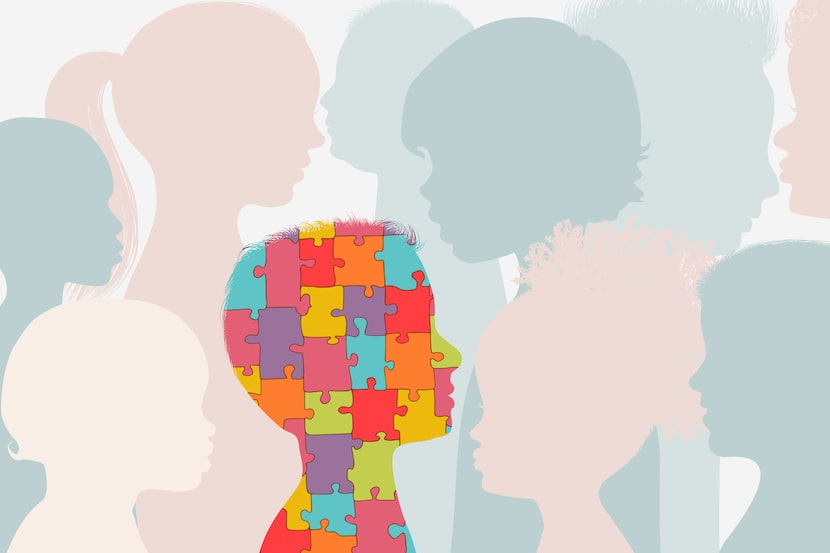
Awareness of Autism Spectrum Disorder (ASD) is growing, with approximately **1 in 31 children** in the United States affected, according to the latest estimates from the **Centers for Disease Control and Prevention**. This increasing prevalence has prompted a shift in societal understanding, emphasizing that individuals with autism are not defined by their condition but are simply different, possessing unique strengths and talents.
The perception of autism has evolved significantly. Initially, many viewed the “D” in ASD as a label, categorizing individuals as disordered or less capable. This narrow perspective often overlooks the remarkable abilities of those on the high-functioning end of the spectrum. Recent interactions with individuals like **Temple Grandin**, a renowned advocate for autism and a professor at **Colorado State University**, have illuminated the potential within this community. Grandin emphasizes that individuals with autism are “not less, but different,” and her own journey showcases how autism can be reframed as a strength rather than a limitation.
Celebrating Unique Perspectives
Grandin’s work provides invaluable insights into animal behavior, illustrating how her autism has equipped her with an extraordinary ability to perceive patterns that others may miss. This ability to find order in chaos highlights the strengths often inherent in those with ASD. While the spectrum is broad and some individuals face significant challenges, it is essential to recognize that those with autism, regardless of their level of functioning, do not fit into a single narrative.
Another historical figure who exemplifies this diversity is **Opal Whiteley**, a child author from the early 20th century. Her journals reveal a deep connection to nature and language, showcasing a vivid inner world that was frequently misunderstood by society. Despite her challenges, Whiteley’s heightened sensitivity and imaginative thinking allowed her to express emotions and insights with exceptional clarity. Both Grandin and Whiteley illustrate the richness of experiences that individuals with ASD can offer to the broader community.
The insights gained from these figures extend beyond academic understanding. They remind us that autism can be a bridge, providing a unique perspective on human perception. Engaging with those on the spectrum fosters a deeper appreciation for the complexities of existence and highlights the value of diverse viewpoints.
A Personal Journey of Understanding
The conversation surrounding autism became even more personal for **Reg Grant**, a retired senior professor emeritus at **Dallas Theological Seminary**, with the birth of his grandson, Evan, who has ASD. Despite the generational gap, Grant finds himself learning from Evan, discovering the world through his eyes. Their shared experiences reveal new mysteries, wonder, and beauty often overlooked in everyday life.
Figures like Grandin, Whiteley, and Evan serve as reminders that autism is not simply a challenge to overcome but a unique lens through which to view the world. By listening to those who navigate the in-between spaces of perception, society can move beyond superficial understanding, fostering an experiential grasp of autism and enriching collective human experience.
This journey illustrates that differences, when embraced, can enhance our understanding of the world and the myriad of perspectives it encompasses. Grant’s reflections affirm that embracing this diversity not only benefits those with autism but also enriches the lives of everyone around them. By celebrating the unique talents and insights of individuals with ASD, society can cultivate a more inclusive and compassionate environment for all.