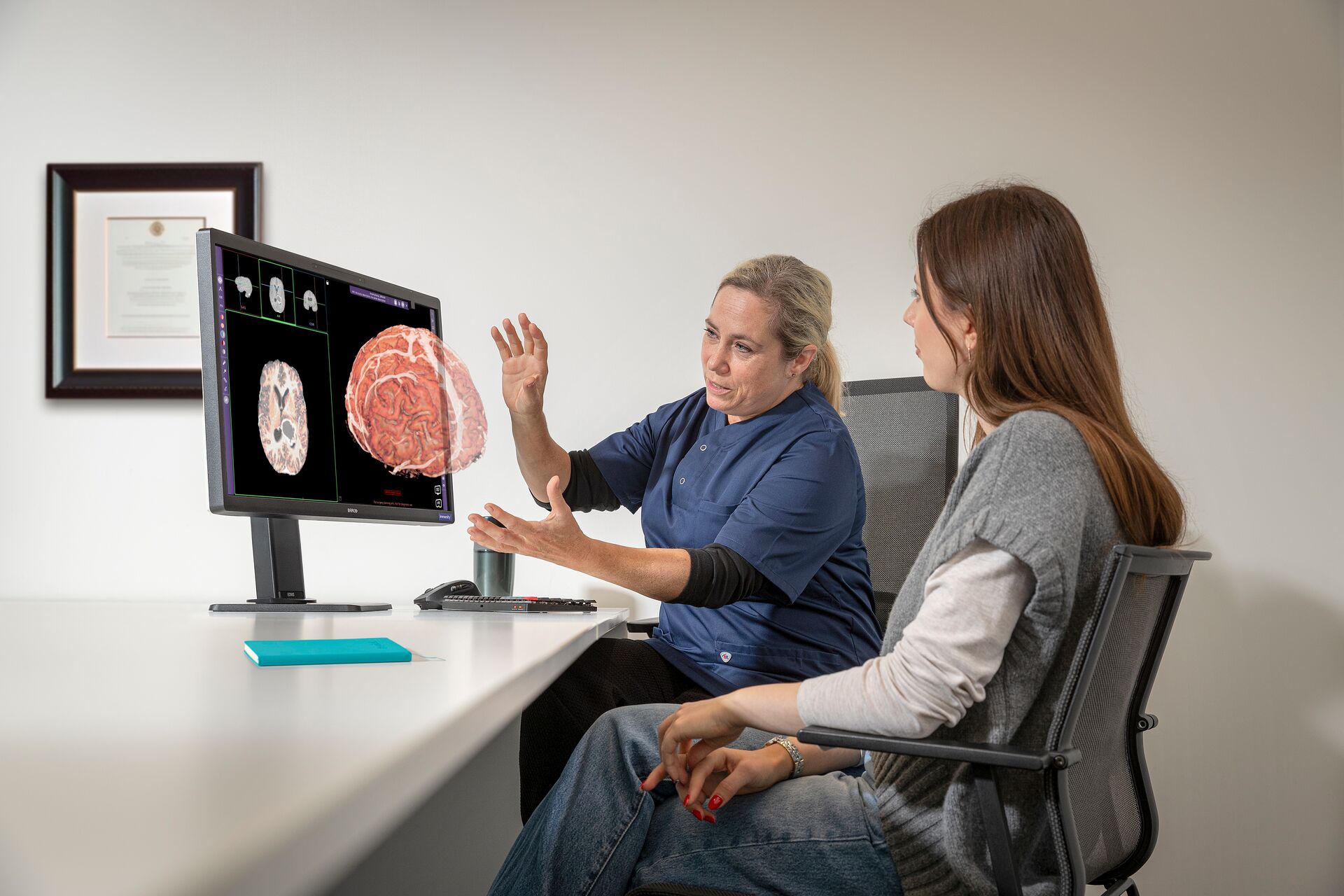
A new pilot program at Eskaton Village in Carmichael, California, is utilizing virtual reality (VR) technology to conduct eye tests that may indicate changes in brain health. Residents like Bonnie Dale, a retired healthcare consultant, participated in this innovative approach, which takes approximately fifteen minutes and screens for various visual acuity factors.
Dale donned a VR headset while a trained operator guided her through the assessment, which involved interacting with a virtual assistant named “Annie.” As she navigated the program, the system monitored her eye responses, including the ability to differentiate colors and shapes, and how her pupils reacted to light. Results are instantly available on a tablet, allowing for seamless communication with ophthalmologists.
The initiative is spearheaded by Yin Allison Liu, a neuro-ophthalmologist at the UC Davis Eye Center. Liu aims to explore whether this method can assist in identifying neurological conditions, such as Alzheimer’s disease, potentially years before symptoms manifest. “Recent research has found that visual processing changes occur about 10 to 12 years before a formal Alzheimer’s diagnosis,” Liu noted. She emphasizes that the eye is part of the central nervous system, providing insights into brain changes through ophthalmic testing.
Advancing Eye Care with Virtual Reality
The VR device used by Dale is developed by Olleyes, co-founded by neuro-ophthalmologist Alberto Gonzalez-Garcia. The company focuses on making eye care more accessible and efficient through artificial intelligence and VR technology. Gonzalez-Garcia, who trained in Cuba, collaborated with researchers like Liu to adapt the VR platform for various medical applications, including emergency departments and pediatric eye exams.
Liu’s research aims to detect visual changes that could hint at cognitive dysfunction. The tailored program allows her to note issues such as hearing impairments alongside visual decline, which could allude to deeper cognitive shifts. “This method provides another angle for diagnosis or early detection of diseases,” Liu explained.
One of the significant advantages of this VR technology is its potential to integrate cognitive testing. Traditional assessments like the Montreal Cognitive Assessment (MoCA) require paper and pencil, but Gonzalez-Garcia envisions a future where cognitive evaluations could be conducted entirely within the VR environment. “Standardized instructions delivered by an AI assistant would ensure a consistent evaluation experience for all test participants,” he said.
Addressing the Growing Alzheimer’s Crisis
The urgency for early Alzheimer’s testing is pressing. Currently, approximately 6.7 million older adults in the United States are affected by the disease, with projections estimating that this number could rise to 14 million by 2060. Liu’s pilot program seeks scalable solutions for early detection of cognitive diseases, particularly in senior communities where accessing traditional eye exams may pose challenges.
“Early diagnosis can empower individuals to make lifestyle changes and explore new treatments,” Liu noted. By implementing this VR program in assisted living facilities, she hopes to enhance the detection of vision changes related to cognitive health.
In conclusion, the integration of virtual reality into eye care represents a promising frontier in both ophthalmology and neurology. The innovative approach not only seeks to streamline eye examinations but also aims to provide critical insights into brain health, potentially leading to earlier interventions for conditions like Alzheimer’s disease. The project showcases the considerable potential of technology to transform healthcare, particularly for aging populations.
This initiative is part of ongoing research efforts, including studies published in reputable journals such as the International Ophthalmology Clinics. Liu and her colleagues continue to explore how these advancements can ultimately benefit patients and improve healthcare outcomes.