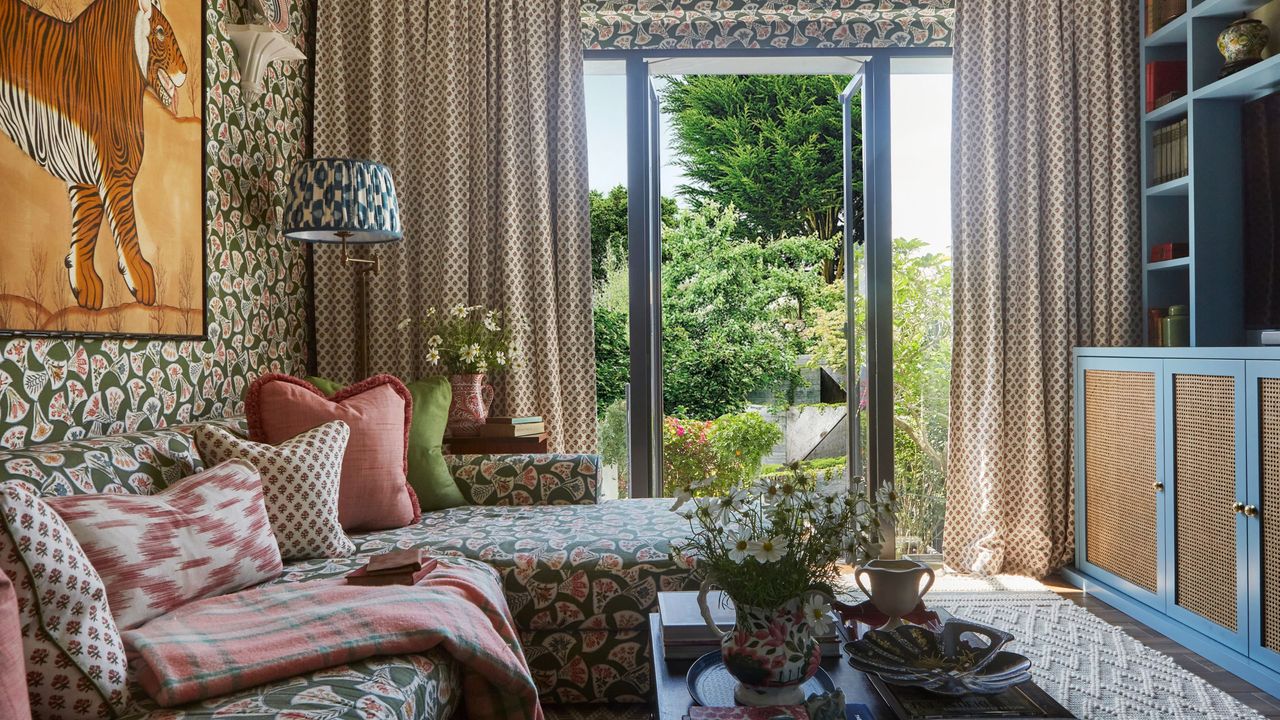
Designer Elizabeth Hay has successfully transformed an East Singapore townhouse into a cozy retreat, utilizing a clever approach to color and pattern. Known for her vibrant and personal interiors, Hay draws inspiration from her childhood in the English countryside, blending rich textures and immersive designs. The homeowners, avid travelers with a penchant for bold decoration, sought a functional yet expressive living space.
The architecture of the townhouse, typical of Singapore’s 1980s and 1990s developments, lacked aesthetic charm. Rather than making structural changes, Hay focused on pattern-driven decorating to create an inviting atmosphere. A standout feature of this transformation is the snug room, which exemplifies her design philosophy.
A Cohesive Design Approach
Hay aimed to create a sanctuary where the clients could unwind and disconnect from the busyness of everyday life. She explains, “Our initial inspiration came from traditional ‘fabric-drenched’ rooms, where one textile is used across walls, upholstery, and soft furnishings. We reinterpreted that idea in a more contemporary way, creating a space that feels immersive yet fresh.”
The defining fabric in this snug is the MONFAUCON by Christopher Moore, featuring a graphic, fan-shaped motif complemented by traditional florals on a deep green background. Instead of using it solely for upholstery or as an accent wall, Hay extended the print throughout the room. This approach eliminates visual breaks, allowing the eye to perceive the space as a unified whole, fostering a calming rather than chaotic effect.
Hay advises selecting fabrics carefully for an all-over look. She notes, “Organic patterns such as floral stripes or flowing motifs work beautifully because they feel immersive rather than rigid. I would avoid large-scale geometrics; they can quickly become visually jarring.”
The Importance of Scale and Texture
Once the hero fabric was chosen, Hay crafted a supporting cast of elements to enhance the overall design. The room features complementary ikat prints, a tonal rug, and solid fabrics that do not compete with the main print. “The entire living room color scheme was derived from the main fabric we selected. We wanted the room to feel rich yet still bright and fresh,” she explains.
To maintain harmony, Hay ensured that secondary patterns echoed tones from the main fabric. “Scale and tone are key. By varying the scale of each pattern, the overall effect feels harmonious and soft rather than busy.”
Texture plays a crucial role in this design. While the primary fabric sets the tone, contrasting textures soften its impact. The rug, for instance, is subtle in color yet rich in texture, providing visual relief and anchoring the scheme cohesively.
A significant design choice is the built-in media wall, painted in a confident blue with woven panel fronts. This intentional color choice acts as a visual “palate cleanser,” offering contrast and preventing the snug from feeling overly enclosed. Hay suggests incorporating a secondary tone from the hero fabric into cabinetry or bookshelves to create balance. “The blue introduces freshness, preventing the room from feeling claustrophobic while still sitting comfortably within the scheme,” she adds.
The media wall not only serves a practical purpose by housing the television and providing storage, but it also enhances the overall aesthetic, balancing the richness of the color scheme.
Strategic Furniture Layout and Lighting
The furniture arrangement is equally strategic. Hay opted for an L-shaped sofa positioned in the corner of the room, optimizing the layout for lounging and watching television. “In a snug or TV room, L-shaped sofas work beautifully,” she notes. This arrangement creates a defined seating area without obstructing flow into the garden.
Lighting is another key element in this cozy design. Hay chose to forego overhead lighting in favor of floor lamps and sculptural wall sconces fitted with patterned shades. “We wanted the lighting to feel intimate and atmospheric, so there is no overhead lighting in the room,” she explains. This layered approach creates a soft glow for relaxing evenings while allowing the artwork to shine. A vintage tiger artwork adds character and depth, serving as a bold focal point that complements the room’s patterns.
Finally, Hay incorporated the clients’ existing collection of Asian antiques, ensuring the space feels personal and authentic. “It was important to include their pieces to avoid a staged appearance,” she states.
For those looking to apply similar design principles at home, Hay emphasizes the importance of committing fully to a theme while also editing carefully to achieve balance. This approach allows for a space that feels both cozy and uniquely personal, showcasing how effective design can transform a practical space into a welcoming retreat.