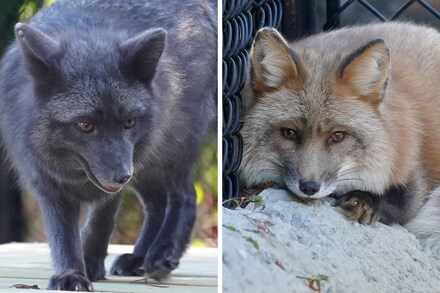
Hundreds of animals were rescued from a fur farm, with notable attention given to two red foxes named Sadie and Seth. These foxes recently transitioned to a new environment where they are beginning to explore their surroundings and adapt to their new life.
In their previous situation, Sadie and Seth, along with many other animals, faced challenging conditions that prompted their rescue. The operation was carried out by an animal rescue organization dedicated to safeguarding wildlife and promoting animal welfare. The exact number of animals rescued reached into the hundreds, showcasing the scale of the effort involved.
As the red foxes acclimate to their new habitat, they have shown remarkable behavioral traits characteristic of their species. Known for their keen sense of smell and natural hunting instincts, Sadie and Seth have been observed sniffing the ground and logs in their enclosure. Their playful nature has emerged as they leap towards food, eagerly pouncing on kibble provided by the zoo staff.
New Beginnings for Rescued Animals
The rescue operation not only highlights the plight of animals in fur farms but also underscores the importance of rehabilitation and safe havens for wildlife. Animals like Sadie and Seth are beginning to experience a life free from captivity and exploitation.
The process of transitioning these animals into a more natural environment involves careful monitoring and support from the zoo staff. Their goal is to ensure that the foxes adjust well, fostering behaviors that reflect their natural instincts. This involves providing enrichment activities and a proper diet that mimic their wild counterparts.
The support from the community and animal welfare advocates has been instrumental in facilitating this rescue. Public awareness campaigns regarding the ethics of fur farming have gained traction, leading to increased pressure on such operations globally.
Community Response and Future Implications
The successful rescue of Sadie, Seth, and many others has sparked discussions about animal rights and the treatment of wildlife in captivity. Various organizations are calling for stricter regulations on fur farms and have intensified their efforts to promote animal welfare.
As Sadie and Seth continue to thrive in their new surroundings, their story serves as a reminder of the ongoing need for rescue operations and the importance of advocating for animal rights. With each animal that finds a new home, the conversation about ethical treatment and animal welfare grows stronger, paving the way for a more compassionate approach to wildlife conservation.
The journey of these foxes is just beginning, and it is a hopeful indication of what can be achieved through collective efforts and a commitment to change.