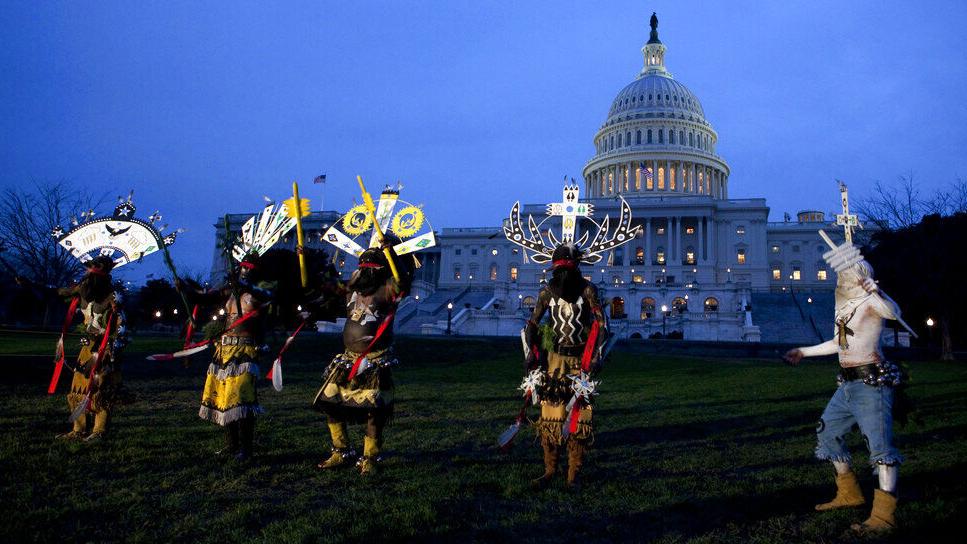
Mary Velasquez Riley played a pivotal role in transforming the White Mountain Apaches into a thriving entrepreneurial community. Her efforts not only brought prosperity to her people but also earned them recognition as one of the most progressive tribes in the United States. In December 1965, she stood proudly with a delegation from her tribe in Washington, D.C., witnessing the lighting of the national Christmas tree—the first time a Native American tribe donated a tree for the event.
Born on December 24, 1908, at Fort Apache, Riley’s early life was steeped in the traditions and challenges faced by her community. Her mother was Apache, and her father was a Mexican rancher who supplied produce to Fort Apache. Growing up on the ranch, she learned the value of hard work, milking cows, feeding livestock, and supporting her family. When the 1918 influenza epidemic struck, Mary left school after just three years to care for sick relatives. Despite the challenges, she developed a keen interest in local and national affairs, often reading newspapers with her father.
Riley’s marriage to Peter Kessay Riley in 1935 marked the beginning of a family that included five children. While Peter served in the military, Mary worked as a housekeeper at the Fort Apache hospital and managed the family ranch. Her commitment to her community became evident when she was elected to the White Mountain Apache Tribal Council in 1958, becoming the first woman to hold a position on the board. During her two decades of service, she often chaired committees focused on health, education, and welfare.
One of Riley’s most significant contributions was the establishment of the Fort Apache Timber Company (FATCO) in 1962. By the following year, the company was operated entirely by the tribe. Its mission was clear: to promote economic development for the White Mountain Apache Tribe by efficiently utilizing tribal timber resources, generating profit, and providing business training for tribe members. FATCO remains operational today, reflecting Riley’s vision for sustainable economic growth.
In addition to FATCO, Riley played a crucial role in developing the Alchesay-Williams Creek National Fish Hatchery, which has revitalized local fish populations, including threatened species. Her foresight led to the establishment of tourist-friendly facilities on the reservation, making it a desirable destination for fishing and outdoor activities. In 1967, a reporter noted that over one-third of all fishing in Arizona occurred within the reservation, which boasted more than 300 miles of fishing streams and numerous recreational lakes.
Riley also championed the development of the Sunrise Park Resort, a year-round recreational facility that offers skiing in winter and hiking, biking, and fishing in the summer. Her advocacy for a high school on the reservation further demonstrated her commitment to education and empowerment for her people.
Retiring from the council in 1978, Riley’s influence continued to be felt. In 1984, she received recognition from the state for her leadership and contributions to the progress of the White Mountain Apaches. She passed away on October 5, 1987, and was laid to rest at the Fort Apache Cemetery alongside her husband.
Riley’s legacy was further cemented when she was inducted into the Arizona Women’s Hall of Fame in 1988. Her work has left an indelible mark on the White Mountain Apache community, showcasing how determination and vision can lead to significant advancements in economic and social standing. The Mary V. Riley Building on the reservation now houses the tribal education department, a testament to her lifelong commitment to education and empowerment.
In reflecting on the progress made under her leadership, then-Indian Commissioner Phileo Nash stated in 1965, “It is probably the most developed reservation in the country. Economic progress has been underway under the leadership of the tribal council for quite a number of years. This is a tribe that knows what it is doing.” Mary Riley was an integral part of that journey, helping to establish the White Mountain Apaches as a formidable entrepreneurial force.