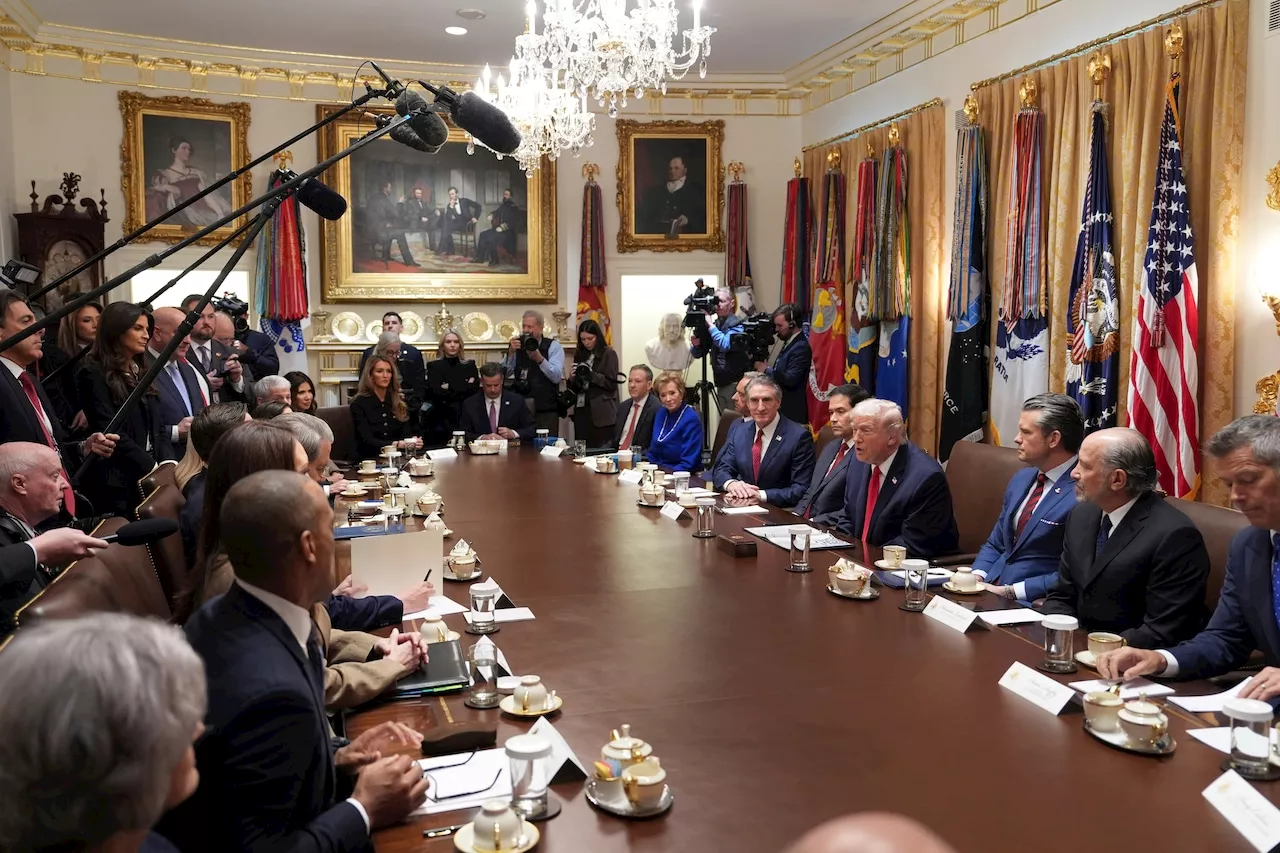
Democrats and the White House have successfully negotiated a temporary funding measure for the Department of Homeland Security (DHS), effectively averting a partial government shutdown. The agreement allows for continued discussions regarding potential restrictions on immigration enforcement under President Donald Trump‘s administration. This deal separates DHS funding from broader government spending legislation, providing a two-week extension while negotiations proceed on Democratic demands concerning the U.S. Immigration and Customs Enforcement (ICE) agency.
The decision comes after Democrats blocked proposed legislation to fund DHS earlier in the week. In a social media post, Trump mentioned that “Republicans and Democrats have come together to get the vast majority of the government funded until September,” while urging Congress members to vote in favor of the bipartisan measure. Speaker Mike Johnson of Louisiana expressed his concern over breaking up the funding package but acknowledged the necessity of quick action to prevent a shutdown.
During the negotiations, Democrats sought a short extension of two weeks or less, stating their readiness to oppose the wider spending bill if their demands were not met. In contrast, Republicans were advocating for a longer funding extension for DHS. Senate Majority Leader John Thune of South Dakota noted that while both sides were moving closer, two weeks may not suffice for a comprehensive agreement.
Negotiations Sparked by Recent Events
The discussions followed the tragic shooting of a 37-year-old man in Minnesota, prompting calls from senators on both sides for a thorough investigation. Chuck Schumer, the Senate Democratic leader, labeled the situation as “a moment of truth.” He emphasized that while the American public supports law enforcement and border security, they oppose what he termed “ICE terrorizing our streets and killing American citizens.”
With no final agreement in sight, the potential standoff threatened to lead to another government shutdown. This would mirror the previous 43-day closure that resulted from a dispute over federal health care subsidies, which concluded only after a small group of moderate Democrats negotiated with Republicans.
Democrats have outlined several key demands, including the cessation of roving patrols in urban areas and enhanced coordination with local law enforcement on immigration arrests. They are advocating for more stringent rules regarding warrants and an enforceable code of conduct to ensure accountability for agents who violate regulations. Schumer insisted that ICE agents should operate under the same standards as local police departments, advocating for transparency with “masks off, body cameras on.”
Connecticut Senator Richard Blumenthal asserted that if the Trump administration resists these reforms, it could lead to the shutdown of ICE. However, Republicans have expressed reservations regarding some Democratic proposals. North Carolina Senator Thom Tillis opposed the requirement for immigration enforcement officers to reveal their identities, citing concerns for their safety.
Future Challenges in Negotiations
While some Republicans, including South Carolina Senator Lindsey Graham, acknowledged the sense in certain Democratic proposals, such as improved training and body camera use, they also warned against changes that would impede the Trump administration’s immigration policies. Graham stated he would insist on new language preventing local governments from opposing these policies.
As the two parties continue to navigate this complex landscape, the path toward a final agreement on the DHS funding bill remains uncertain. The ongoing discussions reflect deep divisions over immigration enforcement practices and the broader implications for government operations.
As negotiations evolve, both sides will need to balance their priorities while addressing public concerns over immigration enforcement and law enforcement accountability. The next steps in this political dialogue will significantly impact the functioning of the federal government and the lives of many American citizens.