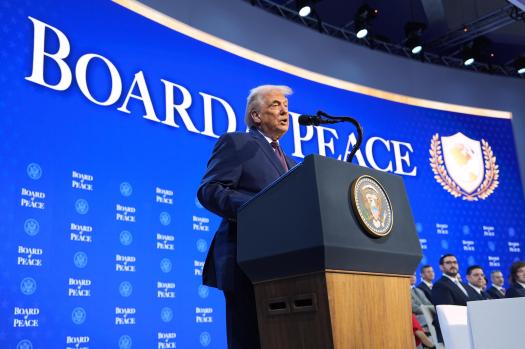
Humanity stands at a precarious juncture, with the Doomsday Clock now set at 85 seconds to midnight, the closest it has ever been since its inception in 1947. This alarming position reflects escalating global tensions, particularly in the realms of nuclear risk and artificial intelligence. The announcement was made during a town hall meeting in Washington, D.C., on January 27, 2026, by experts including Jon Wolfsthal, director of global risk at the Federation of American Scientists, and Asha George, executive director of the Bipartisan Commission on Biodefense.
The Bulletin of the Atomic Scientists, which is responsible for adjusting the clock, has emphasized the urgent need for international collaboration to mitigate these risks. The organization called on global leaders to significantly reduce nuclear arsenals and to establish comprehensive regulations regarding the rapid development of artificial intelligence, which presents unique challenges and threats.
Alexandra Bell, the President and CEO of the Bulletin and a former deputy assistant secretary for nuclear affairs at the U.S. State Department, expressed deep concern over the current state of global cooperation. “What we have seen is a global failure in leadership,” Bell noted. She highlighted that despite some positive developments, such as advancements in climate change policy, overall cooperation among nations is declining, and catastrophic risks are on the rise.
Joseph Davila, a student who attended the event, voiced a common sentiment among attendees, stating, “To me, Doomsday is the metaphorical end of the Earth being livable. The fact that humanity can’t come to an agreement on doing what’s best for the Earth is honestly disturbing.”
Historical Context of the Doomsday Clock
The Doomsday Clock serves as a symbolic measure of how close humanity is to self-destruction, primarily through nuclear weapons and other global threats. Initially set at seven minutes to midnight in 1947, the clock has continually adjusted based on international events and scientific assessments.
Significant historical moments that have influenced the clock include the Soviet Union’s first nuclear test in 1949, which prompted the start of the arms race, and the development of the hydrogen bomb in the early 1950s. During this period, fears escalated as governments engaged in nuclear proliferation, leading to widespread public anxiety, exemplified by initiatives like the “Duck and Cover” campaign aimed at children.
The clock made notable adjustments following key treaties and international agreements, such as the Partial Test Ban Treaty of 1963, and the Nuclear Non-Proliferation Treaty signed in the late 1960s. In 1991, following the end of the Cold War and significant nuclear disarmament efforts, the clock was set back to 17 minutes to midnight, its furthest point from disaster.
However, recent years have seen a troubling trend. The clock moved to 100 seconds to midnight in 2020, reflecting dual threats of climate change and nuclear war, compounded by rising cyber-enabled warfare. In 2023, the clock advanced to 90 seconds, a reaction to increasing global instability, particularly due to the ongoing conflict in Ukraine.
The Current Situation and Future Implications
The latest adjustment to 85 seconds is attributed to several compounding factors: the ongoing nuclear arms race, the unchecked development of artificial intelligence, and a marked decline in international cooperation. As the Bulletin pointed out, the intertwining of these issues poses an unprecedented risk not only to global security but also to the very fabric of society.
The call for action is urgent. Experts urge nations to prioritize dialogue and collaboration to address these pressing dangers. The Doomsday Clock serves as a reminder of the fragility of human existence and the need for collective action to ensure a sustainable future.
As the clock continues to tick down, the imperative for global unity in the face of existential threats becomes increasingly clear. The message is stark: without concerted efforts to mitigate these risks, the potential for catastrophe looms larger than ever.