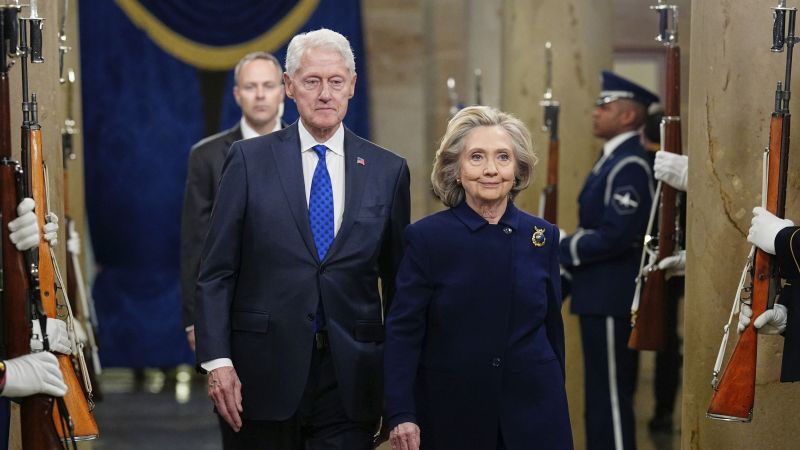
The recent release of documents by the Justice Department related to Jeffrey Epstein has unveiled new details about former President Bill Clinton’s interactions with Epstein and his associate Ghislaine Maxwell. This disclosure comes just ahead of a scheduled House vote to hold both Bill and Hillary Clinton in contempt of Congress for failing to comply with a subpoena linked to a bipartisan investigation into Epstein’s activities.
The House, currently under Republican control, is expected to vote this week on whether to formally charge the Clintons with contempt. This follows a committee vote last month where members from both parties supported holding the former president and secretary of state accountable for not testifying. The newly released files consist of over 3 million documents, including previously unseen photographs of Clinton with Epstein, as well as communications between Clinton’s staff and Maxwell from 2001 to 2004.
During this period, Clinton reportedly traveled on Epstein’s private plane at least 16 times, according to an analysis by CNN. The emails included in the latest release indicate frequent exchanges between Maxwell and Clinton’s staff, often concerning logistical arrangements for events. In one email, Maxwell expressed excitement about a dinner invitation for Clinton, while another email referenced a request for a phone number from Prince Andrew to coordinate a golf outing during a trip to Scotland.
Controversial Communications and Allegations
The content of the emails is varied, ranging from travel itineraries to personal messages. In multiple instances, Maxwell communicated in a manner that could be interpreted as flirtatious. For example, she wrote to a staffer, claiming to have told a tabloid about their interactions and expressing admiration. There is no evidence, however, that either Clinton directly emailed Maxwell or vice versa.
While the documents shed light on Clinton’s connections to Epstein, they also include a list of unverified sexual abuse allegations against former President Donald Trump. Both Clinton and Trump have denied any wrongdoing related to Epstein, and Clinton’s spokesperson, Angel Ureña, emphasized that the former president did not send any of the emails found in the Epstein files, stating, “I can only tell you whose it wasn’t: Bill Clinton’s.”
The tensions surrounding the Clintons’ testimony have escalated as they attempt to negotiate terms with the House committee led by James Comer. Despite offers to appear for interviews, the committee has insisted on in-person testimony, citing Clinton’s potential knowledge relevant to the ongoing investigation.
Political Fallout and Potential Consequences
As the House prepares for the vote on contempt, the situation has drawn criticism from various political figures. Notably, former House Speaker Nancy Pelosi expressed concerns about the timing of the contempt proceedings, suggesting that they should wait until all relevant documents have been released by the Justice Department.
If the contempt vote passes, it would represent a significant political rebuke of the Clintons. While such a vote may not lead to immediate legal repercussions, it could prompt the Justice Department to consider prosecution. The possibility of an agreement between the Clintons and the House committee still exists, with Comer indicating that there may be room for negotiation.
This ongoing saga highlights the complexities of political accountability and the ramifications of past associations, as the Clintons navigate the fallout from the Epstein scandal. The outcome of the contempt vote could have lasting implications not only for the Clintons but also for the broader political landscape as investigations into Epstein’s network continue.