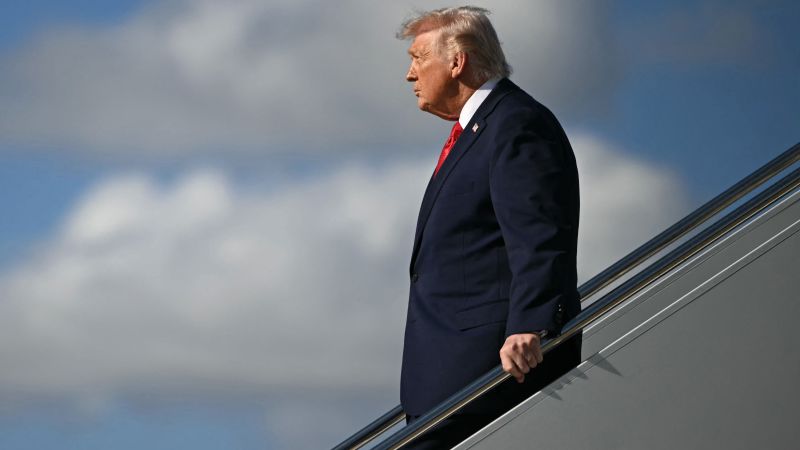
European leaders are grappling with a challenging diplomatic landscape as they respond to demands from Donald Trump regarding Greenland, a semiautonomous territory of Denmark. The situation has escalated tensions within NATO, with some experts suggesting that Europe may need to adopt more aggressive tactics akin to Trump’s own approach in order to protect its interests.
On March 15, 2024, Rasmus Jarlov, a member of the Danish Parliament, voiced his concerns about Trump’s ambitions, stating, “This madness mustn’t escalate any further than it already has.” He emphasized that conceding to Trump’s demands would undermine Denmark’s sovereignty and the integrity of international law.
Trump’s approach to negotiations has often been characterized by a willingness to dismiss conventional diplomatic norms. This has proven difficult for NATO allies who are accustomed to more genteel forms of diplomacy. The U.S. President has previously demonstrated his readiness to leverage extreme tactics, which raises questions about how European leaders can effectively counter his strategies.
As Trump seeks to secure Greenland, which he views as a potential real estate opportunity, he risks jeopardizing nearly 80 years of collaborative security efforts among NATO nations. His insistence on acquiring the territory has led to speculation about the stability of the alliance. Many European leaders are now considering their options, which range from potential trade responses to outright economic sanctions against U.S. interests.
Concerns about Trump’s motivations have prompted some lawmakers in Britain and Germany to contemplate a boycott of the upcoming FIFA World Cup, which is partly hosted by the U.S. They fear that Trump’s presence will overshadow the event and exacerbate diplomatic tensions.
In recent statements, Trump has asserted that Greenland is essential for U.S. national security, claiming it could be vulnerable to threats from Russia or China. However, experts have pointed out that any aggression towards Greenland would invoke NATO’s mutual defense clause, which guarantees that an attack on one member is an attack on all.
Despite Trump’s claims, Greenland already hosts U.S. military facilities, including a Space Force base and missile early warning systems. These established military assets suggest that the acquisition of the territory may not be as critical as Trump asserts. Many view his statements as part of a broader pattern of behavior where he prioritizes personal ambitions over established international agreements.
Some European leaders have attempted to appeal to Trump’s sense of morality and historical context. Lars Løkke Rasmussen, Denmark’s Foreign Minister, recently told Trump, “You can’t cross this line,” urging the importance of upholding international law. Yet, appeals based on legal frameworks seem to have little impact on Trump, who has expressed a disregard for international norms.
The European Union is increasingly considering a united front in response to the U.S. demands. Emmanuel Macron, the French President, has suggested activating the EU’s “trade bazooka,” which could include measures to block U.S. access to European markets should Trump continue his aggressive stance. Such actions could lead to increased prices for consumers and potential economic fallout on both sides of the Atlantic.
Political analysts have noted that if Trump persists in his demands, a showdown seems inevitable. In an editorial, the French newspaper Le Monde remarked, “Donald Trump seems to respect only those who stand up to him.” The EU’s ability to respond effectively could determine not only the future of transatlantic relations but also the economic stability of its member nations.
As the situation unfolds, European leaders must weigh the risks of escalating tensions against the need to protect their sovereignty and maintain a united front against potential U.S. overreach. With Trump’s unpredictable nature, the stakes remain high, and the outcome of this diplomatic challenge could have far-reaching implications for global politics.