Maine Secretary of State Shenna Bellows has gained significant support in her ongoing legal battle against the Trump administration, as more than a dozen former employees of the U.S. Department of Justice (DOJ) have filed an amicus brief opposing the federal government’s lawsuit for Maine’s voter registration data. This development underscores the contention surrounding the administration’s demands and the implications for voter privacy.
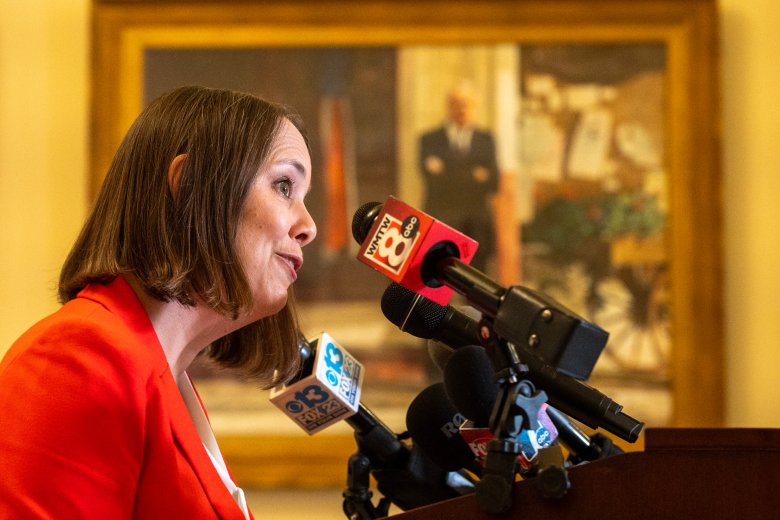
During a press conference held on September 17, 2025, in the Maine State House Hall of Flags in Augusta, Bellows addressed the state’s refusal to comply with the DOJ’s request for unredacted voter registration lists. The lists include sensitive personal information such as names, birth dates, and Social Security numbers. The lawsuit was initiated after Bellows declined to provide the data, prompting the DOJ’s legal action.
The Department of Justice argues that the data is necessary to remove ineligible voters from the rolls and uphold federal voting rights laws. However, Bellows, alongside Democratic officials from other states, has raised concerns about the privacy implications and questioned the motivations behind the administration’s request. This legal struggle is set against the backdrop of former President Donald Trump‘s ongoing claims of election fraud, which have been widely discredited.
The amicus brief was filed by 16 former DOJ attorneys who served under both Republican and Democratic administrations, including those during the presidency of Richard Nixon. They contend that the request for Maine’s voter data appears to be a cover for the administration’s broader immigration enforcement agenda, which they argue disproportionately targets states led by Democrats. The brief highlights that existing laws assign states the responsibility for managing their own voter registration lists, not the federal government.
The former DOJ attorneys assert that the Trump administration has not met the legal threshold outlined in the 1960 Civil Rights Act to justify such a sweeping demand for voter records. They emphasize that the Act was historically intended for specific inquiries into racial discrimination, not general data collection. The attorneys urge the court to dismiss the lawsuit, stating, “The 1960 Civil Rights Act does not authorize such a sweeping information request on such flimsy grounds.”
The DOJ’s initial claim included allegations that Maine had approximately 11,000 voters with duplicate registrations. The Maine Republican Party further alleged that 51 individuals voted twice in the 2024 election. However, Bellows countered these claims, stating that her office’s investigation revealed them to be unfounded.
In response to the lawsuit, Harmeet Dhillon, the assistant attorney general for civil rights, emphasized the DOJ’s commitment to ensuring electoral integrity. She stated that the refusal of certain states to safeguard their citizens against vote dilution may lead to legal repercussions.
Bellows expressed gratitude for the backing of the former DOJ attorneys, remarking, “This is a win for those of us fighting to protect American voter data.” The legal proceedings began when the DOJ filed its lawsuit against Bellows and the state in the U.S. District Court for Maine in September 2025. The next hearing is scheduled for late March 2026, as both sides prepare to argue their positions.
This case not only highlights the tensions between state and federal authority over voter data but also raises critical questions about privacy and the motivations behind data requests that could affect the electoral landscape.