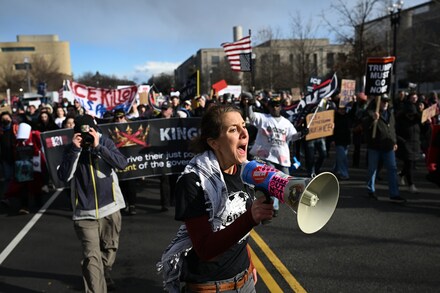
Hundreds of demonstrators gathered in Washington, D.C., on March 24, 2024, to protest the fatal shooting of Renée Good, a 37-year-old mother of three, by a U.S. Immigration and Customs Enforcement (ICE) officer in Minneapolis. The protest was marked by chants such as “No ICE” and “Hey, hey, ho, ho, all these fascists got to go,” as participants called for accountability and reform within the agency.
The incident that sparked the outrage occurred earlier in March, when Good was shot during an encounter with ICE agents. Eyewitnesses reported that the officers were attempting to apprehend her as part of a routine operation. The circumstances surrounding the shooting remain under investigation, but community members have expressed deep concern over the escalating use of force by immigration authorities.
Demonstrators assembled outside ICE headquarters in D.C., demanding an end to what they describe as systemic violence within immigration enforcement. Activists emphasized the need for a shift in policy, asking for greater protections for immigrant communities and transparency in law enforcement practices.
Community Response and Calls for Action
Family members of Renée Good attended the protest, sharing their grief and anger over the loss. “She was a loving mother and a vibrant member of our community,” said her brother, who spoke on behalf of the family. “No family should have to endure this kind of tragedy. We demand justice for Renée.”
The protest featured speeches from local leaders and activists advocating for immigrant rights. They highlighted the broader implications of Good’s death, linking it to a pattern of violence against marginalized communities in the United States. Organizers encouraged participants to continue advocating for change, emphasizing the importance of voting and community engagement.
Social media played a significant role in mobilizing the crowd, with various platforms used to spread awareness of the protest and the issues at hand. Many attendees carried signs with messages calling for justice and reform, underscoring the urgency of addressing the concerns surrounding immigration enforcement.
Political Implications and Ongoing Debates
The protest also reignited discussions regarding immigration policy in the United States. As lawmakers consider potential reforms, advocates are pushing for substantial changes to the way ICE operates. Critics argue that the agency’s practices contribute to a climate of fear among immigrant populations, while supporters assert that enforcement is necessary for maintaining national security.
In the wake of Good’s death, there have been renewed calls for oversight and accountability within ICE. Advocacy groups are urging Congress to hold hearings and investigate the circumstances surrounding her shooting. As the investigation unfolds, many community members continue to rally for justice, vowing to keep pressure on lawmakers and authorities.
The protest in Washington, D.C., reflects a growing movement against perceived injustices within the immigration system. As more individuals and organizations join the call for change, the impact of these demonstrations could shape the future of immigration policy in the United States.