DUBAI, United Arab Emirates — Iranians have begun to reconnect with the outside world through mobile phone calls for the first time since communications were severed during a crackdown on nationwide protests. Activists report at least 646 people have been killed amid the unrest, which has seen a significant security presence in major cities like Tehran.
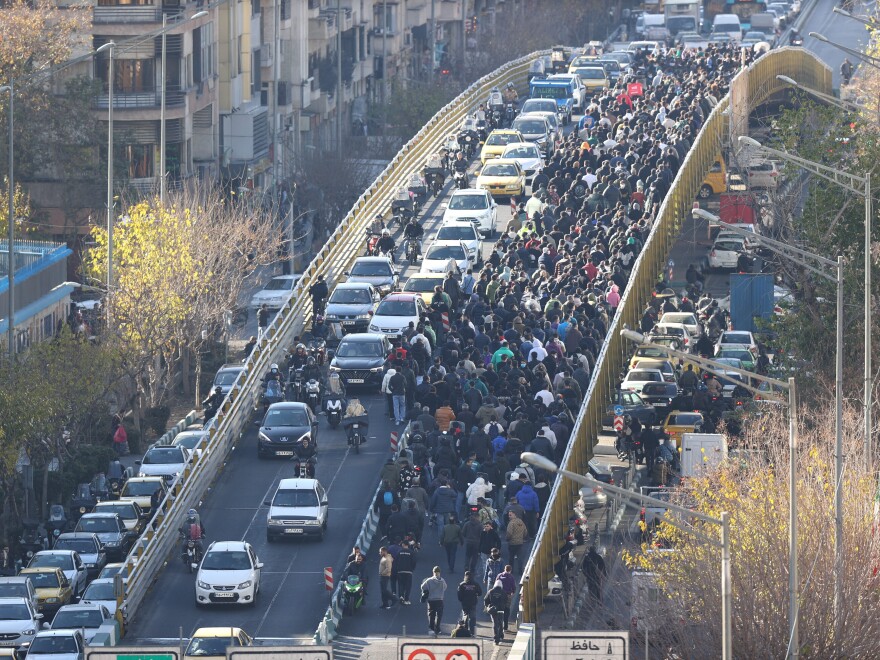
Witnesses in Tehran managed to contact The Associated Press on Tuesday, describing a tense atmosphere marked by heavy surveillance. While some mobile communication resumed, SMS text messaging remained unavailable, and internet access was limited to government-approved websites. The situation paints a stark picture of life in the capital, where protests erupted on December 28, 2023.
Witnesses reported a significant presence of anti-riot police equipped with helmets, body armor, and batons at key intersections. Members of the Revolutionary Guard’s Basij force were also noted, armed and stationed throughout the city. Security officials in plainclothes mingled with the public, further contributing to an atmosphere of fear and control.
Despite the unrest, shops remained open, although foot traffic was noticeably low. The Grand Bazaar, a central hub for commerce, was expected to reopen. However, several shopkeepers mentioned that security forces had ordered them to resume business despite the ongoing protests, a directive not reported by state media.
Iran’s government has faced increasing scrutiny, with more than 10,700 people detained during the protests, according to the U.S.-based Human Rights Activists News Agency. The organization, known for its accurate reporting on previous unrest, also indicated that 512 of the deceased were protesters, while 134 were security personnel. The Iranian government has not provided its own casualty figures.
In a related development, Iranian Foreign Minister Abbas Araghchi claimed ongoing communication with the U.S. regarding the protests, asserting that dialogue continued both before and after the unrest. This came in response to remarks from U.S. President Donald Trump, who suggested that Iran was interested in negotiating.
Trump also announced a new policy imposing 25% tariffs on countries trading with Iran, effective immediately. This move is intended to pressure nations like Brazil, China, Russia, Turkey, and the United Arab Emirates, who have maintained economic relations with Tehran. Trump noted that negotiations with Iran were possible, but he may take preemptive action if the situation worsens.
As pro-government demonstrators took to the streets in support of the regime, chants of “Death to America!” and “Death to Israel!” echoed through the crowds, reportedly numbering in the tens of thousands. The Iranian attorney general warned that those participating in protests would be considered “enemies of God,” a charge that carries severe consequences.
Despite the challenges of communication, the unfolding events in Iran continue to draw international attention as the situation evolves. The lack of internet access has severely limited the ability to assess the full scope of the protests and the government’s response. The Associated Press has been unable to verify the reported casualty figures independently.
With tensions high, the global community watches closely as Iran navigates this critical moment in its history.