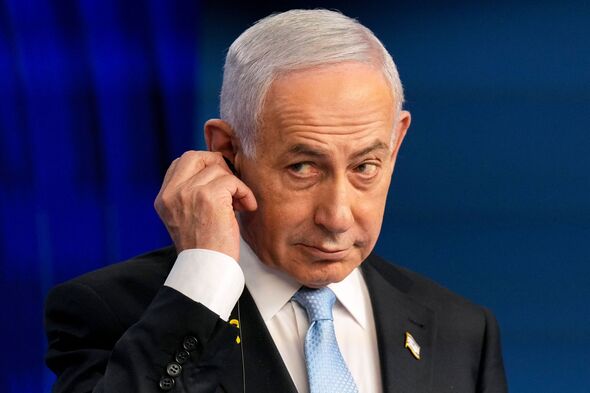
Israeli Prime Minister Benjamin Netanyahu declared on Sunday that Israel and Hamas are expected to enter the second phase of their ceasefire agreement soon. This announcement follows the return of the remains of the last hostage held in Gaza. At a press conference with German Chancellor Friedrich Merz, Netanyahu outlined key components of this upcoming phase, which include Hamas’s disarmament and the withdrawal of Israeli forces from Gaza, potentially starting by the end of this month.
The remains of Ran Gvili, a 24-year-old police officer killed during the Hamas-led attack on October 7, 2023, have not yet been returned. His body was taken to Gaza amidst ongoing negotiations. The second phase of the ceasefire is also expected to involve the deployment of an international force to secure Gaza and the establishment of a temporary Palestinian government. This proposed government would operate under the oversight of an international board led by U.S. President Donald Trump.
A senior Hamas official stated that the group is open to discussions about “freezing or storing or laying down” its weapons as part of the ceasefire. This indicates a potential breakthrough in addressing one of the most contentious issues in the negotiations. Netanyahu acknowledged the skepticism surrounding the first phase of the ceasefire, emphasizing that the second phase presents equally significant challenges. He remarked, “As I mentioned to the chancellor, there’s a third phase, and that is to deradicalize Gaza, something that also people believed was impossible.”
The return of Gvili’s remains, along with Israel’s reciprocal return of 15 bodies of Palestinians, would mark the completion of the first phase of Trump’s 20-point ceasefire plan. Hamas has claimed that it has been unable to recover all remains due to debris left from Israel’s offensive in Gaza. Conversely, Israel accuses Hamas of delaying the process and has threatened to resume military operations or withhold humanitarian aid if all remains are not returned. A collective statement from the families of the hostages highlighted the urgency, stating, “We cannot advance to the next phase before Ran Gvili returns home.”
Military Developments and International Involvement
In related developments, Israeli military Chief of Staff Lt. Gen. Eyal Zamir referred to the “Yellow Line,” which separates the majority of Gaza controlled by Israel from the rest of the territory, as a “new border.” He emphasized, “We have operational control over extensive parts of the Gaza Strip, and we will remain on those defense lines.” The Yellow Line is seen as a forward defensive line for Israeli communities.
Chancellor Merz underscored Germany’s commitment to aiding the implementation of the second phase by sending officers and diplomats to a U.S.-led civilian and military coordination center in southern Israel and providing humanitarian aid to Gaza. Merz reiterated Germany’s belief in a two-state solution, stating that recognition of a Palestinian state should be the culmination of negotiations rather than the starting point.
Netanyahu has consistently voiced his concerns regarding the establishment of a Palestinian state, arguing that it could reward Hamas and lead to a larger Hamas-controlled entity along Israel’s borders. Though he expressed a desire to visit Germany, he has not scheduled a diplomatic trip due to a warrant issued by the International Criminal Court last year related to the war in Gaza. Merz indicated that there are currently no plans for a visit but may extend an invitation in the future.
Furthermore, the Israeli military reported the death of a militant who approached troops across the Yellow Line. The Health Ministry of Gaza stated that Israeli forces have killed over 370 Palestinians since the ceasefire began, with six bodies recovered in the last 24 hours. The ministry, which operates under the Hamas-led government, claims that Israel’s offensive has resulted in at least 70,360 Palestinian deaths, with nearly half being women and children.
In the initial Hamas-led attack in October 2023, approximately 1,200 people were killed, and over 250 others were taken hostage. Most hostages or their remains have been returned through ceasefires or negotiations. The figures provided by Gaza’s Health Ministry are recognized by the U.N. and other international organizations, providing a crucial context for the ongoing humanitarian situation in Gaza.