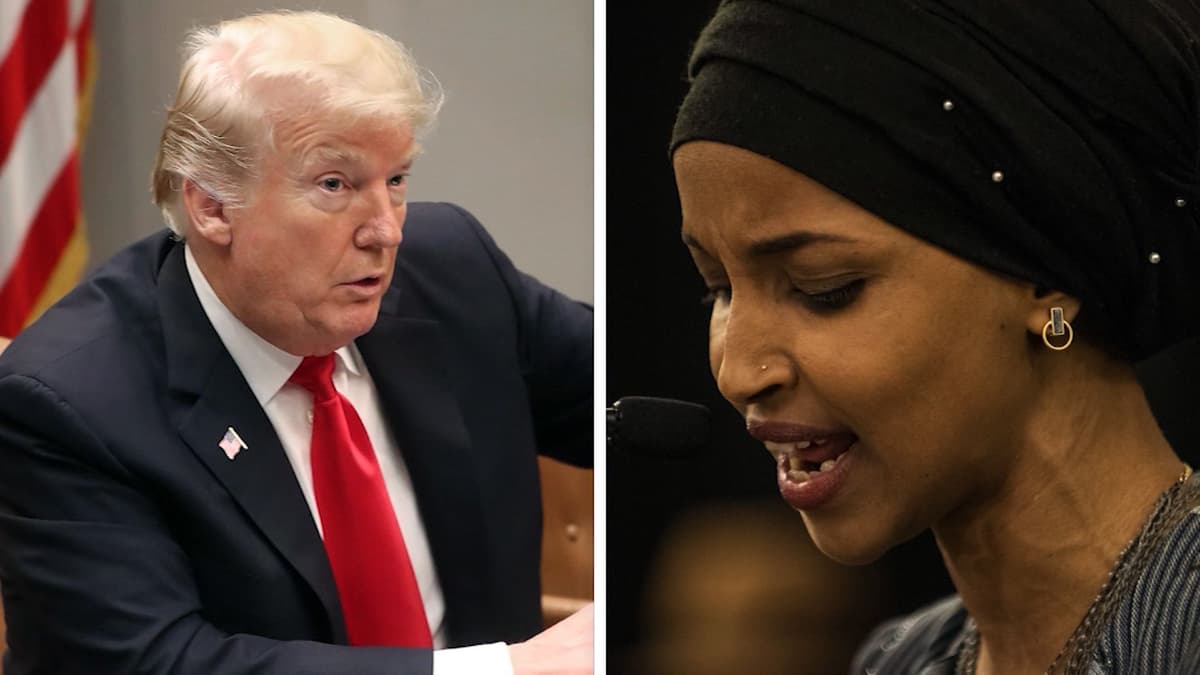
In a divisive Thanksgiving message on November 24, 2023, former President Donald Trump launched an attack on Minnesota Governor Tim Walz and Congresswoman Ilhan Omar, targeting the state’s Somali community. The White House later described his remarks as “one of the most important messages ever released by President Trump,” emphasizing their significance by encouraging followers to “read every word.”
Trump’s post on Truth Social accused Somali refugees of “completely taking over” Minnesota. He claimed that “hundreds of thousands of refugees from Somalia” had led to a deterioration of safety, stating, “Somalian gangs are roving the streets looking for prey as our wonderful people stay locked in their apartments.” He labeled Governor Walz as “the seriously retarded Governor of Minnesota,” suggesting that he was either too fearful or incompetent to address the issues at hand.
The message included a personal attack on Omar, whom he referred to as “the worst ‘Congressman/woman’ in our Country” and made derogatory remarks regarding her background. Trump claimed that her presence in the U.S. was questionable, stating, “you are not allowed to marry your brother,” in reference to unfounded allegations about her immigration status.
He further generalized about the migrant population, suggesting that the actual number of migrants in America far exceeded the official count of 53 million. Trump asserted that the “refugee burden” was a leading cause of social challenges in the U.S., which he stated included “failed schools, high crime, urban decay, overcrowded hospitals, housing shortages, and large deficits.”
The Somali community in Minnesota, home to approximately 80,000 individuals, is the largest such population in the United States. Historically, the community began to grow significantly in the early 1990s when Minnesota’s Lutheran Church provided refuge during Somalia’s civil unrest. The community has faced scrutiny over its integration and perceptions of insularity.
Despite Trump’s claims, crime rates within the Somali community do not show the disproportionate trends that he suggested. In a recent political campaign, Somali-American state senator Omar Fateh ran for mayor of Minneapolis, although his bid ultimately did not succeed. His campaign was met with alarm from anti-immigrant factions and was publicly condemned by senior Trump advisor Stephen Miller.
In the wake of Trump’s Thanksgiving message, the former president instructed officials to review all green cards issued to individuals from Somalia and an additional 18 countries. This directive followed his announcement to end Temporary Protected Status (TPS) for Somali residents in Minnesota, citing security concerns related to “Somali gangs.”
On the following weekend, Trump reiterated his commitment to halting immigration from what he termed “all Third World Countries,” aiming to facilitate recovery within the U.S. immigration system. Homeland Security Secretary Kristi Noem acknowledged the complexities of enacting this directive, stating that no timeline had been established for the potential termination of TPS.
Community leaders and advocacy groups representing Minnesota’s Somali population condemned Trump’s recent comments. They argue that while revoking TPS would be harmful, it would not significantly impact the current Somali residents in Minnesota.
Conservative activist Christopher Rufo took to social media to advocate for measures against individuals he claims are involved in fraudulent activities related to welfare and immigration. Rufo implied that these schemes could be linked to Al-Shabaab, a terrorist organization, although this assertion has drawn criticism for its lack of substantiation.
While Al-Shabaab is recognized as a terrorist group by the U.S. State Department, its focus remains largely on conflicts within Somalia, with no significant activities reported outside East Africa. Nonetheless, some young Somali-Americans have traveled to Somalia to join militant groups, raising alarms within both local and national communities.
As tensions between the Somali community and political leaders intensify, the implications of Trump’s Thanksgiving message may continue to reverberate through Minnesota and beyond, highlighting the complexities surrounding immigration and community integration in the United States.