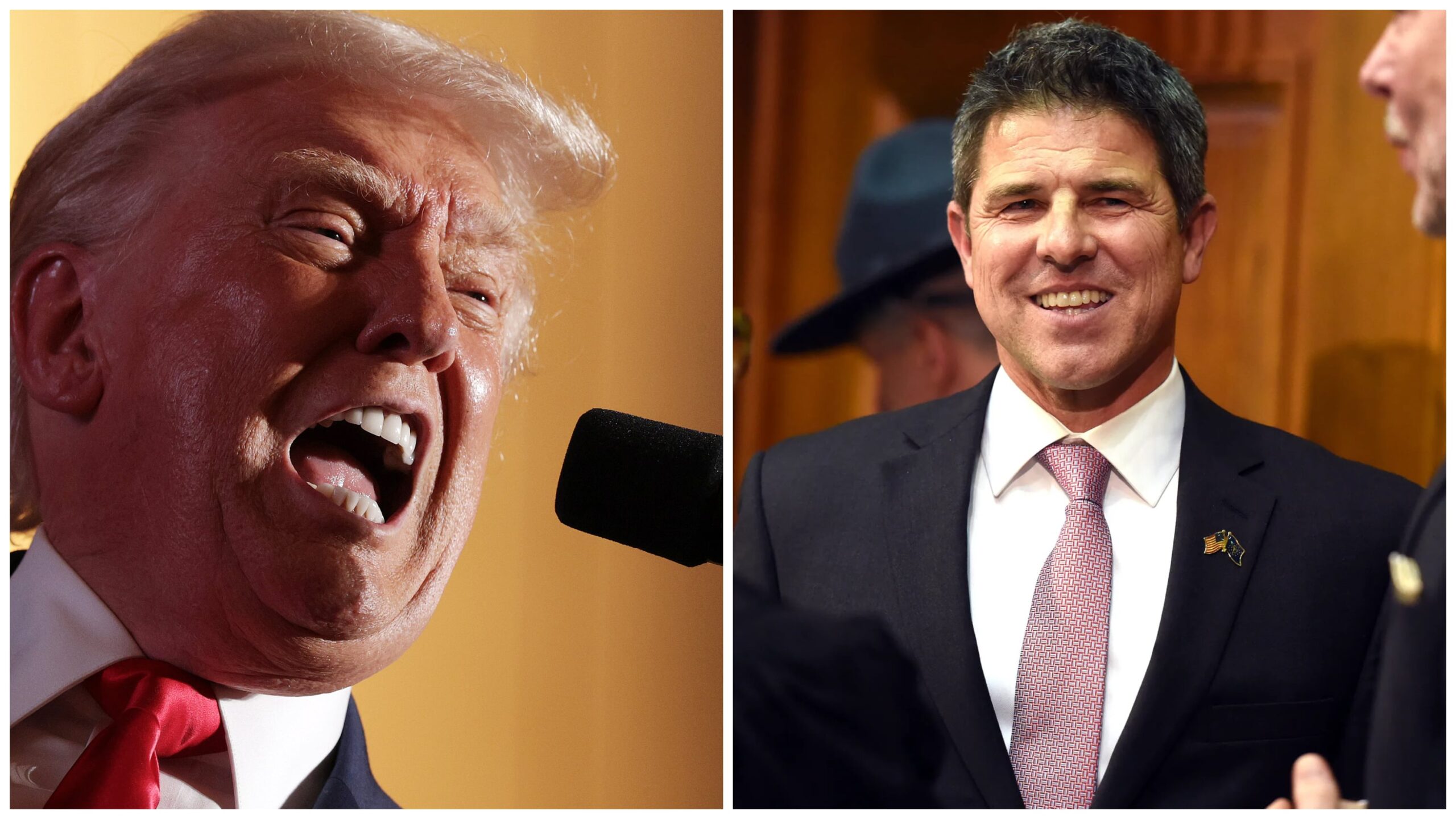
Former President Donald Trump has expressed his discontent with members of the Indiana State Senate after they rejected a proposed congressional redistricting map. The map, which aimed to eliminate the state’s two Democratic congressional districts, was seen as a key element in Trump’s strategy to consolidate power within the Republican Party ahead of the 2026 midterm elections.
On December 7, 2023, the Indiana State Senate voted 31-19 against the gerrymandered map. In a post on Truth Social, Trump criticized the senators, particularly targeting Senate President Rod Bray. He wrote, “Republicans in the Indiana State Senate, who voted against a Majority in the U.S. House of Representatives, should be ashamed of themselves.” Trump continued, “Headed by a total loser named Rod Bray, every one of these people should be ‘primaried,’ and I will be there to help!”
This rejection is significant as it contrasts with actions taken in other Republican-controlled states, such as Texas and Ohio, where similar redistricting efforts have been adopted to bolster Republican representation. Rodric Bray had previously indicated that the redistricting plan lacked the necessary support to pass.
The back-and-forth escalated when Trump publicly criticized Bray, prompting House Speaker Mike Johnson to intervene. Despite the pressure, 21 Republicans, including Bray, sided with Democrats to defeat the measure. Several senators cited Trump’s aggressive rhetoric and behavior as a key reason for their opposition to the map.
In a troubling turn, some Indiana Republicans who spoke out against the proposal were reportedly subjected to threats, including bomb threats. State Senator Greg Walker, who voted against the redistricting plan, stated, “I refuse to be intimidated. I made a choice.” He emphasized that he would not allow political violence to dictate legislative decisions.
While Trump has consistently targeted Bray on social media, his in-person remarks have raised questions about his awareness of the situation. During a recent press event in the Oval Office, Trump struggled to recall Bray’s name, referring to him as “a man named Bray” and questioning his position. Despite this, Trump maintained his intention to support any candidate challenging Bray in future primaries.
The dynamics within the Indiana GOP illustrate the growing tensions as Trump continues to exert influence over the party. With the midterm elections approaching, the party faces critical decisions that could impact its long-term strategy and unity. As the political landscape shifts, the implications of this redistricting battle could resonate beyond Indiana, affecting Republican efforts nationwide.