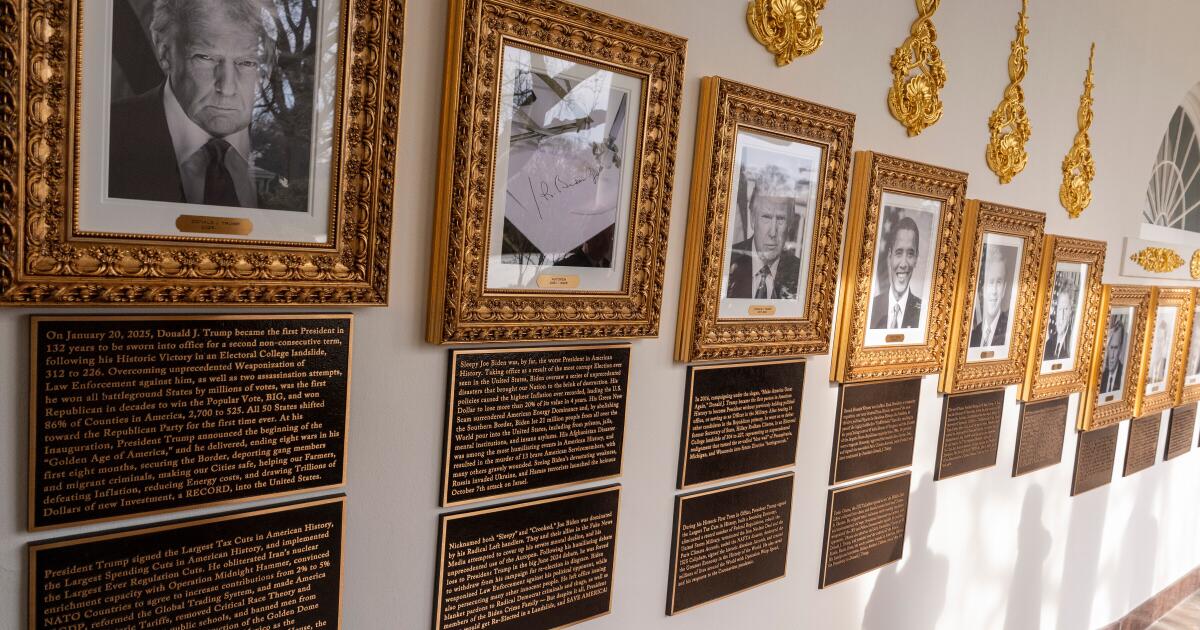
The recent installation of new plaques featuring controversial statements from former President Donald Trump has sparked significant backlash. Critics have voiced their discontent, particularly regarding the plaques displayed below presidential portraits, which some describe as “despicable.” Among the contentious remarks is a reference to former President Barack Obama’s signature healthcare legislation, labeled as “the highly ineffective ‘Unaffordable Care Act.’”
The plaques, which adorn the Presidential Walk of Fame, are not just a matter of personal opinion but have been seen as an affront to the history of the office. In a striking contrast to the other gilded portraits, President Joe Biden is represented by a photograph of an autopen, an image that Trump has used to question Biden’s age and capability. This portrayal has further fueled the fire of criticism surrounding the plaques.
Public Outcry and Calls for Action
In letters to the editor, constituents from various locations have expressed their outrage. Judy Melto from Pasadena described her reaction as one of physical discomfort upon reading the statements. She urged Congress to intervene, citing the plaques as a “destructive force” that undermines the historical significance of the White House.
Similarly, Christy Edwards of Woodland Hills questioned the permanence of these installations, suggesting that any future president would likely remove them. Edwards expressed a desire for a more respectful representation of the White House, lamenting the gaudy gold embellishments and the association of Trump’s name with various buildings.
The sentiments voiced are not limited to the plaques alone. Critics have directed their ire towards the current administration’s communications, particularly targeting White House Press Secretary Karoline Leavitt. Linda Shahinian of Culver City commented on Leavitt’s description of Trump, arguing that terms like “the worst President in American History” reflect a lack of respect for both the office and history itself. This ongoing public discourse indicates a growing frustration with the political climate.
Implications for the Future
As discussions continue, the implications of these plaques extend beyond mere aesthetics. They represent a broader narrative about the legacy and memory of presidencies in American history. The backlash suggests a yearning among some citizens for a return to decorum and respect within the political realm.
The contrasting opinions on the plaques reveal a divided public sentiment, reflecting larger issues at play in contemporary politics. As the nation looks ahead, the future of these plaques remains uncertain, but the dialogue surrounding them is likely to persist as part of the ongoing reflection on presidential legacies.