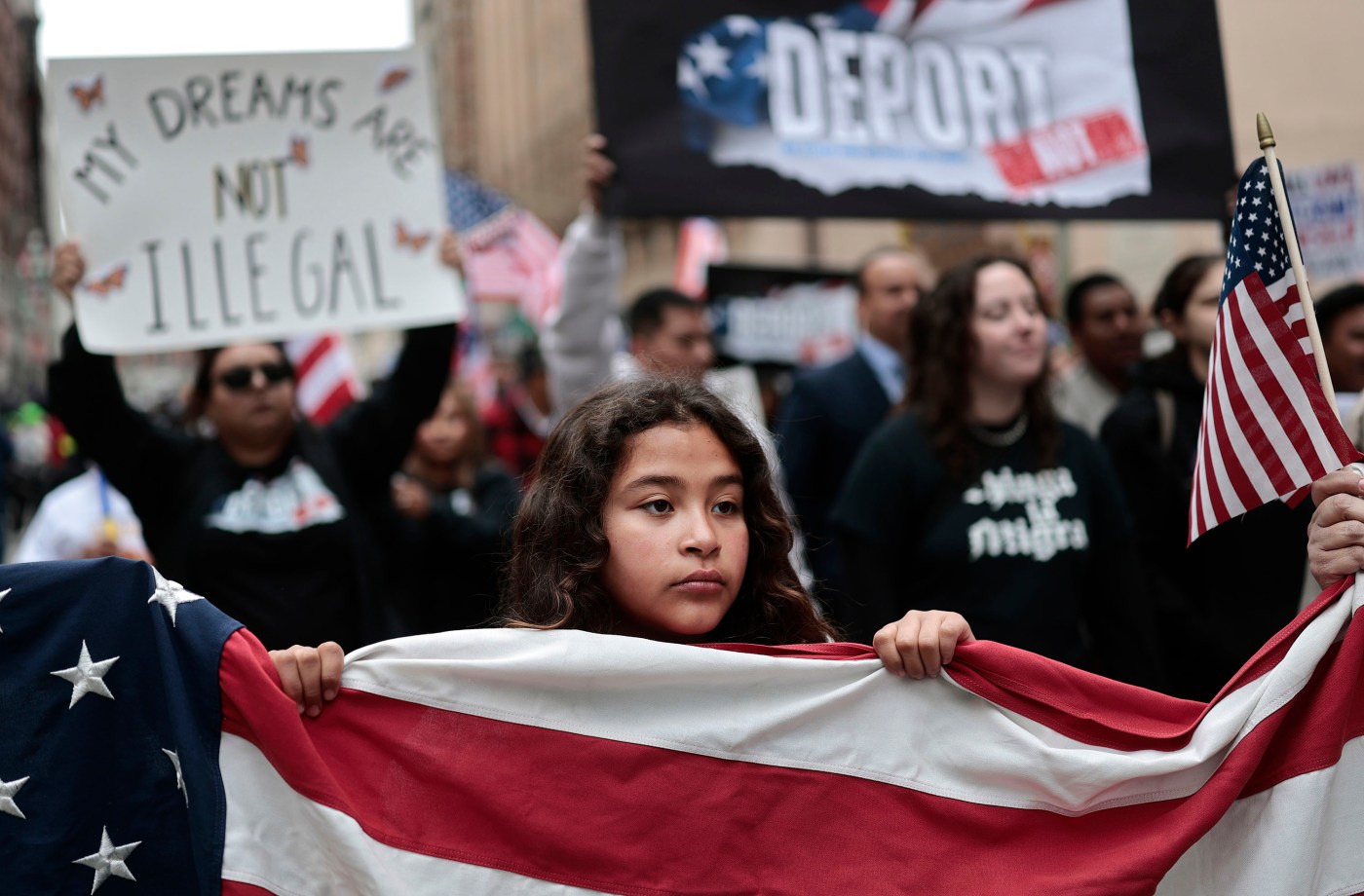
President Donald Trump experienced a significant decline in public support for his immigration policies throughout 2025. Initially, he had successfully implemented measures to secure the southern border, aligning with his campaign promises. However, as the year progressed, his administration’s increasingly stringent anti-immigrant agenda alienated many Americans. By December, polling data from Reuters/Ipsos indicated a 20-point drop in his approval ratings regarding immigration, shifting from a positive 9-point margin in March to a negative 11-point margin.
The turning point can be traced back to the administration’s rhetoric and actions. Trump frequently described immigration as an “invasion,” and on March 15, he invoked the Alien Enemies Act as justification for deporting over 200 Venezuelans to a prison in El Salvador. Despite his claims of targeting only violent criminals, data from ICE revealed that a majority of those deported had not been charged with any crimes.
In stark contrast to the surge in refugee admissions under President Joe Biden, which overwhelmed the U.S. support systems, Trump’s administration took a drastic approach. On his first day in office, he issued an executive order halting the U.S. Refugee Admissions Program, leaving thousands of refugees stranded, including those with pending applications. The current admissions rate stands at just 7,500, a stark reduction from previous years.
Trump’s narrative has also included derogatory comments about immigrants from what he refers to as “Third World” countries, expressing a preference for white immigrants. His refugee program has notably prioritized white Afrikaners, whom he claims face persecution in their home country. This shift has widened the pool of illegal immigrants, as the administration has stripped legal status from individuals who had previously entered under temporary protections. This includes an estimated 1.2 million immigrants who may soon face deportation.
Conditions in detention facilities have drawn sharp criticism. A temporary facility in Florida earned the nickname “Alligator Alcatraz” due to its alleged inhumane conditions. This was the first of several detention centers that became notorious under the Trump administration. Backlash against these facilities has intensified, particularly concerning the treatment of detainees, some of whom are legal immigrants, including graduate students and even U.S. citizens. Reports indicate that individuals have been held for days or weeks without due process.
As part of his broader public safety agenda, Trump has deployed National Guard troops to cities such as Los Angeles, Washington, Portland, and Chicago. This has been accompanied by a visible presence of ICE agents and Border Patrol officers, often equipped for combat, conducting aggressive operations against immigrants, many of whom have no criminal records.
Looking ahead to 2026, the Supreme Court is currently deliberating on the potential repeal of birthright citizenship, a change Trump has deemed essential. Additionally, ICE has begun utilizing mobile facial recognition technology to identify undocumented immigrants in public spaces, raising concerns among civil rights advocates. The agency is also actively recruiting, offering bonuses of up to $50,000 for new hires.
Trump’s immigration policies reflect a broader perception of mass migration as a threat to what he defines as “American” culture, despite the reality that this culture has been shaped by centuries of immigration. Recently, he has introduced aggressive quotas for denaturalization, targeting between 100 to 200 individuals a month, a process typically reserved for cases involving immigration fraud. This new approach is perceived as a tactic to instill fear among those who believed they had successfully navigated the path to citizenship.
As 2026 approaches, the American public faces a critical moment to reflect on the direction of immigration policy and its implications for the nation’s future. With mounting evidence of widespread discontent, the question remains whether these policies will continue to resonate with voters or further alienate them.