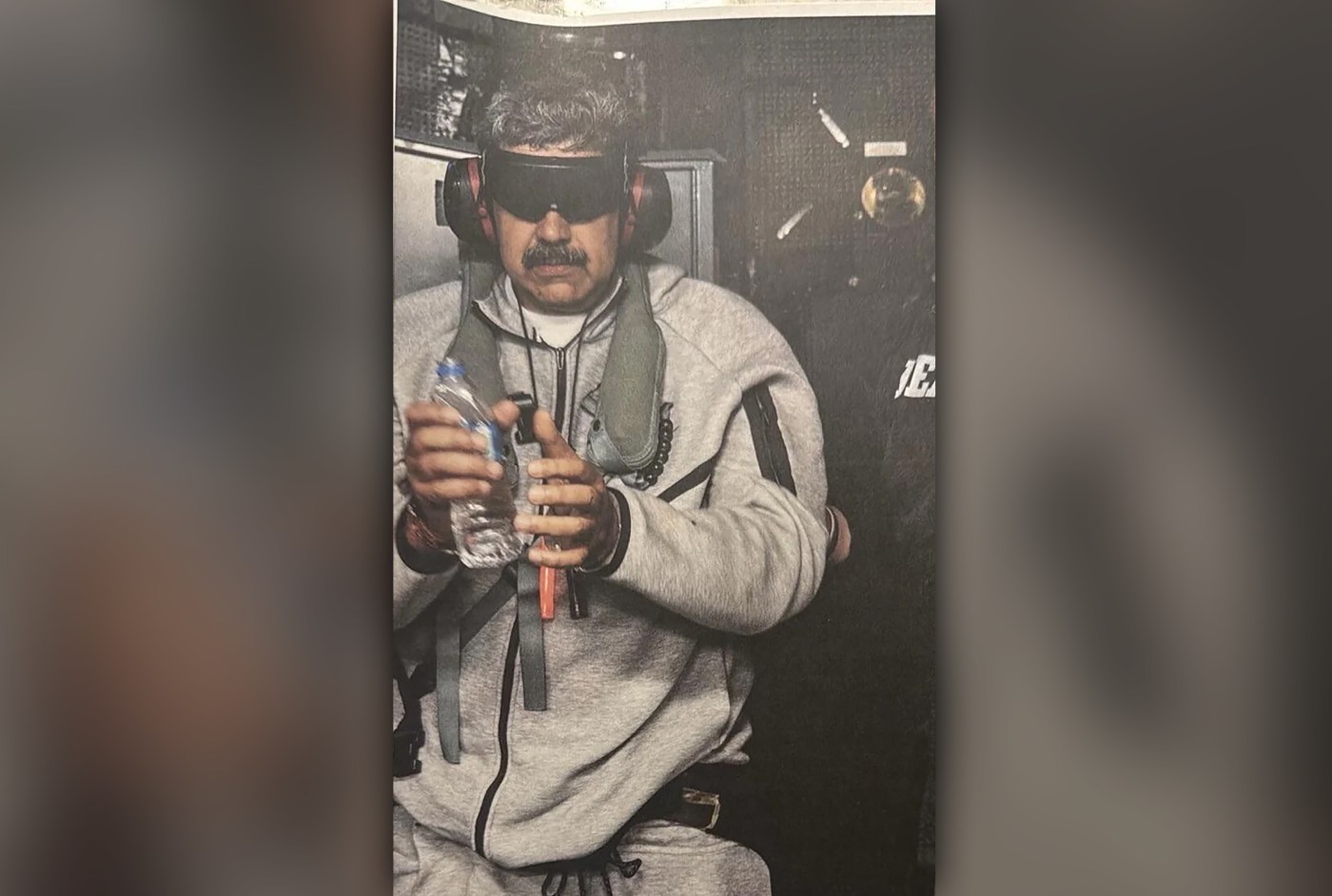
The U.S. military executed a significant operation on March 9, 2024, resulting in the arrest of Venezuelan President Nicolás Maduro and his wife, Cilia Flores, on narcoterrorism charges filed in Manhattan federal court. Chairman of the Joint Chiefs of Staff, General Dan Caine, outlined the details of the operation, which he described as an “apprehension mission,” contrasting sharply with former President Donald Trump‘s claims of a large-scale military intervention in Venezuela.
According to General Caine, U.S. forces conducted the operation in the early hours, successfully landing helicopters in Venezuela, apprehending the Maduros, and departing within two hours. The operation was characterized as a focused effort to assist the Department of Justice rather than an act of war or regime change that would require congressional approval. This contrasts significantly with Trump’s hyperbolic description of the event, which he likened to “an assault like people have not seen since World War II.”
General Caine noted that the operation, dubbed Operation Absolute Resolve, aimed to capture a fugitive with a $50 million reward on his head, reflecting the seriousness of the charges against Maduro. The Venezuelan leader has faced allegations of running a drug cartel, with indictments dating back to 2020. Additional charges were unsealed by Jay Clayton, the U.S. Attorney for Manhattan, indicating the legal challenges Maduro faces upon his return to the United States.
Maduro, who has been accused of overseeing fraudulent elections in 2018 and 2024, had numerous opportunities to leave Venezuela peacefully, including discussions with Trump in recent weeks. Instead, he chose to remain and was captured while attempting to secure himself in a fortified safe room. His arrest marks a significant moment in U.S.-Venezuela relations, with the potential for broader implications for the region.
Following the apprehension, Maduro was transported to the USS Iwo Jima, stationed offshore, before being flown to Stewart Air National Guard Base in New York. As he awaits trial, questions arise regarding the political landscape in Venezuela. The current Vice President, Delcy Rodríguez, may assume leadership, although Trump suggested that the U.S. would play a role in the country’s governance during this “transition.”
The operation’s swift execution raises concerns about the future stability of Venezuela. While General Caine emphasized that this was a precise mission, the potential for chaos following the arrest of a long-standing leader cannot be overlooked. If U.S. troops are necessary to maintain order, it could lead to the very foreign entanglements that Trump has criticized in the past.
As the situation develops, the international community watches closely, assessing the implications of Maduro’s arrest on Venezuela’s political future and its relationship with the United States. For now, the immediate focus remains on the legal proceedings that await Maduro in New York and the broader ramifications for Venezuelan governance and stability.