A recent study has shed light on the elusive axion, a theoretical particle proposed to address unresolved questions in physics, particularly concerning dark matter. Researchers utilized archival data from the Hubble Space Telescope to investigate the potential cooling effects of axions on white dwarfs, which are the dense remnants of dead stars. Although the study did not find evidence for axions, it provided valuable insights into their possible interactions with electrons.
Understanding Axions and White Dwarfs
The axion was first introduced several decades ago to resolve complexities associated with the strong nuclear force. Initial searches for the particle in particle collider experiments yielded no results, leading to a decline in interest. However, recent developments have reignited the scientific community’s focus on axions as possible candidates for dark matter.
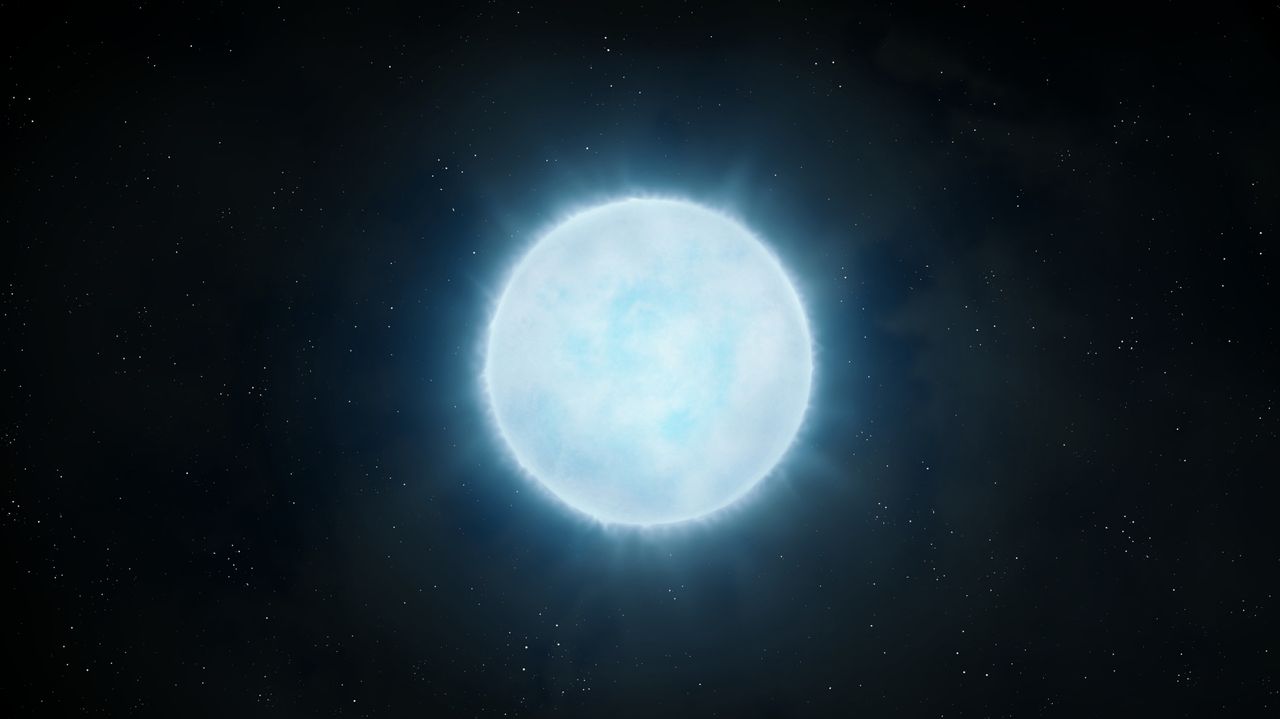
White dwarfs, which can condense the mass of the sun into an object smaller than Earth, are particularly intriguing in this context. These stellar remnants maintain their structure through a phenomenon known as electron degeneracy pressure. This occurs when electrons, which cannot occupy the same quantum state, create a pressure that counteracts gravitational collapse.
According to theoretical models, axions could be produced by fast-moving electrons. In a white dwarf, the electrons move at nearly the speed of light within their confined space, potentially leading to high rates of axion production. If axions escape, they could drain energy from the white dwarf, causing it to cool more rapidly than expected.
Innovative Research Methods and Findings
The researchers implemented a sophisticated software suite to simulate star evolution, predicting the typical temperature of white dwarfs based on their age with and without axion cooling. They then examined data from the globular cluster 47 Tucanae, which contains a large population of white dwarfs formed around the same time, providing a robust dataset for analysis.
Despite their thorough investigation, the researchers found no signs of axion-induced cooling among the white dwarfs. Nonetheless, their findings imposed new constraints on the interaction between electrons and axions, suggesting that axions cannot be produced more efficiently than once in a trillion attempts. This does not eliminate the possibility of axions existing, but it indicates that their interaction with electrons is unlikely.
The study, published in a pre-print paper in November 2025 on the open-access server arXiv, illustrates the ongoing quest to understand dark matter and the nature of the universe. The findings emphasize the need for continued exploration and innovative approaches in the search for axions, as astronomers seek to unravel the mysteries of these hypothetical particles.