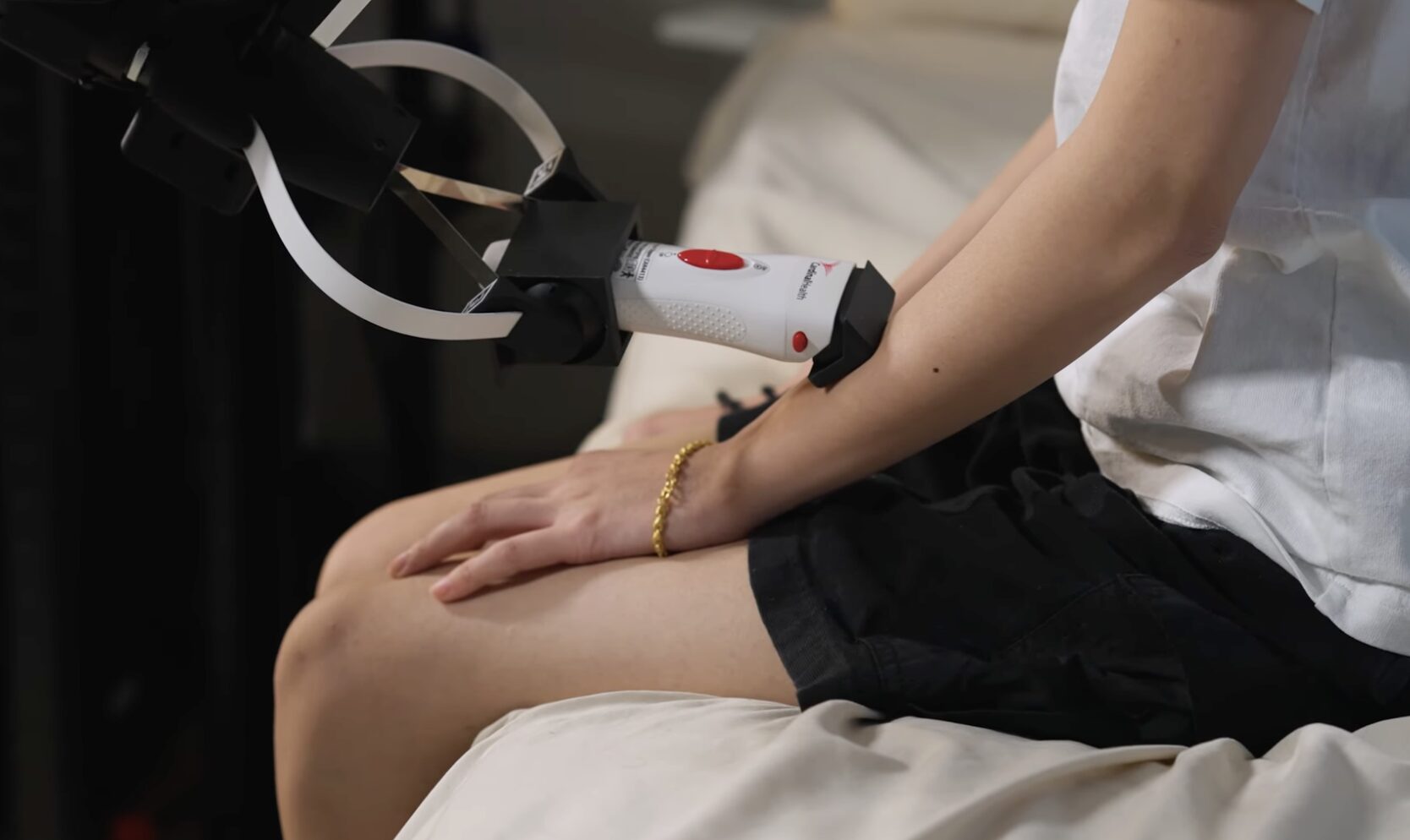
Residents at the Baptist Senior Family, an assisted living community near Carnegie Mellon University (CMU), recently engaged with an innovative caregiving robot that responds to voice commands. This robotic arm is designed to interact naturally with users, adjusting its actions based on real-time feedback.
During a recent demonstration, the robot announced, “I’m slowing down and increasing the pressure,” while assisting a resident. When the resident indicated that the pressure was too light, the robot promptly responded, “I’m increasing the pressure slightly,” showcasing a new level of interaction that goes beyond mere command-following.
Advancing Human-Robot Interaction
This advancement in human-robot communication comes from research conducted at CMU’s Robotic Caregiving and Human Interaction lab (RCHI). Researchers are exploring how assistive robots can use natural dialogue to adapt their actions to fit human preferences, marking a significant shift in how technology can aid caregiving.
Jim Wang, a Ph.D. student and the lead researcher on the project, explained, “Natural language is a way that a lot of people communicate with others in their daily lives. We wanted to create an interface that many users could pick up and use without prior training.” The project, titled “Bidirectional Human-Robot Communication for Physical Human-Robot Interaction,” allows the robot to articulate its intentions, listen to user input, and respond verbally while physically engaging with users.
Initially, the robot focused on unidirectional communication, announcing its planned movements before executing them. This approach helped residents anticipate physical contact and build trust. As research progressed, the team achieved bidirectional communication, where user commands directly influence the robot’s actions and the robot can respond with confirmations or clarifying questions.
Enhancing User Experience Through Feedback
The system leverages a large language model (LLM) to interpret user speech, grounding verbal instructions in the robot’s movement trajectory. This enables a more intuitive interaction, akin to the exchanges one might have with a human caregiver. Wang noted the importance of transparency during these interactions, stating, “Transparency not only calms anxieties humans have about working with a robot, but it also continually builds trust between robot and user.”
For instance, if a resident notes that the pressure from the robot feels inconsistent, the robot is programmed to ask follow-up questions to better understand the issue and adjust its behavior accordingly. This selective listening process ensures that the robot remains focused on its tasks while facilitating a more natural conversational flow.
The research team’s findings emphasize the significance of trust in human-robot interactions, which is essential for effective caregiving. The work has garnered funding from Honda R&D Americas Inc. and has been accepted for presentation at the 2026 Human-Robot Interaction Conference.
For more information about this innovative research, interested parties can visit the project website or contact Aaron Aupperlee at CMU.
As caregiving robots continue to evolve, the integration of conversational capabilities may lead to broader acceptance and utilization in various caregiving settings, potentially transforming the landscape of assistance for seniors and individuals with disabilities.