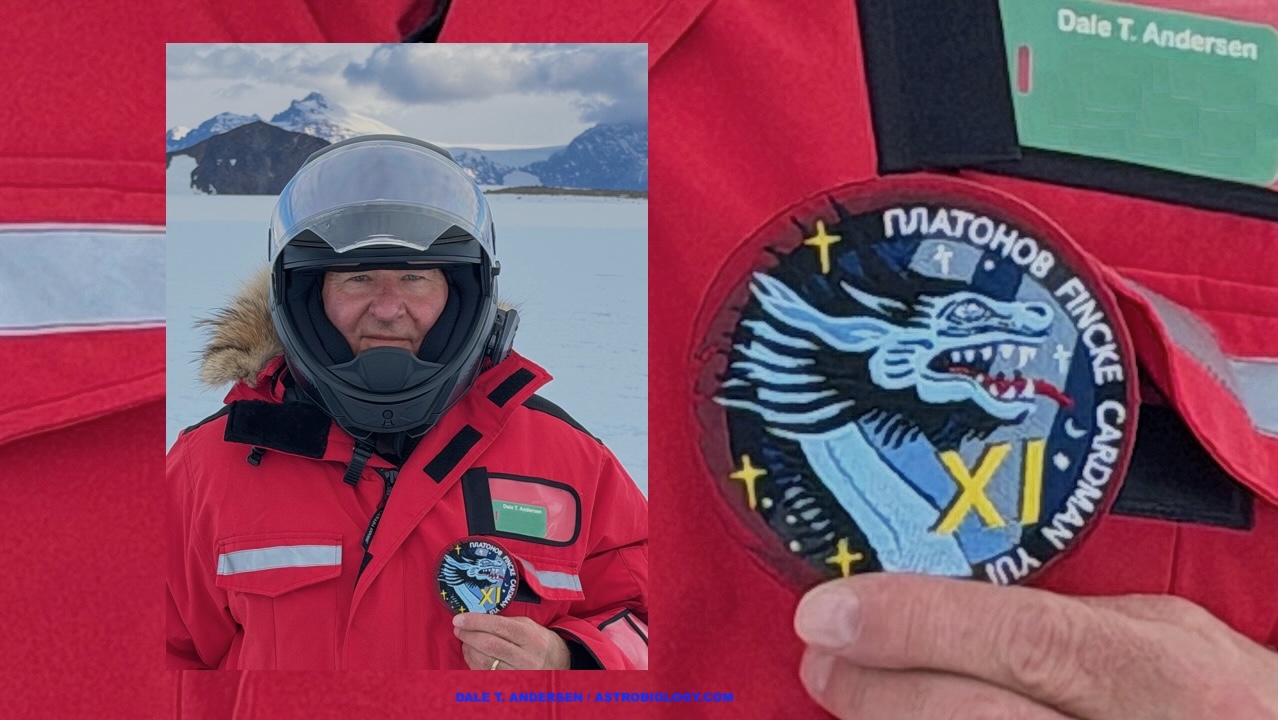
Dale Andersen and his astrobiology research team have embarked on their annual expedition to Antarctica, focusing on the unique environment of Lake Untersee. After departing from the Ultima ice airstrip, the team traveled south with snowmobiles to reach their research base. This year’s mission is particularly significant as it leverages newly established Starlink satellite connectivity, allowing for enhanced communication and data sharing from the remote location.
With the Starlink system operational, Andersen, a prominent astrobiologist, shared vivid imagery and a video of their surroundings, showcasing the harsh yet fascinating environment of Lake Untersee. Notably, he held a patch representing the International Space Station Crew 11, a reminder of his collaboration with astronaut and fellow biologist Zena Cardman. The duo had intended to engage in a dialogue about Antarctica and space, but the early return of the ISS crew necessitated a change in plans.
The Importance of Lake Untersee Research
For Andersen and his team, the choice of Lake Untersee is deliberate. Each year, they return to this challenging environment to pursue vital research aimed at expanding our understanding of Earth’s history and future. “Lake Untersee is a difficult place to live and work. But we are seeking new knowledge. Knowledge that will inform us about Earth’s past history and help us understand its future,” Andersen explained. This research not only addresses Earth’s evolution but also plays a crucial role in the quest for extraterrestrial life, particularly on planets such as Mars and the icy moons of Jupiter and Saturn.
The ongoing work at Lake Untersee has garnered attention since its inception. Andersen has been sharing research updates from Antarctica for nearly three decades. In fact, he and Keith, a colleague, claim to have operated one of the first web servers updated from the continent back in 1996.
As the team dives into this year’s field season, they remain committed to uncovering insights that could have significant implications for both our planet and the broader universe. The combination of their rigorous research approach and advanced technology like Starlink positions them at the forefront of astrobiological studies.
Images and videos sent from the Lake Untersee base camp will continue to provide a window into their findings, fostering a greater appreciation for this remote and scientifically rich area. The commitment of researchers like Andersen underscores the importance of understanding our own planet as we explore the possibilities of life beyond it.