A groundbreaking study has revealed that significant water reserves may have been stored deep within Earth’s mantle, potentially influencing the planet’s evolution from a fiery mass to a life-supporting environment. Led by Prof. Zhixue Du from the Chinese Academy of Sciences, researchers found that the mineral bridgmanite can contain much more water than previously understood. Their findings, published in the journal Science on December 11, 2025, challenge long-held beliefs about the planet’s interior.
Unlocking the Mysteries of Earth’s Water Storage
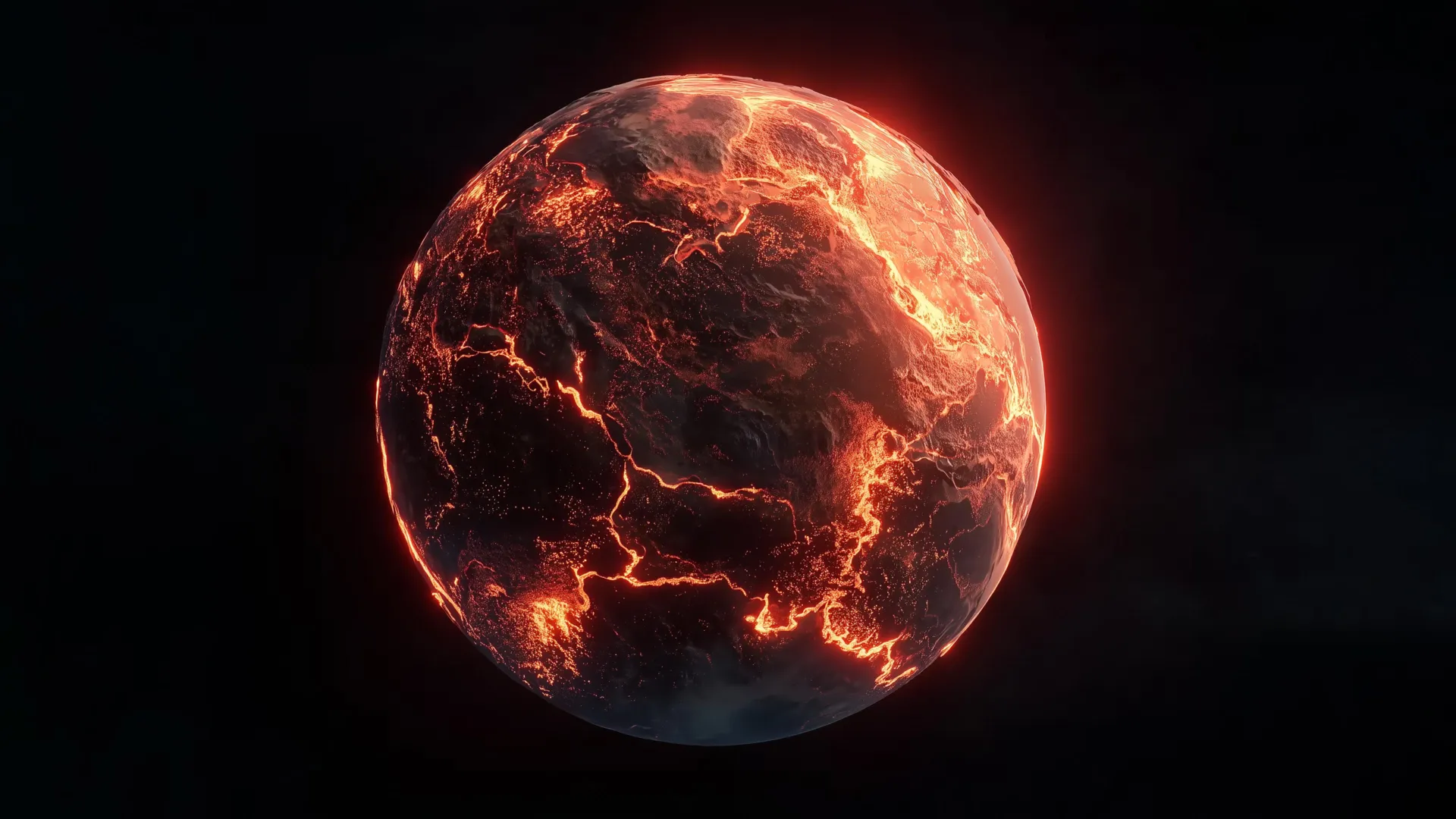
Around 4.6 billion years ago, Earth was a turbulent and molten world, with a surface covered by a vast ocean of magma. The extreme temperatures at that time made it impossible for liquid water to exist. The transition from this inferno to the blue planet we see today has long puzzled scientists.
The new research indicates that as Earth cooled, bridgmanite, the most prevalent mineral in the mantle, acted like a “water container,” potentially housing water volumes comparable to today’s oceans. This hidden reservoir could have been crucial in shaping Earth’s geology and surface environment.
Innovative Techniques Reveal Hidden Water Distribution
Previous experiments suggested that bridgmanite could hold only minimal quantities of water, primarily due to testing conditions that did not replicate the high temperatures found deep within the Earth. To address this, the research team developed a diamond anvil cell system paired with advanced laser heating techniques, successfully reaching temperatures of approximately 4,100 °C. This innovative setup allowed the scientists to simulate the intense conditions more than 660 kilometers beneath the surface.
Using advanced methods such as cryogenic three-dimensional electron diffraction and NanoSIMS, the research team mapped water distribution within tiny bridgmanite samples. Collaborating with Prof. LONG Tao from the Institute of Geology, they employed atom probe tomography to confirm that water is structurally dissolved in bridgmanite itself.
The results showed a significant increase in bridgmanite’s ability to store water at elevated temperatures. This discovery suggests that during Earth’s hottest phases, bridgmanite could have trapped far larger volumes of water than previously estimated.
Implications for Earth’s Geological and Biological Evolution
The research indicates that the lower mantle may serve as a much wetter reservoir than scientists had thought. The new estimates suggest water volumes could range from 0.08 to 1 times the volume of modern oceans, making this reservoir five to 100 times larger than earlier calculations.
This deeply stored water played a critical role in Earth’s geology. It acted as a lubricant for the planet’s internal processes, lowering the melting point and viscosity of mantle rocks, thus facilitating geological activity and plate tectonics. Over time, some of this water escaped to the surface through volcanic activity, contributing to the formation of Earth’s early atmosphere and oceans.
The research posits that this hidden water reservoir was a pivotal factor in transforming Earth from a molten inferno into the vibrant, life-sustaining planet we inhabit today. The findings open new avenues for understanding the planet’s history and the fundamental processes that govern its evolution.
The study not only enhances our knowledge of Earth’s internal dynamics but also underscores the importance of water in shaping planetary environments. As research continues, scientists aim to explore further implications of these findings on our understanding of terrestrial and extraterrestrial water sources.