Research on extremophiles has long expanded our understanding of life’s limits, particularly focusing on bacteria and archaea. A recent study has introduced a groundbreaking discovery: a novel geothermal amoeba known as Incendiamoeba cascadensis, which can thrive and reproduce at a remarkable temperature of 63°C (145.4°F). This finding establishes a new upper temperature limit for all eukaryotic organisms, reshaping existing paradigms regarding the thermal constraints of cellular life.
Researchers conducted extensive growth experiments and utilized advanced imaging techniques, including high-temperature live-cell imaging and expansion microscopy, to confirm the cellular proliferation and mitotic processes of I. cascadensis. Notably, the amoeba displayed movement even at temperatures reaching 64°C, demonstrating its extraordinary resilience in extreme environments.
The genome of I. cascadensis was sequenced and analyzed through comparative genomics, revealing a significant enrichment of genes associated with proteostasis, genome stability, and environmental sensing. These genetic features challenge the current understanding of how eukaryotic cells can adapt and survive under extreme thermal conditions.
Significance of the Discovery
This discovery holds immense implications for the field of astrobiology, suggesting that eukaryotic life may exist in environments previously thought to be inhospitable. The identification of Incendiamoeba cascadensis as a novel genus and species within the Amoebozoa group is supported by comprehensive phylogenetic, morphological, and physiological data.
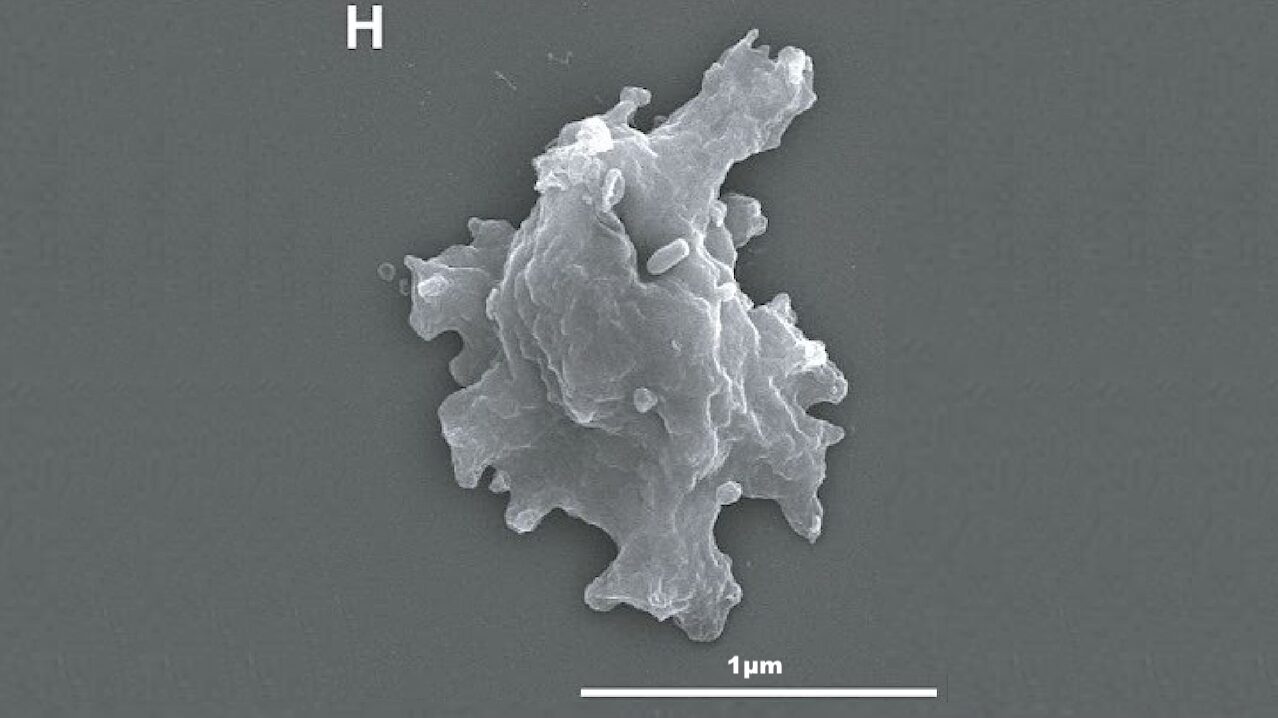
The study also includes detailed imagery of the amoeba, showcasing its various forms. Key observations include the distinct morphology of I. cascadensis in both vermiform and amoebiform states, depicted through differential interference contrast (DIC) and scanning electron microscopy (SEM). These visual representations reveal its unique structural features, such as a lobate nucleus and complex mitochondrial architecture, providing insights into its cellular organization.
Future Directions in Research
As researchers continue to explore the limits of life, the findings related to Incendiamoeba cascadensis open new avenues for investigation. The potential for eukaryotic life to endure extreme conditions prompts questions about the adaptability of life forms in other planetary environments.
The full study, including all findings and methodologies, is available on biorxiv.org, contributing to the growing body of knowledge in extremophile research. These insights not only enhance our comprehension of life’s resilience on Earth but also inform the search for extraterrestrial life in similar extreme environments.