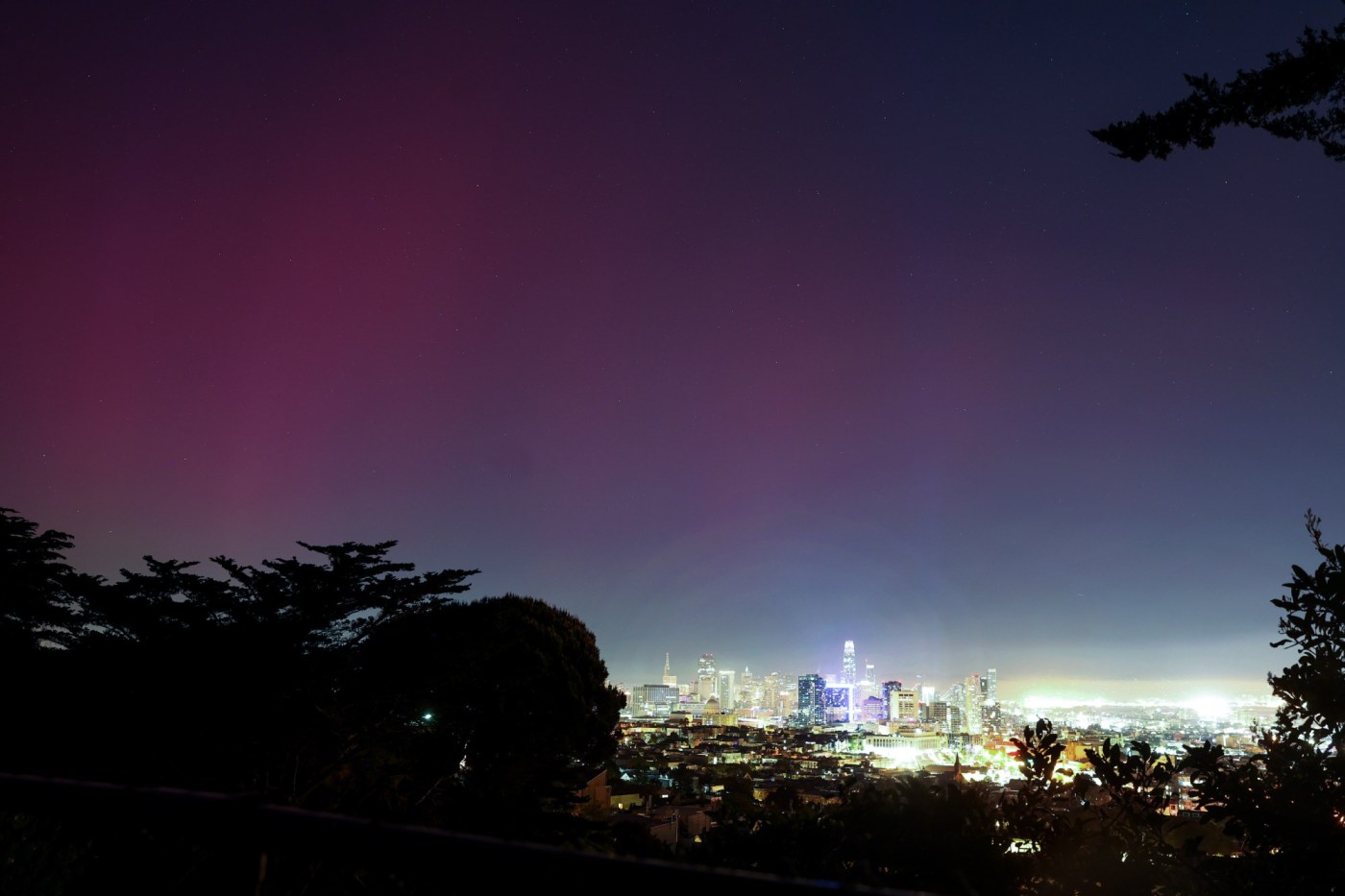
Jason Press, a graduate of Marin Catholic High School, is pioneering the use of artificial intelligence to improve scientific data collection on the aurora borealis, commonly known as the northern lights. Currently a senior at Pepperdine University in Malibu, Press’s research aims to overcome the challenges posed by cloud cover, which often obscures valuable data during observations of this stunning natural phenomenon.
Press, aged 22, explained the issue succinctly: “There are very few clear-sky nights with aurora data. When clouds roll in, that data is usually lost.” His project involves creating a model that can essentially “see through” cloud cover, allowing for better data recovery from past satellite observations. This innovative approach has already shown promise, with Press and his team successfully clarifying images from 90 minutes of satellite video footage of the aurora borealis last summer.
By December 2023, their efforts earned them an invitation to present their findings at the American Geophysical Union conference, a prestigious platform for discussing advancements in Earth and space sciences. Press’s computer science professor, Fabien Scalzo, expressed pride in his student’s achievements, noting that Press’s work is opening new avenues for research in both computer vision and AI.
A New Approach to an Old Challenge
The aurora borealis, a result of interactions between solar-charged particles and the Earth’s magnetic field, has been tracked by satellites for over a decade. Yet, according to Press, more than half of the data collected from these observations has been rendered useless due to cloud cover.
Press’s primary mentor, Gerard Fasel, a physics professor at Pepperdine, emphasized the significance of this research. Being able to analyze the aurora with greater accuracy could enhance scientists’ ability to predict severe solar events, such as solar flares and solar wind emissions, which can disrupt technology on Earth.
Historically, such solar events have had serious consequences. In 1859, a powerful solar wind blast ignited telegraph lines across the globe. More recently, a solar storm in 1989 led to a power grid failure in Quebec, leaving millions without electricity for days. “We’d like to be able to predict these storms so that we can power our spacecraft down to avoid damaging electrical circuits,” Fasel stated. His research on the aurora borealis has been ongoing since 1995, showcasing a long-standing commitment to understanding these phenomena.
A Family Legacy of Excellence
Press was raised in Mill Valley, California, as the middle child among five siblings, all of whom have pursued excellence in academics and extracurricular activities. His parents, veterinarians Mary and Curtis Press, instilled a strong work ethic and a sense of curiosity in their children. The family moved from Mill Valley to Belvedere when Press was 18.
The principal of Marin Catholic High School, Chris Valdez, highlighted the Press family’s reputation within the school community. “Jason Press is one of five Press siblings who attended Marin Catholic, each excelling academically while also engaging in service, sports, and music,” Valdez noted. He praised Jason’s initiative in blending his intellectual strengths with creativity to tackle this ambitious data recovery project.
As Press continues his research at Pepperdine, he exemplifies how the intersection of technology and scientific inquiry can lead to advancements in our understanding of the natural world. His work not only contributes to the field of auroral studies but also enhances our capacity to anticipate and respond to solar-related disruptions that could impact technology on Earth.