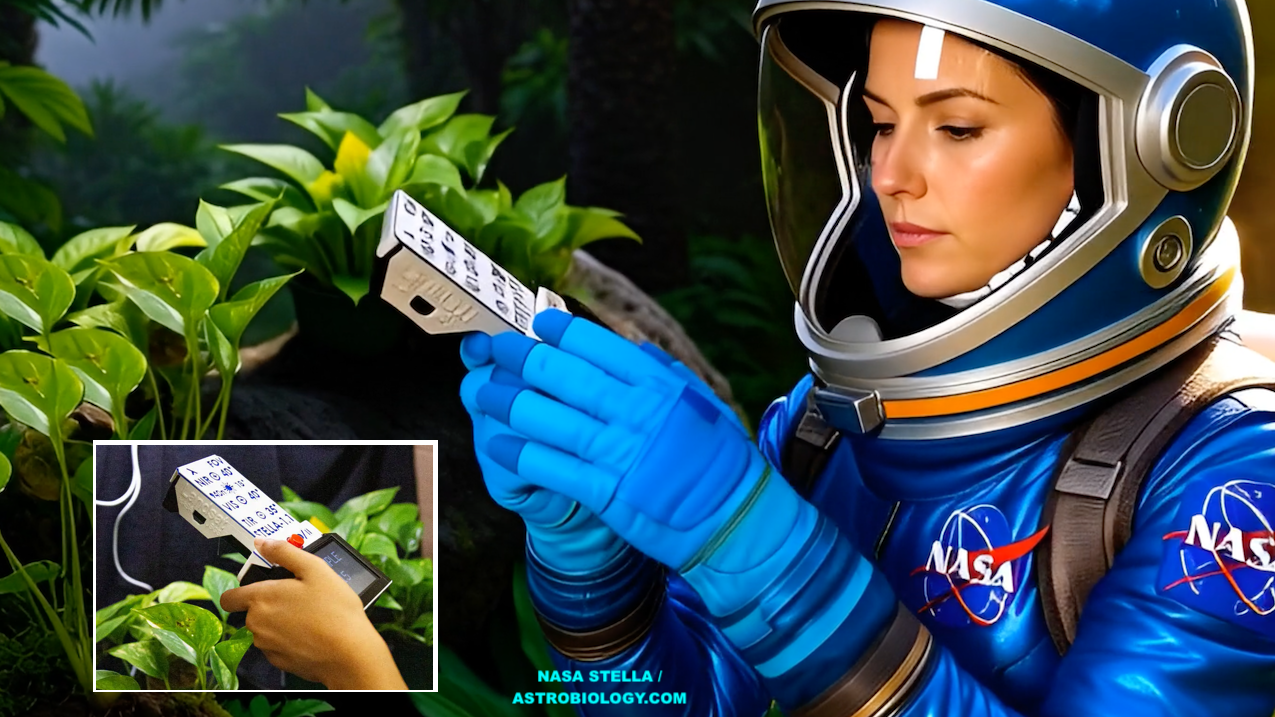
NASA has launched an innovative initiative called STELLA, which stands for Science and Technology Education for Land/Life Assessment, aimed at democratizing the use of remote sensing technologies. This project enables individuals and communities to construct low-cost, open-source instruments that can analyze environmental conditions. The initiative is part of a broader effort to prepare for future explorations of other planets and to better understand extraterrestrial life.
The STELLA instruments are designed to be accessible, allowing users to build devices using commercially available components and 3D-printed housings. For approximately $200, participants can assemble a basic version, known as the STELLA-Q, which measures light spectra across 18 channels in the visible and near-infrared range. This capability allows users to assess natural and built environments, including monitoring plant health, which is crucial for understanding ecosystems.
Empowering Future Explorers with Citizen Science
NASA’s Goddard Space Flight Center leads the STELLA project, which targets a new generation of researchers, often referred to as the Artemis Generation. This initiative promotes hands-on learning experiences in remote sensing science, engaging students and enthusiasts in the scientific process. As NASA states, the goal is to inspire analytical thinking and provide insight into the quantitative aspects of satellite data.
According to a research paper published on March 15, 2024, the STELLA instruments not only facilitate educational opportunities but also open new avenues for scientific research. The project recognizes the growing interest in citizen science and DIY initiatives globally, encouraging participants to utilize their creativity in building sensor technologies. The accompanying open-source software, written in a user-friendly variant of the Python programming language, further simplifies the data analysis process, making remote sensing science more accessible.
Significance for Astrobiology and Future Missions
The development of these instruments holds significant implications for future astrobiology missions. As humanity prepares to explore potentially habitable worlds, understanding how life functions in different environments becomes paramount. The STELLA instruments enable in situ examination of alien ecosystems, allowing astronauts and robotic teams to analyze environmental conditions in real time.
The necessity for efficient data transmission is also addressed by the STELLA project. Instead of relying on complicated sample return missions, which can be logistically challenging, the instruments facilitate immediate data relay back to Earth. This capability not only enhances the learning experience for explorers but also accelerates the scientific discovery process.
The research paper emphasizes that as data accumulates from explorations, an evolving catalog of life forms can be created. This catalog, supported by artificial intelligence, will assist in identifying and differentiating various life forms encountered on other worlds. The STELLA initiative embodies a forward-thinking approach to space exploration, blending education with cutting-edge technology.
The STELLA project reflects a growing trend in science education, where complex technologies are made accessible to a broader audience. By fostering a vibrant community interested in remote sensing, NASA aims to cultivate the next generation of scientists and explorers. As they continue to develop these instruments, the potential for innovative research and exploration expands, promising exciting discoveries in the realms of astrobiology and beyond.
For more information on the STELLA program, visit NASA’s official site where the full paper is available for open access.