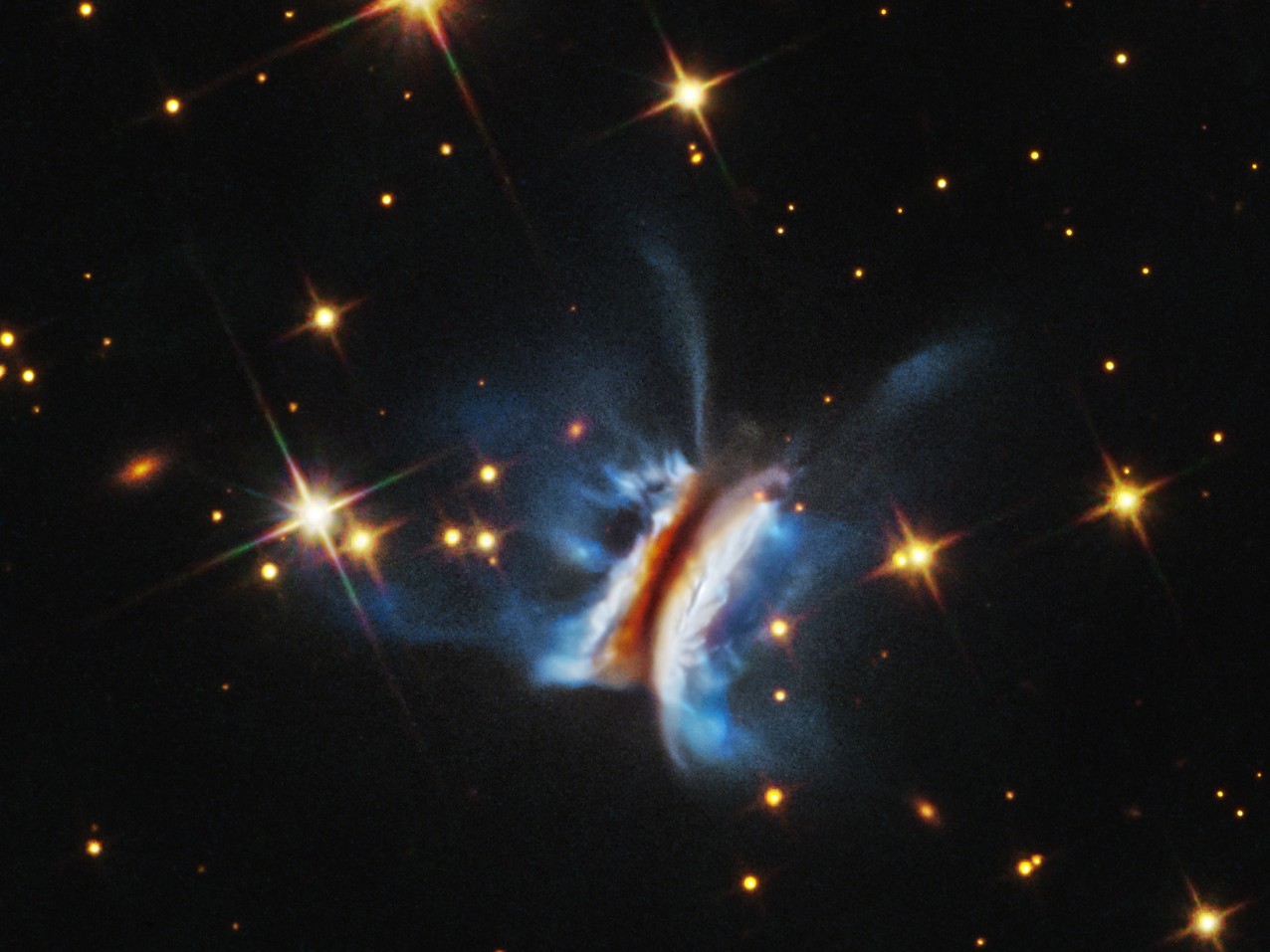
NASA’s Hubble Space Telescope has uncovered significant turbulence within the largest known region for planet formation. This discovery, detailed in a recent publication in the Astrophysical Journal, sheds light on the dynamic processes occurring in a region that has fascinated astronomers for years.
The observation focused on a massive molecular cloud located in the constellation of Perseus, known as the W51 region. This area is approximately 17,000 light-years from Earth and is characterized by its rich potential for star and planet formation. The findings indicate that intense turbulence is disrupting the orderly process traditionally associated with planet formation.
Understanding the Turbulence
Hubble’s observations revealed that the turbulence within W51 is likely caused by stellar winds and shockwaves from the formation of new stars. These forces can scatter materials, preventing the smooth accumulation of gas and dust that typically leads to the creation of planets. The research team, including lead author Kristina Monsch from the Center for Astrophysics, emphasized that this turbulence could explain why some regions are more conducive to planet formation than others.
Monsch noted, “The turbulence we’re seeing in W51 plays a critical role in how planets form. It challenges existing models of planet formation, which often assume a more stable environment.”
This research is particularly significant as it provides insights into the early stages of planetary systems, including our own solar system. The findings suggest that environments shaped by turbulence may lead to diverse planetary systems, potentially differing substantially from what we see in more stable conditions.
Implications for Future Research
The implications of these findings extend beyond the W51 region. Understanding how turbulence affects planet formation can help astronomers refine their models and predictions regarding the formation of planets in other star-forming regions across the universe. Moreover, this research may illuminate the processes that govern the emergence of habitable worlds.
The Hubble Space Telescope continues to be an invaluable tool in the study of astrophysics, and this recent discovery reinforces its role in expanding our understanding of the universe. As scientists continue to analyze data from Hubble, new revelations about the complexities of star and planet formation are expected.
The collaboration between NASA, the European Space Agency (ESA), and other institutions underscores the importance of international cooperation in advancing space science. The contributions of team members, including image processing by Joseph DePasquale from the Space Telescope Science Institute (STScI), have been vital in bringing these findings to light.
As researchers build on this work, the mysteries of planet formation remain a central focus for astronomers. The turbulence observed in W51 is just one piece of a larger puzzle, as scientists strive to understand the myriad factors influencing the birth of planets in our ever-expanding universe.