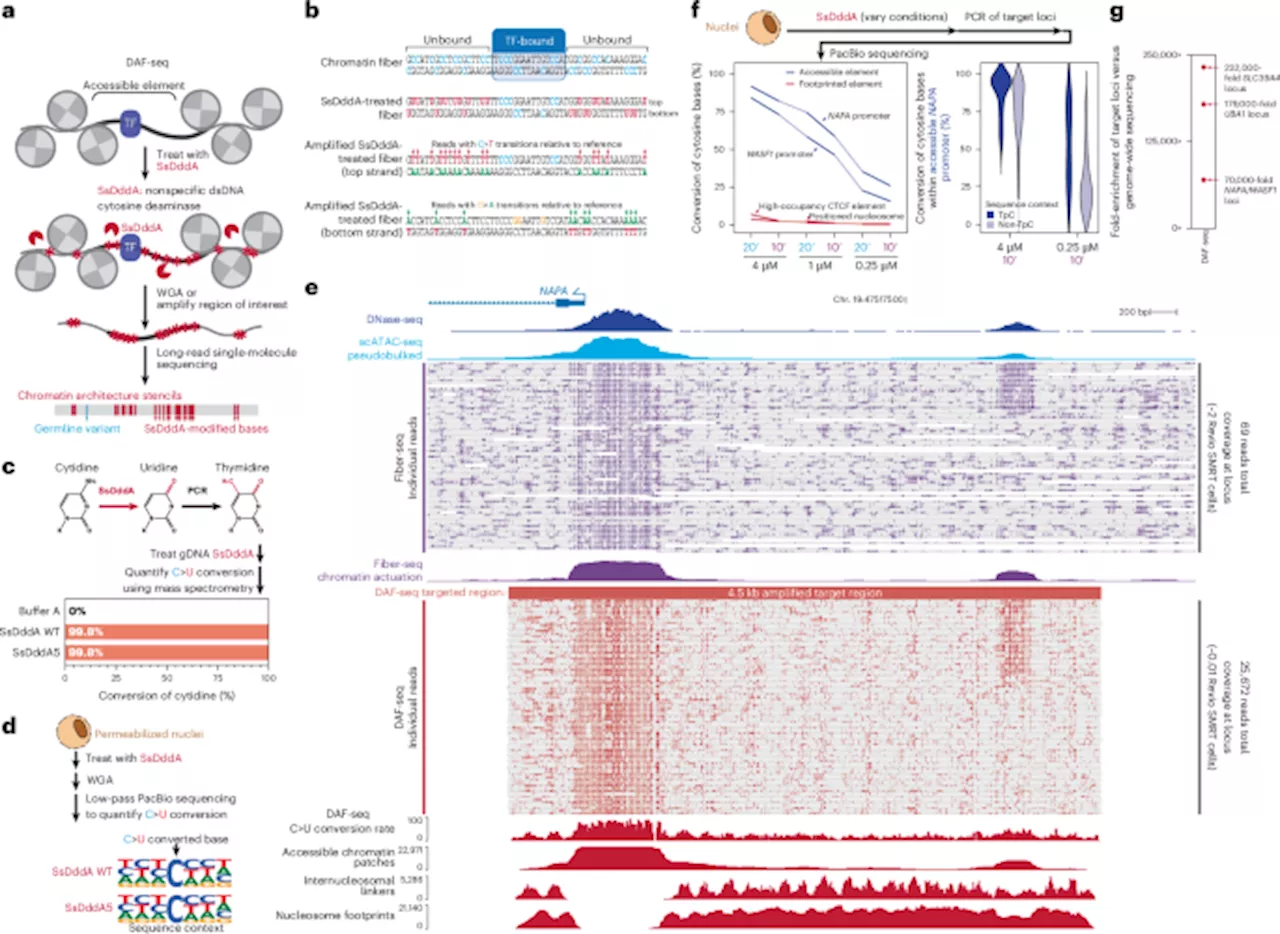
Gene regulation plays a critical role in cellular function, driven by the interaction of various proteins along chromatin fibers. Recent research from the University of Washington has introduced a groundbreaking technology known as Deaminase-Assisted single-molecule chromatin Fiber sequencing, or DAF-seq. This innovative method enhances our understanding of gene regulation by providing detailed insights into single-cell chromatin fiber architectures.
DAF-seq allows researchers to perform single-molecule footprinting at near-nucleotide resolution. This capability enables the simultaneous profiling of chromatin states and DNA sequences in individual cells. The technology illuminates how proteins occupy regulatory elements and reveals the functional implications of somatic variants and rare chromatin epialleles. Remarkably, single-cell DAF-seq generates comprehensive protein co-occupancy maps for approximately 99% of each cell’s mappable genome.
Insights into Chromatin Plasticity
The findings from DAF-seq indicate extensive chromatin plasticity both within individual diploid cells and across different cells. The study highlights a divergence of 61% in chromatin actuation between haplotypes within the same cell, and a 63% divergence notable across different cells. Such variability underscores the complexity of gene regulation and the need for advanced techniques to capture these dynamics.
Additionally, researchers discovered that regulatory elements tend to co-actuate along the same chromatin fiber in a distance-dependent manner, reflecting the influence of cohesin-mediated loops. This collaborative behavior of regulatory elements provides essential insights into the spatial organization of the genome and its impact on gene expression.
Furthermore, DAF-seq’s precision allows for the exploration of chromatin interactions at single-nucleotide, single-molecule, and single-cell levels. This capability marks a significant advancement in the field of genomics, facilitating a deeper understanding of the underlying mechanisms of gene regulation in diploid organisms.
Collaborative Research and Future Directions
The development of DAF-seq is a collaborative effort led by a team including A.B. Stergachis, E.G. Stergachis, and others from the Department of Genome Sciences at the University of Washington, as well as the Edison Family Center for Genome Sciences and Systems Biology at Washington University in St. Louis. Their work has been supported by notable organizations such as the National Institutes of Health and the Chan Zuckerberg Initiative.
This research holds promise for various applications, particularly in understanding genetic disorders and developing targeted therapies. The ability to map chromatin architectures with such precision could lead to breakthroughs in personalized medicine and genomic therapies.
As this study pushes the boundaries of what is possible in genomics, it opens the door to a myriad of new research opportunities. The implications of DAF-seq could extend beyond basic science, potentially influencing clinical practices related to genetics and epigenetics.
The full details of the research, including methodology and findings, are available through the University of Washington’s official channels and relevant scientific publications. As the scientific community continues to explore the complexities of gene regulation, technologies like DAF-seq will undoubtedly play a pivotal role in advancing our understanding of the human genome.