Recent research published on November 21, 2025, in the journal Science reveals significant advancements in understanding plant breeding, particularly the mechanisms that prevent fertilization between distantly related species. An international team from the University of Massachusetts Amherst and Shandong Agricultural University has made strides in deciphering how plants identify and respond to pollen from other species, a process crucial for developing new crop varieties.
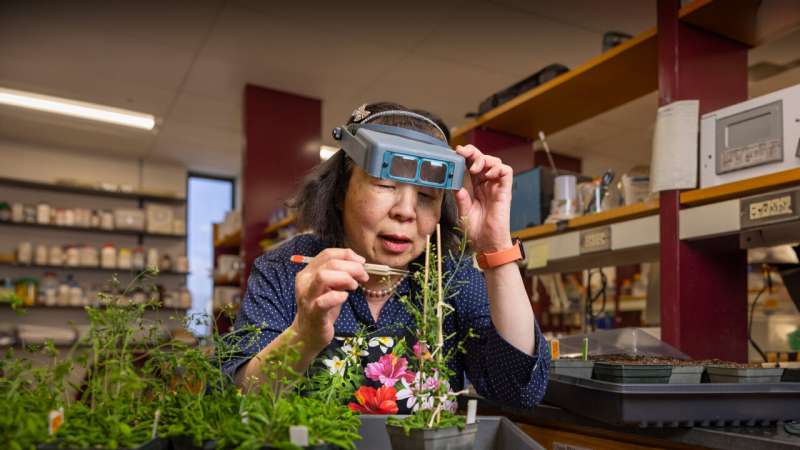
The study focuses on a phenomenon known as “interspecific incompatibility” (ISI), which explains why pollen from broccoli cannot fertilize kale, preventing the creation of hybrids. This incompatibility is essential for maintaining genetic diversity and avoiding inbreeding within plant populations. Alice Cheung, a distinguished professor of biochemistry and molecular biology at UMass Amherst, leads the research team. She highlights the need for a deeper understanding of ISI as a means of enhancing crop traits and ensuring food security.
Many flowering plants have evolved mechanisms for self-incompatibility, allowing them to reject their own pollen and that of closely related species. Yet, the details surrounding ISI remain largely unexplored. Cheung notes that the molecular processes underlying ISI are “very much a black box,” contrasting with the well-documented self-incompatibility systems.
Understanding the Mechanisms of Pollen Rejection
Cheung and her colleagues utilized the Brassicaceae family of plants, which includes common vegetables such as cabbages, broccoli, and canola, to investigate the signaling mechanisms involved in ISI. Their research uncovered a critical interaction between a protein called SRK and a chemical signal termed SIPS. When pollen from a different Brassica species is detected, SRK recognizes this chemical and initiates a rejection response.
The study also reveals that the SRK-SIPS interaction recruits another enzyme known as FERONIA. This collaboration leads to the production of reactive oxygen species (ROS), which effectively blocks the pollen’s entry into the pistil, the female reproductive organ of the flower. This discovery is a significant advancement in understanding plant reproductive biology and opens doors for new breeding strategies.
Paving the Way for Future Crop Development
Cheung and her team propose a novel breeding strategy that could enable successful crosses between distantly related Brassica species. By overcoming the barriers posed by pollen incompatibility, researchers may be able to enhance crop traits and improve agricultural resilience.
The findings from this research not only contribute to the fundamental understanding of plant biology but also hold promise for agricultural innovation. As the global demand for food continues to rise, such breakthroughs could play a vital role in developing new crop varieties that are more adaptable and resilient to changing environmental conditions.
This research marks a significant step forward in the quest to unlock the potential of plant breeding. The implications for food security and agricultural sustainability are profound, as scientists seek ways to cultivate crops that can thrive in diverse environments.
For further information, see the study by Yunyun Cao et al., titled “Pan-family pollen signals control an interspecific stigma barrier across Brassicaceae species,” published in Science.