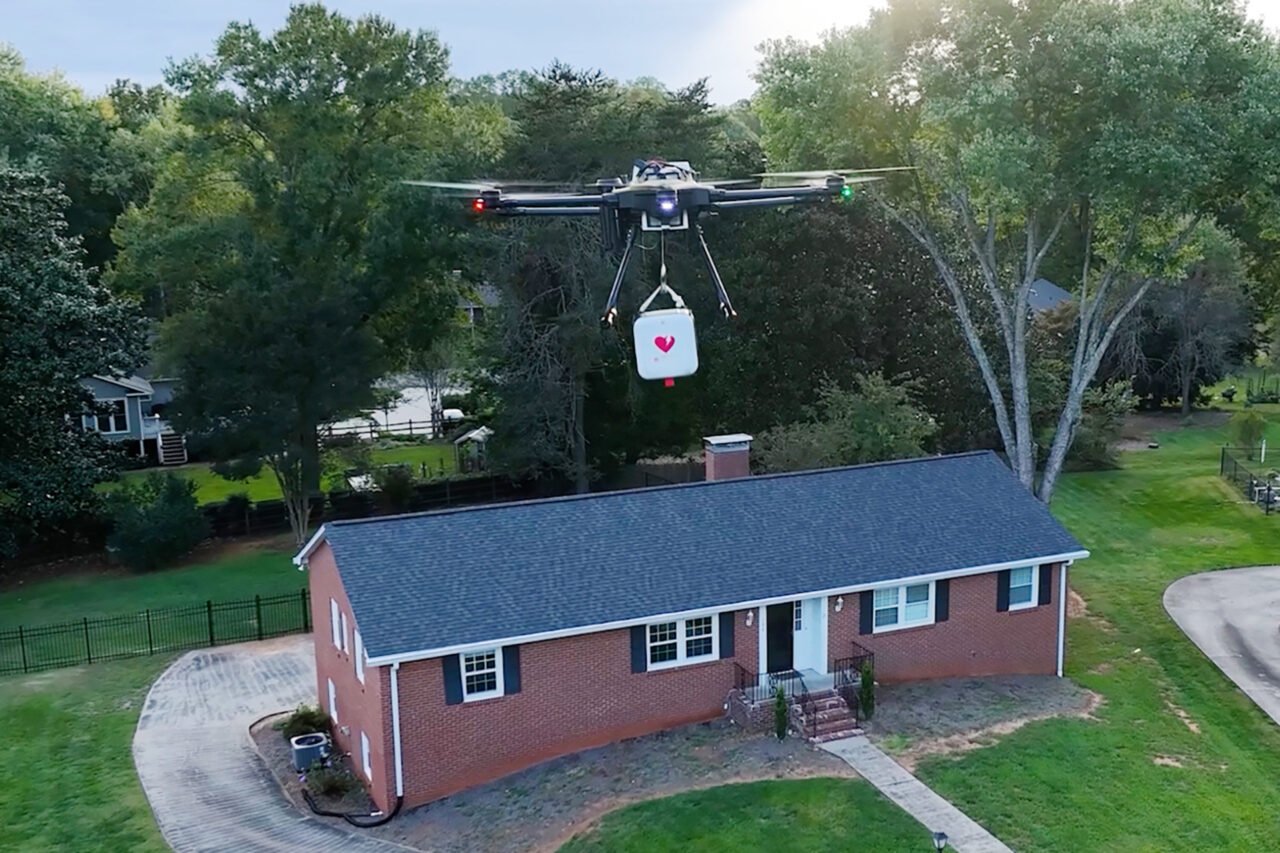
In a groundbreaking initiative, the town of Clemmons, North Carolina, has become the first in the United States to deploy drones for delivering automated external defibrillators (AEDs) during real-time 911 emergencies. This innovative project, led by Duke Health, aims to reduce the response times for cardiac arrest victims significantly, potentially saving lives in critical situations.
Drones Enhance Emergency Response
The use of drones allows for a more direct route to the location of a medical emergency, bypassing the limitations faced by traditional emergency vehicles that must navigate roadways. According to Bobby Kimbrough, Forsyth County Sheriff and a collaborator on the project, once a 911 call is received, a drone is immediately dispatched to deliver an AED to the scene. “The drone is in flight with the AED attached. Minutes later, the drone appears in the sky—not a bird, not a plane, not Superman—a drone and an AED,” Kimbrough stated during a press briefing.
The project is currently under evaluation, with researchers aiming to measure the effectiveness of the drone deliveries. Monique Starks, a cardiologist at Duke Health and the study’s lead, noted that the average arrival time for the drone is approximately four minutes. This marks a significant improvement compared to the typical 6- to 7-minute response time for traditional emergency medical services (EMS).
Addressing the Urgency of Cardiac Arrest
Starks explained that in situations of cardiac arrest, every minute counts. “If a patient can be shocked within two to five minutes, we could see survival rates of 50 to 70%,” she said. Unfortunately, the current survival rate for cardiac arrest in the U.S. is only around 10%. This low figure is largely due to the reliance on EMS to arrive with an AED. Starks emphasized that the goal of this initiative is to empower bystanders to act more quickly in these emergencies.
Currently, only 1 to 4% of cardiac arrest cases in the United States see a bystander or community member applying an AED, primarily because these incidents often occur at home. “We want to change that dynamic,” Starks added. The initiative aims to ensure that AEDs are available for immediate use, thereby increasing the chances of survival for individuals experiencing cardiac arrest.
The ongoing study not only focuses on the speed of AED delivery but also tracks the potential rise in AED usage among bystanders. As technology continues to advance, this project underscores the dual nature of innovation: while it presents risks, it also holds the promise of saving lives.