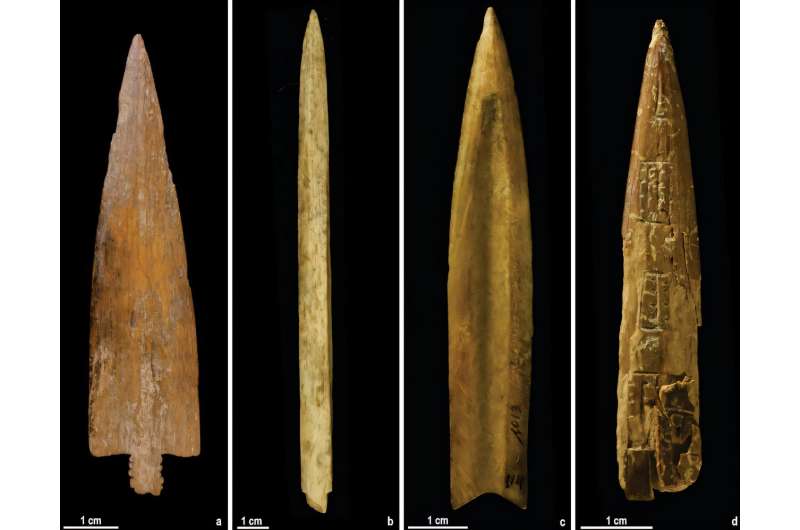
Research published in the *International Journal of Osteoarchaeology* uncovers significant insights into the organized craft production of ancient communities in Argentina’s Sierras de Córdoba. Led by Dr. Matías Medina and his team, the study analyzes bone arrow points, revealing the sophisticated techniques used by the Late Prehispanic Period people, dating from approximately 1220 to 330 cal BP.
For decades, knowledge about the bone tools of this era remained limited. Previous studies primarily focused on archaeological artifacts as markers of culture and chronology, neglecting deeper inquiries into their manufacturing processes. Dr. Medina noted that “publications dealing specifically with bone technology were, for decades, scarce, especially in South America.” This lack of detailed analysis meant that the production techniques of bone arrow points had not been thoroughly explored.
Investigating Arrow Point Production
To fill this research gap, the team examined 117 bone artifacts collected from the Museo Arqueológico Numba Charava. These items were gathered non-systematically throughout the 20th century from various archaeological sites in the southern Punilla Valley, leading to challenges in establishing precise provenance. The primary raw material identified was bones from the guanaco, a species of llama hunted for food. Bones from other animals, such as pampas deer, were less common.
The study found that the arrow points were typically crafted from the metapodia, the long bones of the limbs. These bones were split lengthwise to create workable blanks and then ground, scraped, and shaped into arrowheads. Some finished points were enhanced with decorative features, although such instances were rare. Dr. Medina explained, “Only three bone arrow points with incised decoration on the blade were reported in the archaeological literature.”
The research posits that these arrow points were primarily used for warfare rather than hunting. The decorative elements, including incised designs, may have been a means of expressing social identity and cultural affiliation, particularly in conflict scenarios.
Broader Implications of the Study
The findings shed light on how communities in the Southern Punilla Valley organized their tool production. Each arrow point was unique, reflecting individual craftsmanship despite the standardized production techniques that likely passed from parent to child within families. This reinforces the notion that the nuclear family served as the primary social unit for both food and tool production during the Late Prehispanic Period.
Dr. Medina emphasized the need for further comparisons with neighboring regions, such as the Low Paraná and Uruguay River floodplains. These areas, located over 500 km away, developed complex bone technologies suitable for their specific environmental challenges, particularly the scarcity of stone materials. A comprehensive understanding of these technological differences will illuminate further areas for future research.
The study represents a critical step in understanding the social and technological dynamics of prehistoric communities in Argentina, offering a richer context for their material culture and daily life. By examining the craft production of bone tools, researchers not only enhance the archaeological record but also contribute to a broader understanding of human innovation and adaptation throughout history.